The test result matters less than whether it helps explain what’s affecting the indoor environment. Mold testing for sensitive individuals in San Francisco is scoped around the inspection and sampling needed; cost depends on the affected areas, the sampling plan, and the condition of materials, with pricing provided after a quote request. A focused assessment can compare indoor air samples with an outdoor sample as a local baseline.
If someone in your home is sensitive to mold, it’s understandable to want a clear answer without unnecessary alarm. Air sampling alone may not show why mold is present or where moisture is entering, so building conditions matter alongside test results.
This guide explains what an inspection can assess, how moisture and damaged materials inform the sampling plan, and what indoor air quality testing can and can’t tell you. You’ll also learn how the findings can help clarify next steps for your space.
Key Takeaways
- Learn why inspection scope and sampling needs influence the cost of black mold testing in San Francisco.
- See how comparing indoor air samples with an outdoor baseline can add context to test results.
- Understand why moisture sources and damaged materials need to be assessed alongside air samples.
- Explore how different testing methods identify mold and what their results can reveal.
- Find out how indoor air quality findings can help guide appropriate next steps for a sensitive household.
How Much Does Black Mold Testing Cost in San Francisco?
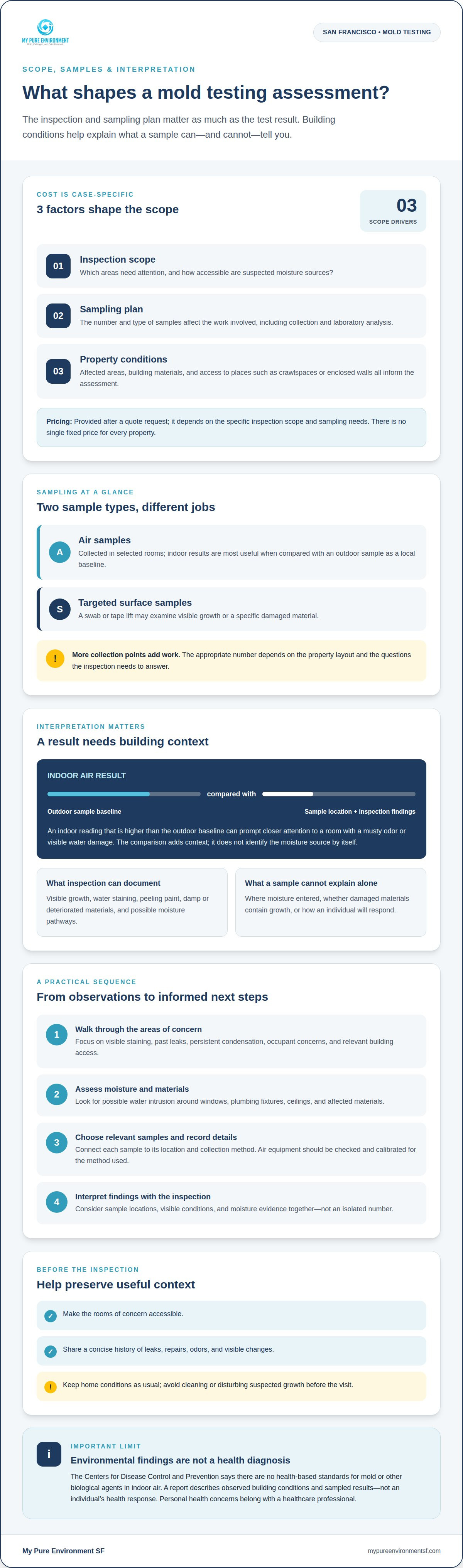
The cost of black mold testing in San Francisco depends on the inspection scope, sampling plan, and property conditions. When you work with My Pure Environment SF, the price depends on the case and is given after a quote request; key cost factors include the number and type of samples, affected areas, and access to suspected moisture sources.
Indoor air samples are most useful when interpreted against an outdoor sample collected as a local baseline. For example, a higher indoor reading can prompt closer attention to a room with a musty odor or visible water damage. The comparison adds context, but sample locations and the building inspection matter too. A single indoor result cannot explain where moisture entered or whether damaged materials contain growth.
Sample collection can involve air sampling in selected rooms, plus targeted surface samples when visible growth or damaged materials need examination. A swab or tape lift may help identify material at a specific spot. Additional samples can change the total because each collection point adds work and laboratory analysis. The appropriate number depends on the property’s layout and the questions the inspection needs to answer.
Property-specific sampling starts with a walk-through. An inspector can focus on rooms with visible staining, past leaks, persistent condensation, or occupant concerns. A bathroom with discolored drywall calls for a different sampling plan than an attic with damp roof sheathing. In a San Francisco Bay Area home, access to a crawlspace or enclosed wall can also affect inspection time and sample selection.
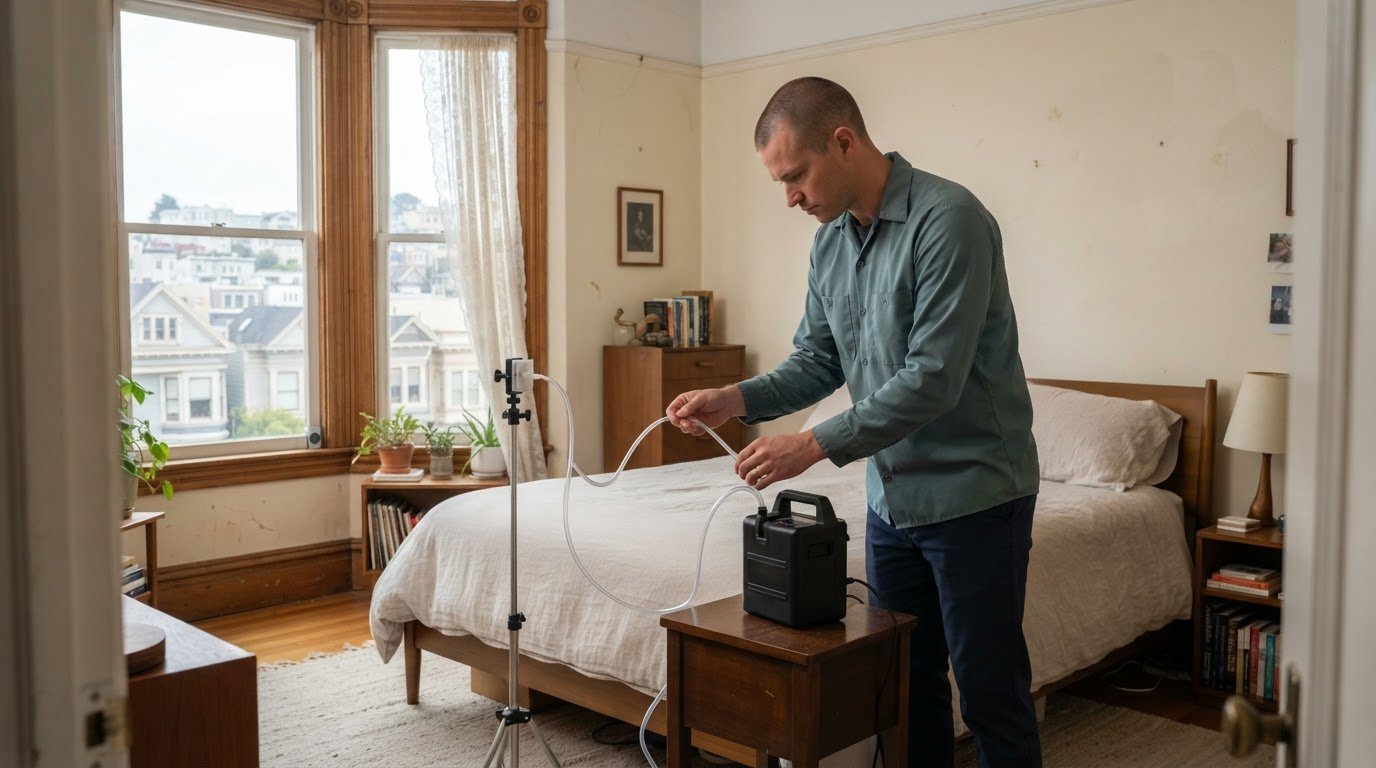
Air sampling equipment must be checked and calibrated for the method being used. Calibration helps ensure the instrument collects air at the intended flow rate, making results more meaningful. The inspection record should connect each sample to its location and collection method. Without those details, comparing an indoor result with an outdoor baseline becomes less useful.
To prepare for an inspection and air sampling, make the rooms of concern accessible and share a concise history of leaks, repairs, odors, and visible changes. Keep the home’s conditions as usual rather than cleaning or disturbing suspected growth before the visit.
If testing finds elevated spore levels, interpret the results alongside the inspection, sample locations, and moisture evidence. The next step is to identify and address the moisture source, then determine whether affected materials need mold remediation. This sequence helps owners respond based on the conditions found, rather than treating an isolated number as a complete diagnosis.
When planning for these services, professional mold testing for sensitive individuals sf addresses each unique environment methodically. This range is a starting point rather than a fixed price for every property, since the inspection scope and sampling needs vary. Owners can use it when considering whether to request an evaluation, while recognizing that a property requiring an extensive inspection may fall above the range. The appropriate cost is determined by the work involved, so a quote request is the way to get pricing for a specific case.
Moisture and mold inspection for sensitive occupants
A thorough inspection gives air quality findings context by examining moisture, building materials, and visible conditions. For sensitive occupants, the aim is to identify potential sources without treating a sample result as a diagnosis.
Visual Checks and Moisture Assessment
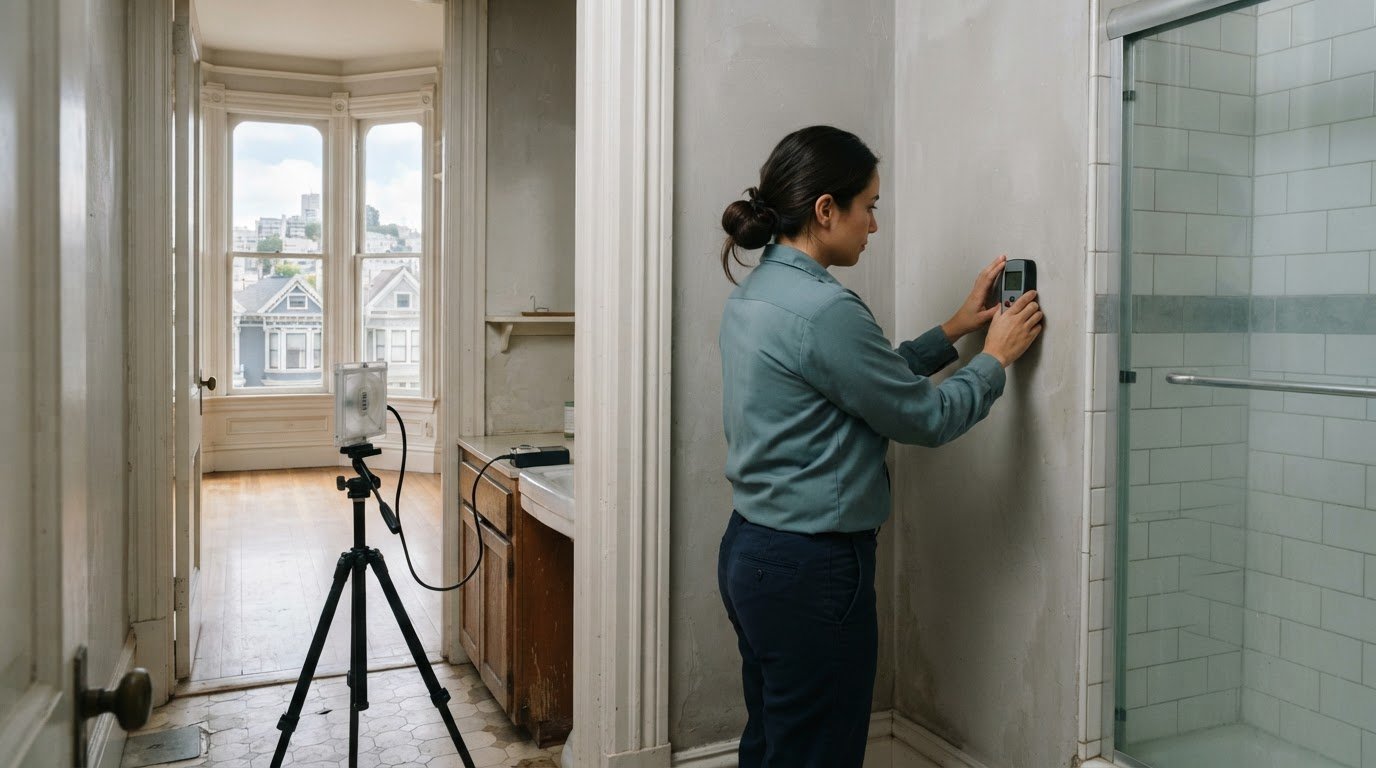
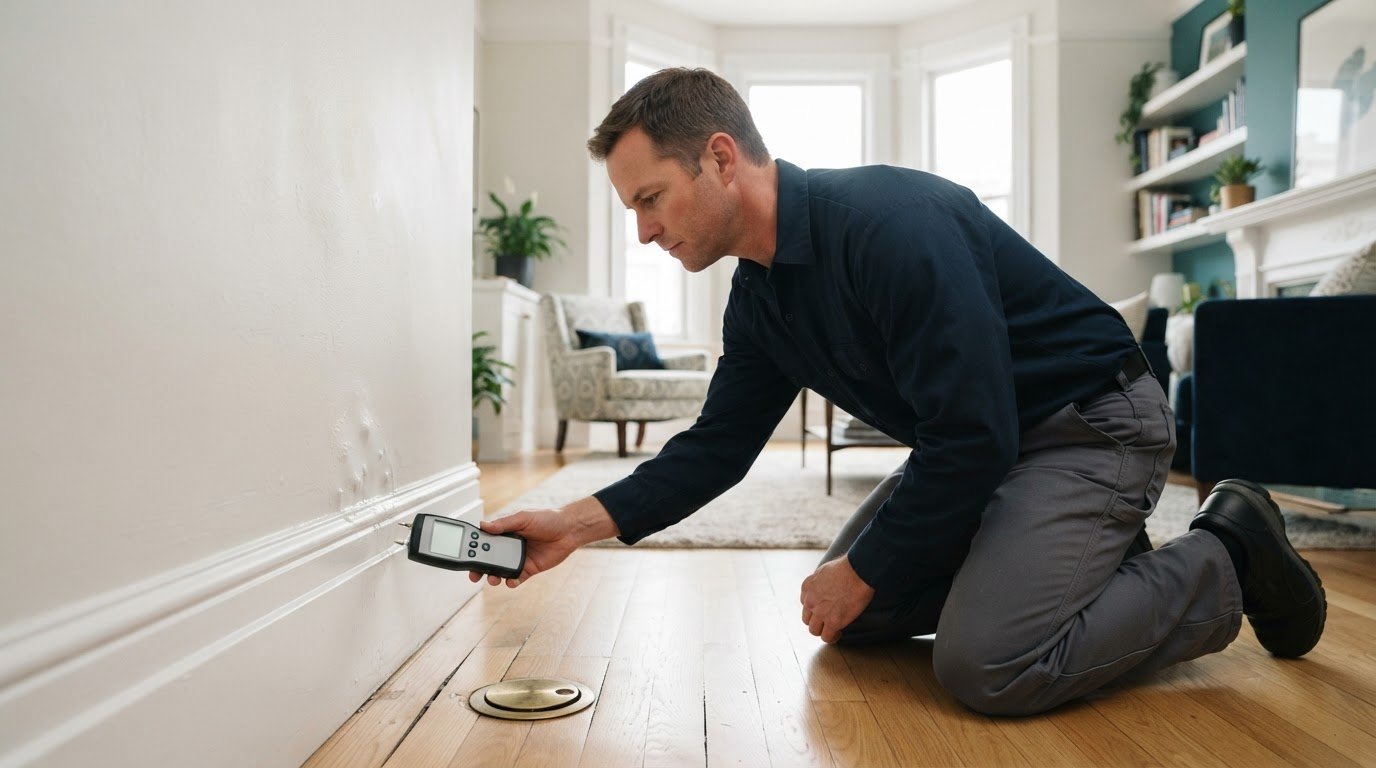
A visual inspection looks for visible mold growth, water staining, peeling paint, and materials that appear damp or deteriorated. Moisture assessment helps trace possible water intrusion, including around windows, plumbing fixtures, and ceilings below a roof leak. For example, a stain beneath a bathroom may point toward a hidden plumbing issue. A report can document observed conditions and locations that may need further evaluation.
Professional Services and DIY Test Kits
DIY mold test kits can collect a sample, but they don’t assess the building conditions that may explain it. A professional inspection combines observations, moisture assessment, and a sampling plan based on the rooms and materials involved. For a sensitive household, that context can help distinguish a useful finding from an isolated result. Mold testing without a thorough moisture and mold inspection is not recommended because the results lack context.
Risks and Limits for Sensitive Occupants
Sampling can involve entering rooms or approaching materials that occupants find concerning. A clear plan can focus collection on relevant areas and avoid unnecessary disturbance of suspected growth. Testing also has limits: the Centers for Disease Control and Prevention says there are no health-based standards for mold or other biological agents in indoor air. A result therefore describes sampled conditions, not an individual’s health response.
For people with allergies or chemical sensitivities, inspection findings should be interpreted as information about the building, not as a prediction of symptoms. A report can describe moisture evidence, visible conditions, and sample results, while a healthcare professional addresses personal health concerns. This distinction keeps environmental observations separate from medical conclusions.
For a real estate transaction, an inspection can document observed mold concerns and signs of water damage. California requires sellers of residential buildings with up to four units to disclose known hazardous conditions, including mold, in writing. An inspection can inform the condition record, but it does not replace a seller’s disclosure obligations.
Some occupants request a CIRS-focused inspection because they are concerned about building conditions they associate with symptoms. The building assessment can document moisture, visible mold, and indoor air findings; it cannot diagnose CIRS or establish that a specific condition caused symptoms. Clear documentation gives occupants and their healthcare professionals distinct information to consider.
When an inspection identifies a likely moisture source, the next step is to address that source and assess affected materials. This sequence helps owners respond to the building conditions behind a mold problem rather than relying on a test result alone.
Mold inspection and testing in the San Francisco Bay Area
In San Francisco, a mold inspection connects visible conditions, moisture evidence, and sampling results to the rooms affected. That context matters because mold spores may occur indoors, while a result from one location cannot describe every part of a home.
When choosing a mold inspection, focus on the inspection process and the report’s detail. A useful report distinguishes observed conditions, sample locations, laboratory findings, and interpretation instead of treating one spore count as a complete account of contamination. For sensitive occupants, it should also explain what the sampling can and cannot establish.
Reviews of San Francisco inspection and testing companies can help readers understand reported experiences, but the useful details are specific. Look for comments about clear communication, documented findings, and whether the inspection explained moisture concerns. A review describing an attic inspection after a roof leak, for example, offers more context than a general statement about satisfaction.
San Francisco’s local rules are relevant when a mold concern involves a rental home. San Francisco laws passed in 2015 set a legal threshold for tenants making mold-related claims or withholding rent. That statement does not supply the threshold itself, so an inspection report should remain focused on building observations and test results rather than making legal conclusions.
The San Francisco Department of Public Health does not perform mold testing. Its role should not be confused with a property inspection that documents visible conditions, moisture, or collected samples. For a rental property, a report can help describe what was observed in a particular unit and identify areas where further assessment may be appropriate.
Across the Bay Area, building conditions can vary by location and construction. A ground-floor room with water intrusion, a bathroom with recurring condensation, and an attic with a roof leak present different inspection questions. A sampling plan should follow those property-specific clues, rather than collecting identical samples in every room.
Mold risks also need careful framing. Breathing in black mold over time can cause allergies and difficulty breathing. That does not mean a visual inspection or spore result can predict an individual’s response; an inspection documents the building, while health concerns require separate consideration.
For sensitive occupants, a clear sequence helps: document the affected rooms, inspect for moisture and visible growth, then select samples to answer specific questions. Comparing locations and findings can help distinguish a localized concern from a broader pattern. This approach gives owners actionable information about indoor conditions without overstating what a single test can prove.
Indoor air quality assessment
An indoor air quality assessment combines sample results with building conditions and the question being investigated. In the San Francisco Bay Area, that means identifying what each method measures, where samples were collected, and what conclusions the findings can support. This context makes mold testing for sensitive individuals in San Francisco more focused on the home’s specific concerns.
Mold growth requires three things: mold spores, a food source such as building materials, and moisture or water. An assessment considers how those factors may come together in a home. For example, a damp wall behind furniture may contain moisture and a suitable material, while air sampling can help examine airborne spores in the room. A trained inspector uses building observations to give each result practical context.
Airborne spore-trap analysis can identify spores to the genus level. It cannot distinguish Penicillium from Aspergillus, so a report should state that limit clearly. Certified mold testing often takes one to two days to finish. Sample locations and collection conditions matter, since results describe the air captured there rather than every room or hidden cavity.
ERMI or PCR testing uses microbial DNA analysis to identify mold to the species level. It may still miss many molds because relatively few species have been cataloged. Mold culturing takes longer than the other described testing methods and identifies colonies that grow to the species level. These methods answer different questions, so choosing one depends on the assessment goal, such as identifying contamination scope or examining a particular material.
Interpretation requires detail, not just a list of detected organisms. A useful assessment connects each result to its sampling location, visible conditions, and moisture observations. Indoor samples compared with an outdoor baseline can help show whether the indoor pattern differs from local air. Results describe environmental conditions, not an individual’s health or a prediction of symptoms.
The Centers for Disease Control and Prevention says there are no health-based standards for mold or other biological agents in indoor air. A numerical result therefore cannot establish a health threshold by itself. For sensitive occupants, mold testing for sensitive individuals in San Francisco is most useful for identifying possible building sources and areas needing attention, rather than treating a single concentration as a universal pass-or-fail measure.
Laboratory testing can help determine contamination scope, set a pre-remediation baseline, or assess an area after remediation. After treatment of a contaminated area, a clearance test can be performed before rebuilding. That sequence documents conditions at a defined stage and helps keep restoration decisions tied to observed findings. A focused indoor air quality assessment connects sampling, building evidence, and the next appropriate step.
Mold testing services for sensitive individuals in San Francisco
A focused mold assessment in San Francisco starts by defining the concern, not by collecting samples everywhere. The inspection plan can account for rooms where occupants notice concerns, visible material changes, and building history such as a reported leak. This gives each sample a clear purpose and helps the findings relate to actual conditions inside the property.
Before sampling, the inspector can document areas of concern and examine accessible building surfaces. For example, staining near a window may direct attention to that wall, while an odor in a closet may call for a separate inspection there. A written record of locations and observations helps distinguish a room-specific finding from a pattern across several areas.
Sampling methods serve different purposes. Air samples collect airborne particles from selected locations; swabs and tape lifts collect material from a specific surface. A laboratory can analyze the submitted samples, and the report should identify the method and location associated with each result. That detail matters when occupants need to understand whether a finding relates to a visible spot, indoor air, or a particular room.
A useful report links observations and results rather than presenting laboratory data alone. It can organize information by room, describe visible conditions, and state the limits of the sampling method. For instance, a surface sample from one discolored section does not describe every wall in the home. Clear documentation helps owners decide whether further inspection, moisture investigation, or remediation is the appropriate next step.
For sensitive occupants, the assessment should also keep environmental findings separate from medical conclusions. Mold testing describes conditions at the sampled locations; it cannot determine why a person experiences symptoms. A healthcare professional addresses individual health questions, while a building assessment can identify potential moisture sources or areas needing attention. This distinction helps prevent a laboratory result from being treated as a diagnosis.
Testing plans can also be tailored to specialized settings. In a cannabis-related space, for example, the assessment needs to address the specific rooms and building conditions under review. A sampling plan should make clear which areas were assessed and why, so results remain interpretable within that environment.
After treatment of a contaminated area, a clearance test can be performed before rebuilding. This creates a documented checkpoint between remediation and the next work on the affected area. For occupants who want a structured assessment of indoor conditions, schedule a targeted mold assessment focused on the rooms and concerns that matter most.
For rental properties, San Francisco landlords are advised to have rental properties tested and cleaned when a tenant reports mold.
My Pure Environment SF: Mold Remediation
My Pure Environment SF can help turn inspection findings into a practical plan for addressing mold and indoor air concerns. Its Mold Testing & Inspection service assesses building conditions and sampling needs; Mold Remediation addresses identified mold growth. When the concern centers on indoor air, Indoor Air Quality Improvement may be relevant, while Bathroom Mold Removal focuses on mold in that area.
Consider reaching out when visible growth, recurring moisture concerns, or test findings leave you unsure what to address next. Share the affected rooms and any inspection details to discuss whether testing, remediation, or indoor air quality improvement best fits the concern. Contact My Pure Environment SF to discuss the next step for mold concerns in your home.
Take the Next Step Toward a Clearer Indoor Environment
For sensitive occupants, the next useful step is turning concern into a focused plan for the home. Start with the specific room or condition that prompted questions, such as a persistent musty odor, visible material changes, or worries about indoor air. This keeps the conversation centered on your property and the information you need to decide what comes next. Thoughtful mold testing for sensitive individuals in San Francisco should support practical decisions without treating environmental findings as a medical diagnosis.
My Pure Environment SF can help with Mold Testing & Inspection, Mold Remediation, and Indoor Air Quality Improvement. Share the conditions you’re concerned about and the areas involved to begin discussing an appropriate path forward. Start a conversation with My Pure Environment SF about your indoor environment. A measured next step can make a complicated concern easier to address.
Frequently Asked Questions
How much does mold testing cost in San Francisco?
The inspection helps connect laboratory findings with conditions observed in the home. For example, a report can help clarify which sampled area needs attention and what next steps may fit the findings.
What types of mold tests are available for people with mold sensitivity?
Available methods include airborne spore-trap sampling, surface swabs or tape lifts, mold culturing, and ERMI or PCR DNA analysis. Each answers a different question: surface samples examine material from a specific spot, while air samples assess airborne spores where collected. A test plan should match the concern, such as checking a visible patch or investigating indoor air. No test result diagnoses a person’s sensitivity.
What are the San Francisco and California rules for mold inspection and remediation?
California requires sellers of residential buildings with up to four units to disclose known hazardous conditions, including mold, in writing. Landlords must tell tenants before they sign a rental agreement that mold in the property may pose a health threat. San Francisco laws passed in 2015 set a legal threshold for tenants making mold-related claims or withholding rent. The San Francisco Department of Public Health does not perform mold testing.
San Francisco mold inspection and testing companies with reviews
Reviews can help you assess San Francisco mold inspection and testing companies. Look for specific comments about clear communication, documented findings, and whether the inspection explained moisture concerns.