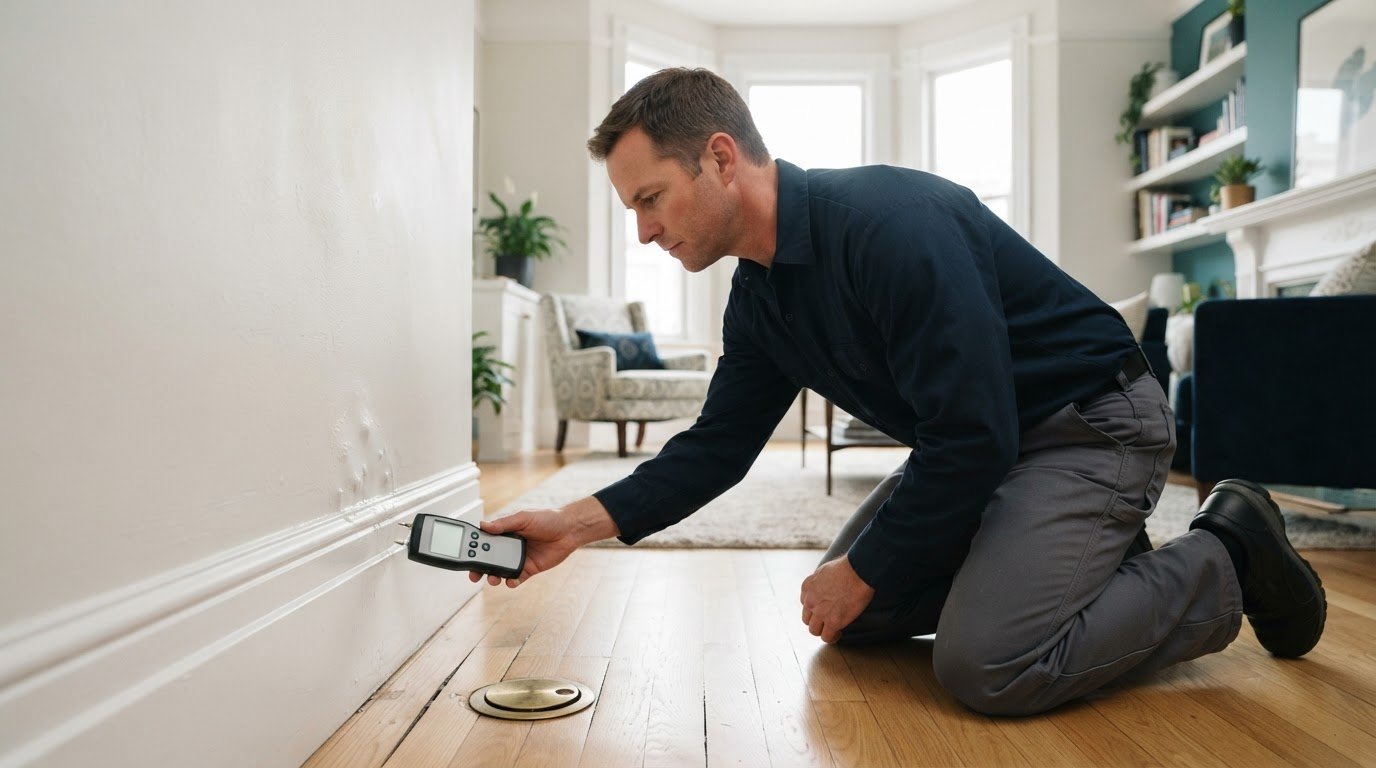
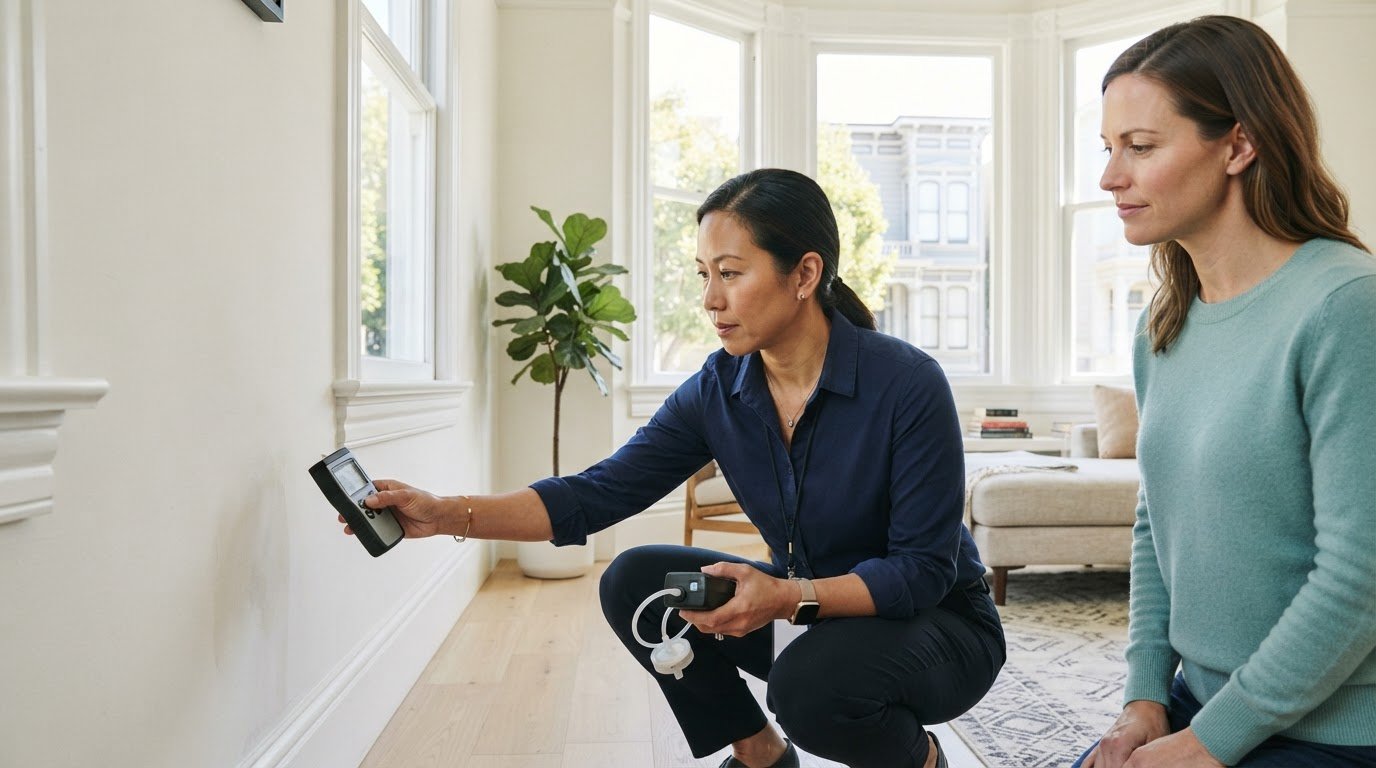
Mold testing isn’t routinely necessary before remediation in San Francisco. The U.S. Environmental Protection Agency does not recommend routine mold sampling, so whether to test depends on what an inspection finds and what you need to know.
It’s reasonable to worry that mold could return after removal. If the moisture source remains, remediation may address visible growth without resolving the conditions that allowed it to develop.
Testing can help when the source or extent of a suspected problem is unclear, or when results could guide the work. This article explains when sampling may be useful, how indoor findings compare with outdoor samples, and why inspecting for hidden moisture matters. You’ll also learn what a professional inspection can contribute before remediation, so you can choose your next step with better information.
Key Takeaways
- The U.S. Environmental Protection Agency does not recommend routine mold sampling. Testing is most useful when it can answer a specific question about a suspected problem.
- Indoor air results make more sense when compared with outdoor samples, which provide context for interpreting what is found inside.
- Visible growth may not need sampling to establish that mold is present; an inspection can help identify where moisture is coming from and whether growth may be hidden.
- Addressing the underlying moisture source matters because mold can begin developing within 24 to 48 hours of water exposure.
- An independent inspection can help clarify the findings and inform remediation decisions without combining assessment and cleanup in one role.
Comparing indoor air samples with outdoor samples
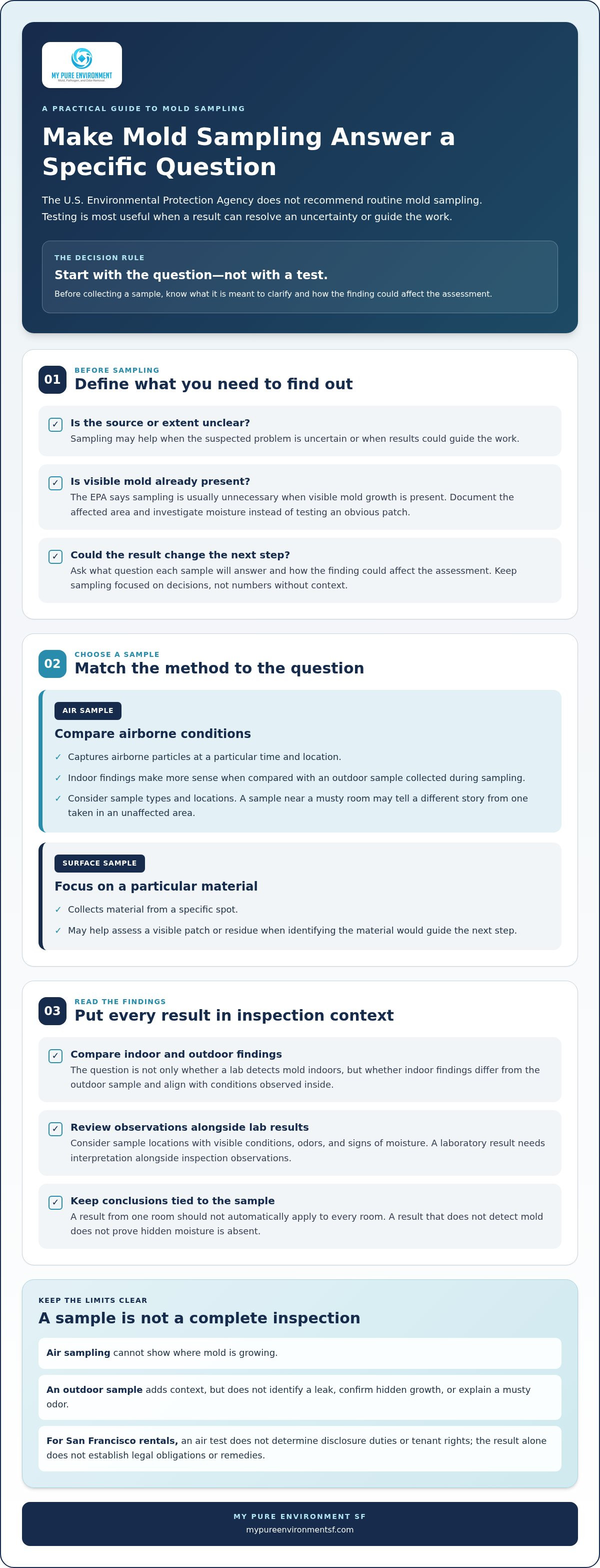
Indoor air results need context. Outdoor air provides a comparison for interpreting what was airborne outside during sampling. The key question isn’t simply whether a lab detects mold indoors, but whether indoor findings differ from the outdoor sample and align with conditions observed inside.
For a useful comparison, review sample types and locations alongside the laboratory findings. An indoor sample collected near a musty room, for instance, may tell a different story from one taken in an unaffected area. An outdoor sample adds context, but it won’t identify a leak, confirm hidden growth, or explain a musty odor.
Air sampling captures airborne particles at a particular time and location. It can help answer a specific question, such as whether indoor findings differ from outdoor conditions. A sample alone can’t show where mold is growing. Interpret results alongside visible conditions, odors, and signs of moisture, rather than treating a lab result as a complete inspection.
Surface sampling collects material from a specific spot and can help assess a visible patch or residue when identifying the material would guide the next step. The U.S. Environmental Protection Agency says sampling is usually unnecessary when visible mold growth is present. In that case, documenting the affected area and investigating moisture may be more useful than testing an obvious patch.
Air and surface samples can complement each other when the inspection has a clear purpose. An air sample may help compare indoor and outdoor conditions, while a surface sample can focus on a particular material. Neither replaces investigating likely moisture sources. Ask what question each sample will answer and how the result could affect the assessment.
Laboratory analysis produces findings that need interpretation. Review the report alongside sample locations and inspection observations. A result from one room shouldn’t automatically apply to every room, and a result that doesn’t detect mold doesn’t prove that hidden moisture is absent.
For San Francisco rentals, an air test doesn’t determine disclosure duties or tenant rights. Sampling is an environmental assessment; the result alone doesn’t establish a landlord’s legal obligations or a tenant’s remedies.
Use testing when it can resolve a specific uncertainty, such as whether indoor air differs from the outdoor comparison or what a particular surface sample contains. When visible growth already identifies the concern, document its location and investigate moisture. This keeps sampling focused on decisions, not numbers without context.
Independent mold inspection and conflicts of interest
A pre-remediation assessment should connect observed conditions, moisture evidence, and any sampling to a clear work plan. The inspection and report should explain how the findings inform remediation decisions.
Pre-Remediation Inspection and Protocols
A professional mold inspection can include a visual evaluation, moisture and humidity readings, and air or surface samples for laboratory analysis. Each method answers a different question, so the inspection should explain why a particular room or material is assessed. For example, a moisture reading near a stained wall can point to a damp area. The findings help define the affected location and remediation scope.
Separating Inspection and Remediation
Separating assessment from cleanup can help distinguish inspection findings from work recommendations. An independent inspector can document conditions and recommend a third-party contractor if mold is detected. That gives you a report to review when considering proposed work, rather than relying only on the assessment of the contractor who will perform it.
In California, compare an assessor’s inspection methods and report with a contractor’s written remediation scope. For a licensed contractor, review the relevant license status and whether the proposed work matches the documented findings.
Inspection Reports and Recommendations
A useful report identifies inspected areas, observed conditions, moisture readings, and any laboratory samples collected. It connects each recommendation to a finding, such as visible growth or elevated moisture near a specific surface. If testing is included, the report should identify sample locations and explain how the results inform the next step. This detail helps you compare proposed work with the evidence.
A report can recommend remediation by a third-party contractor when mold is detected. It informs decisions but doesn’t establish a San Francisco landlord’s legal duties.
Visual Inspection and Moisture Detection
A visual inspection looks for visible growth, water staining, and other signs that direct attention to possible problem areas. Moisture and humidity readings add information that appearance alone cannot provide. For example, an inspector may record moisture near a discolored ceiling and examine the nearby area for signs of continued dampness. Those observations can help focus further assessment before remediation begins.
For San Francisco homeowners and landlords, the U.S. Environmental Protection Agency’s guidance against routine mold sampling is not a local landlord regulation. Inspection findings and applicable housing obligations are separate considerations.
The person conducting mold testing should document the inspection and explain sample locations. Remediation should follow a defined scope based on the findings. Keeping these roles clear helps show who assessed the problem and who will address it.
Hidden mold and moisture sources
A room can look clean while moisture remains behind a wall, beneath flooring, or inside a cabinet. A musty odor near a bathroom vanity, for example, may point to damp material below the sink. Stains, peeling paint, and warped surfaces can also guide an inspection, but each clue needs context.
Trace moisture toward its source instead of focusing only on the visible mark. Check around plumbing connections, window edges, rooflines, and bathroom fixtures for dampness or staining. A ceiling mark below an upper floor, for example, can direct attention to plumbing or water entry above. The visible area may not reveal the full extent.
Water can travel through building materials before becoming visible indoors. A leak behind a wall may leave a distant stain, while moisture under flooring can go unnoticed until materials change or an odor develops. An inspection can follow these clues, assess nearby surfaces, and identify areas that need closer attention.
Mold can begin growing within 24 to 48 hours of water exposure. That timeline makes the source and duration of dampness important details after a leak or spill. Note where water entered, which materials became wet, and whether the area dried. Those observations can help distinguish a resolved event from continuing moisture.
Removing visible growth without addressing moisture can leave conditions that support its return. Cleaning a bathroom wall, for example, won’t resolve dampness from a persistent leak under the sink. A useful assessment connects the affected material to the likely moisture pathway and determines whether the source still needs attention.
Before remediation, record what you observe in each affected room. Note the location of stains, odors, or damaged materials, and when they appeared. Compare these details with nearby plumbing, exterior walls, windows, and ceilings. This gives an inspector specific locations to assess instead of a general report of “mold somewhere.”
Hidden areas may require focused investigation, but sampling alone won’t locate a leak. An air result describes conditions at the time and place sampled; it can’t reveal whether water is entering through a window or pipe. Pair any sample findings with visual observations and moisture evidence to make the investigation more useful.
In a San Francisco home, a musty closet beside an exterior wall and a stain near a bathroom ceiling suggest different inspection paths. Record each clue separately, then trace nearby sources before deciding which areas need further assessment. Identifying and correcting the moisture pathway is central to preventing a repeat problem.
When mold testing may be useful before remediation
Testing is most useful when it can resolve a specific uncertainty and guide a decision. Musty odors, water damage, or unexplained respiratory symptoms can prompt a closer assessment.
Testing Requirements Before Remediation
The U.S. Environmental Protection Agency does not recommend routine mold sampling. Testing isn’t automatically needed before remediation in San Francisco. First consider whether an inspection has already identified visible growth and its likely moisture source.
Testing may add value when suspected growth isn’t visible, an odor persists without an obvious cause, or water damage leaves the affected area unclear. Sampling, for example, may help investigate a musty room when a visual inspection hasn’t located growth. Decide what question the test should answer before collecting samples.
If visible growth is present, the EPA says sampling is usually unnecessary. Document the affected location and assess moisture conditions so remediation planning can focus on the observed problem.
Testing Before and After Remediation
Before remediation, testing can clarify uncertain findings, such as whether an indoor sample differs from an outdoor comparison. It doesn’t replace an inspection or identify the moisture source on its own. Consider results alongside the affected area, odors, water damage, and moisture readings to determine whether they change the planned work.
Should testing happen both before and after remediation? Not routinely. Pre-work testing is useful when it answers a defined question, while a clearance test may be considered after treatment and before rebuilding. Whether to sample after work depends on the remediation scope and what you need to verify about the treated area.
For example, a report documenting a specific affected room can guide a later clearance assessment of that area. Testing should have a stated purpose, rather than being repeated without a clear question for the laboratory to answer.
Risks of Skipping Mold Testing
Skipping testing can leave uncertainty when growth isn’t visible, the source is unclear, or an odor continues after a leak. In these cases, an assessment without samples may not answer whether indoor air findings differ from outdoor conditions. Decide whether that unanswered question affects the remediation plan.
However, a test isn’t a substitute for investigating moisture. A negative sample doesn’t prove hidden dampness is absent, and a positive result alone doesn’t locate a leak. Consider inspection evidence, sample locations, and building conditions together.
Before proceeding, write down the unresolved concern, such as an unexplained odor in one room or water damage without visible growth. Then consider whether sampling can answer it. If visible mold already defines the affected area, EPA guidance supports focusing on the condition and moisture source rather than routine sampling. This ties testing to decisions and avoids treating a lab result as a complete diagnosis.
Is mold testing required before mold remediation in San Francisco?
The U.S. Environmental Protection Agency does not recommend routine mold sampling. Its guidance doesn’t make testing a standard prerequisite for remediation. The practical question is whether a sample can answer something an inspection alone cannot, such as whether an uncertain area needs further assessment.
For a San Francisco property, consider three questions: Is growth visible? Is moisture present? Would a test result change the next step? If a bathroom wall has visible mold and a damp area nearby, an inspection can document those conditions. A laboratory sample may add little if it won’t change the planned response.
Testing may be more useful when a musty odor persists but an inspection hasn’t located growth, or when water damage leaves the affected area unclear. Define the concern before sampling. For example, ask whether indoor air findings differ from an outdoor comparison or whether a particular material needs analysis.
A report should connect its findings to the property’s conditions. Review which room or surface was sampled, what question the sample addressed, and how the result affects the remediation scope. A result without this context can be difficult to use. Sample location matters because findings from one area don’t automatically describe every room.
Homeowners and landlords shouldn’t confuse testing guidance with an answer to every housing or lease question. The EPA’s recommendation concerns routine sampling; it doesn’t determine a landlord’s obligations or a tenant’s rights in a specific San Francisco situation. Keep inspection records, photos of visible conditions, and notes about water damage together when discussing the property.
Use a focused decision sequence: document visible growth or damage, identify moisture concerns, then decide whether testing would resolve an unanswered question. If the purpose is unclear, sampling may not help guide remediation. If you’re concerned about hidden growth or uncertain indoor conditions, a defined sampling plan can provide relevant evidence alongside inspection observations.
Testing is a tool, not a universal entry requirement. For a visible patch, the EPA says sampling is usually unnecessary; for an unclear condition, targeted testing may inform the assessment. If you need a property assessment that combines inspection with purposeful sampling, explore mold testing and inspection as a next step.
My Pure Environment SF: Mold Remediation
My Pure Environment SF can help when an inspection identifies mold or you need clearer information before deciding on next steps. Its Mold Testing & Inspection service assesses suspected issues, while Mold Remediation addresses identified mold. The company also provides Indoor Air Quality Improvement and Bathroom Mold Removal for related concerns.
If you’re unsure whether sampling would help, consider what remains unanswered: where growth may be, whether moisture is present, or how to define the affected area. A focused assessment can clarify these conditions and inform the next step without treating testing as an automatic requirement.
To discuss mold testing or remediation for your property, contact My Pure Environment SF or visit mypureenvironmentsf.com.
Make Your Next Step Clear
Use what you’ve observed to frame your next decision. Note which rooms concern you, when odors or staining appeared, and whether there has been recent water exposure. Photos and a short timeline can help organize these details before an assessment. A clear record also helps distinguish what you’ve seen from what you still need to understand.
Whether mold testing is necessary before remediation in San Francisco is a practical decision, not an automatic rule. First identify what remains uncertain, then consider what information would help you move forward. This keeps the focus on your property’s conditions and the decisions ahead.
If you’re ready to discuss what you’ve noticed and consider a suitable next step, get in touch with My Pure Environment SF. A clear, informed start can make the path forward feel more manageable.
Frequently Asked Questions
Can mold come back after removal?
Yes, mold can return if the moisture that supported its growth remains. Cleaning a patch near a leaking pipe, for example, won’t address damp materials behind the cabinet. After removal, watch for recurring stains, musty odors, or damp surfaces in the same area. These signs may point to an unresolved moisture source, rather than a need to clean the surface again.
Can mold grow even if I don’t see it?
Yes, growth can be hidden behind drywall, under flooring, or inside a cabinet. A musty odor in a closet, for example, may prompt an inspection of the adjoining wall, especially if there’s water staining. Odor alone doesn’t identify mold or its location. An inspection can combine visual observations and moisture readings to decide which areas need closer assessment.
What happens if mold is found?
If an inspection identifies mold, document the affected rooms and materials, then consider what the findings mean for the work. Note whether the report describes visible growth, moisture concerns, or laboratory results. Mold on a bathroom surface and dampness near plumbing, for example, raise a different follow-up question from a musty odor with no visible source. A clear record keeps decisions tied to the property’s actual conditions.
How do inspectors find hidden mold?
Inspectors look for clues that direct attention beyond visible surfaces. They may assess moisture and humidity, examine stains or damaged materials, and consider air or surface samples for laboratory analysis. A ceiling mark beneath a bathroom, for instance, can prompt a closer look at nearby plumbing. No single observation establishes what lies behind a wall, so findings are interpreted together to guide further assessment.
When is professional mold testing necessary before remediation?
Professional testing may help answer a specific question that visual inspection hasn’t resolved. For example, if a musty odor persists but no growth is visible, consider whether a targeted sample could clarify indoor conditions. Whether mold testing is necessary before remediation in San Francisco depends on what remains uncertain and whether results could inform the next step.
Can visible mold be remediated without testing or air sampling?
Yes. The U.S. Environmental Protection Agency says sampling is usually unnecessary when visible mold growth is present. If you see a patch on a bathroom wall, document its location and assess nearby moisture rather than testing just to confirm the obvious. Sampling may still be appropriate for a separate, specific question, such as suspected growth elsewhere that an inspection hasn’t located.
How to choose a licensed mold assessor or remediation contractor in California
Choose an assessor who documents inspected areas, observed conditions, moisture readings, sample locations, and how findings support each recommendation. For a remediation contractor, review the relevant license status and compare the written scope with the documented findings. Keeping assessment and cleanup roles separate can clarify the basis for the work.