

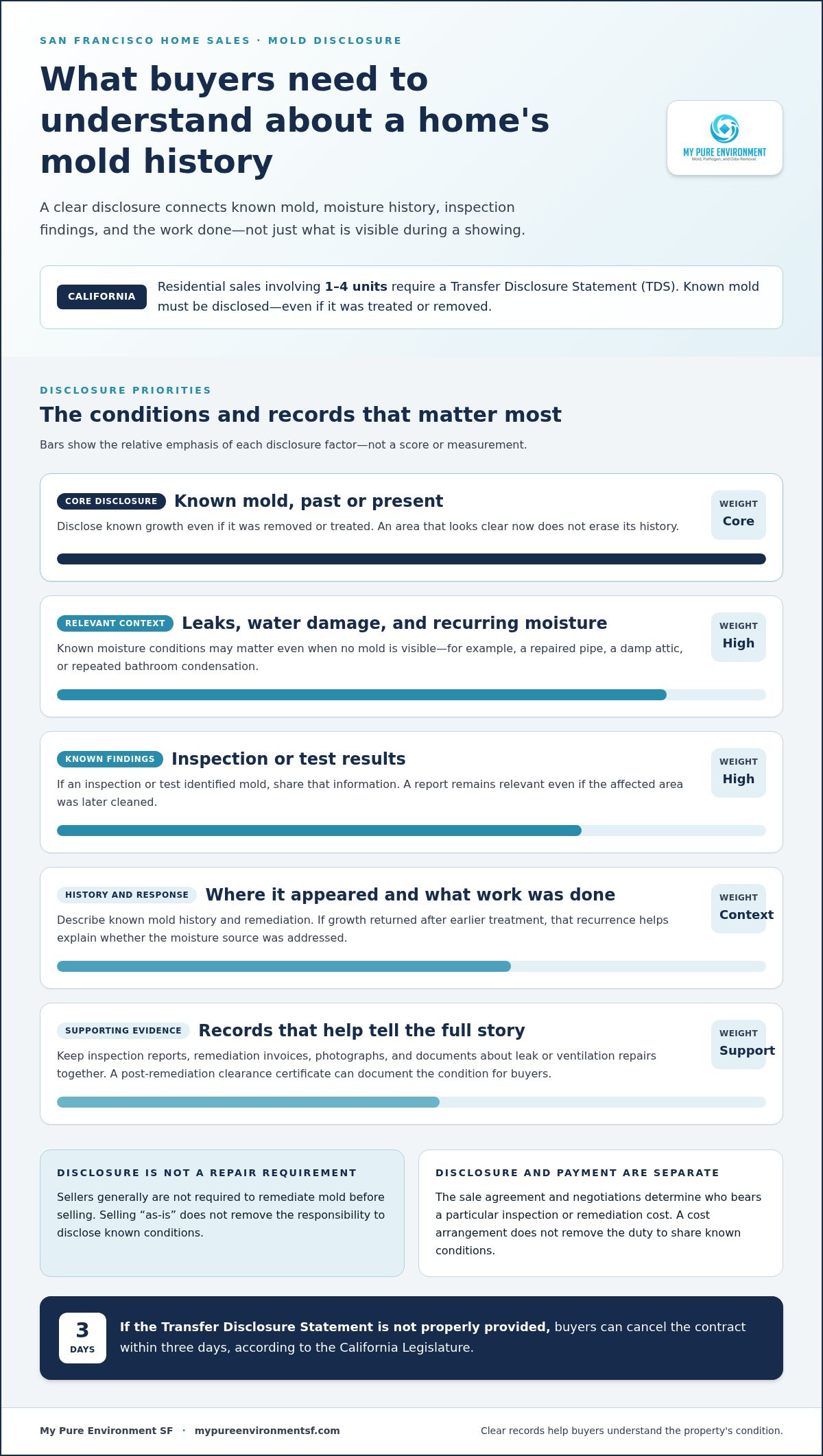
Known mold is a disclosure issue, even if it was treated before the sale. In San Francisco mold disclosure in real estate sales, California sellers of residential properties with 1-4 units must complete a Transfer Disclosure Statement and disclose known mold; selling “as-is” doesn’t remove that responsibility. Sellers generally aren’t required to remediate mold before selling, but past problems, moisture conditions, and available inspection or remediation records can matter.
It’s understandable to wonder whether a repaired leak or removed mold still needs to be disclosed. In a San Francisco home sale, buyers need a clear picture of known conditions, not just what is visible during a showing. Incomplete disclosure can create problems after closing.
This article explains what sellers may need to share about mold, water intrusion, humidity, remediation, and inspection findings, and what may follow if relevant information is left out. It also clarifies how California’s disclosure paperwork fits into the sale. If a Transfer Disclosure Statement isn’t properly provided, the California Legislature says buyers can cancel the contract within three days.
Key Takeaways
- California sellers of residential properties with 1-4 units must complete a Transfer Disclosure Statement and disclose known mold, including problems that were treated or removed.
- Past leaks, water damage, and other known moisture conditions may be relevant even when mold isn’t currently visible.
- Keep remediation records, receipts, and inspection findings together so buyers can understand the property’s history.
- A standard home inspection may miss hidden mold; specialized mold testing and inspection can provide more information about suspected conditions.
- Nondisclosure may lead to legal claims or requests for compensation. My Pure Environment SF provides mold testing and inspection, remediation, and indoor air quality improvement.
Do You Have to Disclose Mold When Selling a House?
Yes. California home sellers must disclose known mold, including past mold that was treated or removed, and sellers of residential properties with 1-4 units must complete a Transfer Disclosure Statement. San Francisco mold disclosure in real estate sales also involves relevant moisture conditions and available inspection findings.
California sellers generally aren’t required to remediate mold before selling, but selling a home “as-is” doesn’t remove the obligation to disclose known conditions.
California Seller Disclosure Forms
A Transfer Disclosure Statement is a California form used to disclose known conditions affecting covered residential property. California Civil Code §1102.6 is identified with this requirement, which applies to residential sales with 1-4 units.
Sellers should answer the disclosure form accurately and include known mold history, whether growth is present now or was removed in the past. If the statement isn’t properly provided, buyers can cancel the contract within three days, according to the California Legislature.
Seller and Agent Disclosure Duties
Disclosure means sharing known property conditions that could matter to a buyer, not limiting answers to visible defects. California sellers should disclose known mold and relevant history, including prior treatment, rather than assume removal ends the obligation.
Real estate agents may help communicate property information and prepare transaction documents, but sellers should provide accurate details about what they know. For example, a seller aware of recurring growth after a leak shouldn’t describe the issue as resolved without disclosing that history.
Disclosure Rules by Property Type
Property type affects which records and forms may accompany a sale. A single-family home sale is covered by the California Transfer Disclosure Statement rules for residential properties with 1-4 units; a condo sale may also involve association records.
For San Francisco rentals, tenant-related mold rules are a separate issue from disclosures in a home sale. Condo buyers may review 12-24 months of board and member meeting minutes or summaries, while sellers of either property type still need to disclose known mold in a covered sale.
California sellers aren’t required to remove mold before listing, but known mold must be disclosed. California Health & Safety Code § 26147 is cited in connection with mold disclosures when mold poses a health threat. The form should reflect known facts, not assumptions about whether a condition is serious enough to mention.
Past remediation doesn’t erase known mold history. A seller who had growth removed should disclose the prior issue and relevant details about the work. The same applies when an inspection confirmed mold, even if the affected area no longer appears to have growth.
Pennsylvania provides a useful contrast: sellers must disclose known material defects, including mold affecting a property’s habitability, structure, health, or value. For a California sale, focus on the state disclosure form and the property information known to the seller. Clear, complete records help buyers understand the home’s condition.
Disclosure of moisture conditions and past remediation
Known mold isn’t the only relevant condition in a San Francisco home sale. Sellers should disclose known leaks, water damage, and recurring moisture that could support mold growth, even when no growth is visible now. A repaired pipe, damp attic, or repeated bathroom condensation can help explain the property’s moisture history.
Past mold matters, too. Removing visible growth doesn’t erase the fact that it occurred. Disclose known mold, describe where it appeared, and explain what remediation was performed. If it returned after earlier treatment, that recurrence is important context for a buyer assessing whether the underlying moisture source was addressed.
Disclosure is about sharing known property conditions, not diagnosing every stain or damp area. California sellers generally aren’t required to arrange mold testing before listing. But if an inspection or test identified mold, or the seller observed it, that information should be disclosed. For example, a report that found growth in an attic remains relevant even after the area was cleaned.
Keep the paperwork together. Useful records include inspection reports, remediation invoices, photographs, and documents describing leak or ventilation repairs. These materials help distinguish visible symptoms from the moisture source. Buyers can then see what was found, what work was done, and whether the records describe a recurring condition.
Remediation should address the moisture source, such as a leak or ventilation problem, as well as affected mold. Otherwise, growth may return. A post-remediation clearance certificate can document the condition for buyers. The California Department of Public Health states that indoor dampness or fungal growth should be eliminated.
The disclosure rules don’t assign mold inspection or remediation costs to one party in every sale. The sale agreement and negotiations determine whether the seller or buyer bears a particular cost. Disclosure and payment are separate issues: a seller’s cost arrangement doesn’t remove the duty to share known conditions.
If a buyer discovers serious undisclosed mold after closing, possible outcomes include a claim for nondisclosure, fraud, or breach of contract. Buyers may seek costs related to remediation, medical expenses, or additional repairs; in extreme cases, a buyer may be able to rescind the sale. Clear disclosure and organized records help prevent moisture history from becoming a later dispute.
Where mold is present or suspected, mold testing and remediation can help clarify conditions and address affected areas. Document the findings and completed work alongside the property’s disclosure materials.
Inspection reports and specialty inspections
Sellers generally aren’t required to arrange mold testing before listing, but known mold should be disclosed. Buyers may commission a specialty inspection because a standard home inspection can miss hidden growth.
Mold Inspection Reports and Testing
A mold inspection report documents observations, testing results, and areas of concern in a property. It can help buyers understand whether suspected growth is visible, detected through testing, or associated with moisture.
Read reports alongside repair records, and note the locations inspected. An attic report and a bathroom report, for example, describe different parts of the home. Testing reflects the sampled conditions and areas, so a report isn’t a complete history of every room. Sellers with existing reports should keep them with related remediation documents.
Buyer Inspection and Due Diligence
Buyer due diligence includes reviewing the home’s condition and investigating signs that may need specialist attention. A standard home inspection can miss hidden mold, particularly when growth is concealed behind finishes or in less accessible areas.
A musty odor near a bathroom, recurring ceiling discoloration, or a history of roof leaks can prompt further evaluation. Buyers can compare the inspection report with seller disclosures and repair records to identify gaps or recurring concerns. A specialty mold inspection can add information when visible signs, moisture history, or prior findings raise questions about possible exposure.
Pre-Listing Mold Inspections
A pre-listing mold inspection is an optional assessment conducted before a seller markets a property. California sellers generally don’t have to test for mold before listing, but an inspection may help clarify suspected conditions.
For example, a seller who notices repeated dampness in an attic can use an inspection to document the area and findings. If testing identifies mold, the seller can include the report in the property records and disclose the known results. Testing doesn’t replace disclosure of known problems. Read the report within its scope, including the locations inspected and any sampling performed.
Seller Testing and Report Requirements
San Francisco sellers generally aren’t required to commission a mold test or provide a report they don’t have. The key distinction is between testing to investigate a new concern and disclosing known conditions or existing inspection findings.
If a seller has a report identifying mold, it’s relevant information for buyers. If the seller knows about visible growth but never ordered testing, the lack of a test doesn’t make that known condition disappear. Keep reports, receipts, and repair records together so buyers can understand what was inspected, what was found, and what work followed.
California mold disclosures in residential property sales
California’s residential sale disclosures operate alongside habitability rules and mold-related laws. Knowing which rules address a sale, visible mold, or a rental helps sellers share relevant facts without confusing separate obligations.
California sellers must disclose known mold in covered residential sales. California Civil Code § 1102.6 is identified with the Transfer Disclosure Statement requirement for covered sales, while California Health & Safety Code § 26147 is cited in connection with mold disclosures when mold poses a health threat. These rules make mold history relevant to the transaction, including when growth has been removed.
California has not adopted enforceable mold exposure limits. That does not make visible growth irrelevant: California SB 655 classified visible mold as a substandard housing condition under the habitability code, effective 2016. A seller should distinguish the disclosure question from the habitability question. The first concerns information known about the property; the second concerns housing conditions.
The state’s regulatory history also explains why public guidance and legal thresholds may differ. California’s 2001 Toxic Mold Protection Act, SB 732, tasked the California Department of Public Health with developing mold exposure guidelines. The Department maintains that indoor dampness or fungal growth should be eliminated. For a seller, this supports taking moisture and visible growth seriously, but it does not create a numerical exposure limit for a sale.
What must San Francisco landlords disclose to tenants? San Francisco’s 2015 laws established a legal threshold for tenants making mold-related claims or withholding rent. That rental issue differs from the seller’s Transfer Disclosure Statement in a residential sale.
Condo transactions can involve another layer of paperwork. California Civil Code §4525 outlines delivery requirements for common-interest development association documents. Those documents are separate from an individual seller’s disclosures, but records about building conditions can help buyers understand whether a concern affects one unit or shared areas.
For sellers, the practical distinction is between a known condition and a general regulatory standard. Record visible mold, prior findings, and relevant moisture history accurately. If a bathroom has recurring growth, for example, disclose that known issue rather than relying on the absence of a statewide exposure limit. No numerical threshold doesn’t mean the disclosure obligation disappears.
When a serious dispute involves visible mold, a disclosure form, or a rental condition, an attorney can assess how California rules apply to the facts. Keep property records and transaction documents together so the issue can be reviewed in context. Clear records help separate known property facts from broader standards.
Consequences and limitation periods for nondisclosure
Failing to disclose known mold can expose a California seller to claims after closing. Buyers may sue over nondisclosure, fraud, or breach of contract, and may seek compensation for resulting losses.
Potential Consequences of Nondisclosure
A nondisclosure dispute can arise when buyers discover mold after the sale and allege the seller withheld relevant information. Buyers may seek compensation for mold remediation, medical expenses, and additional repairs. Depending on the evidence and losses presented, a claim may also involve structural damage or respiratory concerns.
For example, if a buyer alleges that a known leak caused recurring mold, records and disclosures may become central to the dispute. A civil claim generally requires proof by a preponderance of the evidence, meaning the evidence must show the claim is more likely true than not. Emails, inspection reports, repair invoices, and disclosure forms can help establish what the seller knew.
Some disputes resolve through negotiated compensation; others proceed to court. A settlement is an example, not a standard penalty or a prediction of what another case will produce. The facts, claimed damages, and evidence shape the outcome.
Penalties for Failing to Disclose
There is no single fixed mold-disclosure penalty for every California sale. Potential consequences include a lawsuit, compensation for losses, or, in extreme cases, rescission of the sale. If the Transfer Disclosure Statement isn’t properly provided, buyers can cancel the contract within three days, according to the California Legislature.
Time limits depend on the type of claim. Buyers have up to two years after discovering a nondisclosure issue to file a lawsuit, and California fraud claims related to property disclosure have a three-year limitation period. These periods apply to different legal claims, so they aren’t one universal deadline.
Fraud limitation periods for mold-related claims typically range from two to five years across states, while California’s stated period for property-disclosure fraud is three years. A buyer’s discovery date and the claim’s legal basis can affect how a deadline applies. Organizing transaction documents promptly after a concern arises can help clarify the timeline.
A valuation dispute may also shape claimed losses. It illustrates a possible damages argument, not an automatic award. For a property with suspected mold, document mold conditions with relevant inspection and remediation records.
My Pure Environment SF: Mold Remediation
My Pure Environment SF helps property owners address mold concerns through Mold Testing & Inspection, Mold Remediation, and Indoor Air Quality Improvement. If an inspection identifies growth, or you’re concerned about a persistent moisture-related mold problem, these services can help clarify conditions and address affected areas. Bathroom Mold Removal is available for bathroom-specific mold concerns.
Testing and inspection can provide useful information about suspected mold, while remediation focuses on addressing mold in the property. Improving indoor air quality can also support a broader response to indoor environmental concerns. Keep relevant findings and work records with your property documents as you prepare for a sale.
For help with mold concerns at your San Francisco property, contact My Pure Environment SF or visit mypureenvironmentsf.com.
Prepare for a Clearer Sale
A home sale is also a transition for the people who will live there next. Addressing environmental concerns carefully can help keep the property’s condition aligned with its documented history. For San Francisco sellers, mold disclosure in real estate is one part of a thoughtful handoff, alongside a clear understanding of conditions that need attention.
If you’re unsure what a mold finding means for the home, a focused assessment can clarify the next practical step. My Pure Environment SF offers Mold Testing & Inspection, Mold Remediation, and Indoor Air Quality Improvement. These services address different needs: understanding suspected conditions, treating mold, and improving indoor air quality.
Taking action on a concern can help you move forward with greater clarity as you prepare the property and its records. For support with mold testing, remediation, or indoor air quality, contact My Pure Environment SF. A well-informed next step can make the path to your sale feel more manageable.
Frequently Asked Questions
Should You Test for Mold Before Listing?
Usually, no. California sellers generally aren’t required to test for mold before listing. Testing may still help if you notice a musty odor, recurring dampness, or staining that returns after cleaning. A professional inspection can assess suspected conditions and document findings. If you already have test results, keep them with the property records and disclose known mold information. The absence of a new test doesn’t establish that a known concern never existed.
What Counts as "Known" Mold?
Known mold can include growth you observed or mold identified in an inspection or testing report. For example, recurring spots on a bathroom ceiling, an attic finding in a report, or mold removed during earlier work can all be relevant. Prior repair records, photographs, and inspection documents may help establish what information you have. Disclose the condition and its history accurately rather than assuming that cleaning or covering a spot makes it irrelevant.
What If You Did Not Know the Home Had Mold?
If you weren’t aware of mold, answer disclosure questions based on the information you actually have. Don’t claim a test or inspection ruled out mold if none occurred. If a buyer’s inspection identifies suspected growth before closing, promptly share the new finding through the transaction process and preserve the report. Distinguish newly discovered information from earlier knowledge, and keep dated communications and records with the sale documents.
Will A House Pass An Inspection With Mold?
A home inspection doesn’t issue a universal mold pass or fail. An inspector may report visible growth, moisture signs, or conditions needing further evaluation, while hidden mold can escape a standard inspection. For example, a clean-looking wall doesn’t resolve concerns about a recurring leak behind it. Buyers should read the report’s limitations carefully and consider a specialty mold inspection if the findings or property history point to concealed growth.
Which San Francisco Forms Address Mold or Water Intrusion in Real Estate Transactions?
For covered California home sales, the Transfer Disclosure Statement is the key seller form for known property conditions, including mold or moisture issues. Condo transactions may also involve association documents under California Civil Code §4525. The Natural Hazard Disclosure under Civil Code §1103 is a separate disclosure; it shouldn’t be treated as a mold inspection or a substitute for reporting known property conditions in the seller disclosure materials.
What Steps Should Buyers Take If They Suspect Mold Before Closing on a San Francisco Property?
Before closing, compare the seller’s disclosures with inspection reports, repair records, and visible moisture signs. If a musty odor or recurring stain raises concern, arrange a specialty mold inspection and keep the findings in writing. Ask for available records about the affected area and earlier work. Then raise unresolved issues through the transaction process while applicable contract deadlines remain open, so the parties can address the findings before closing.