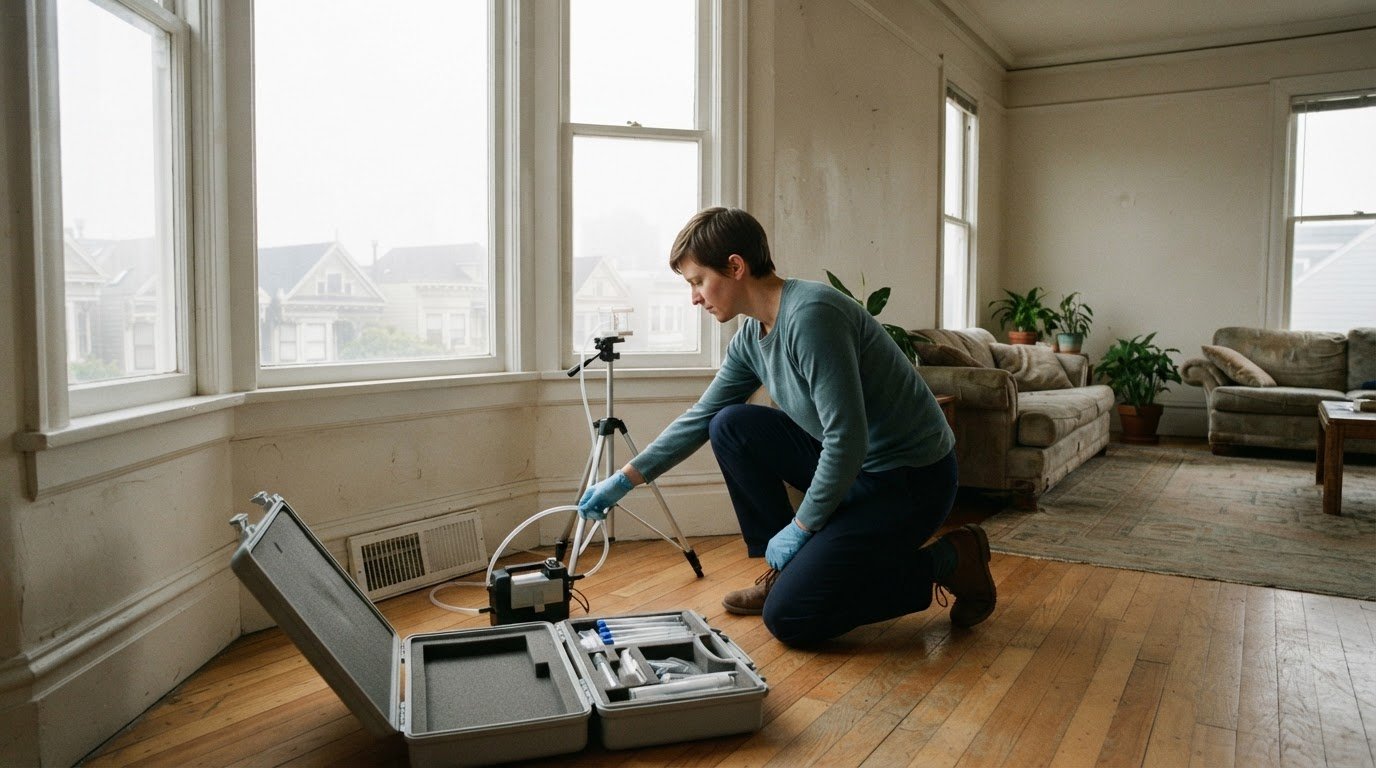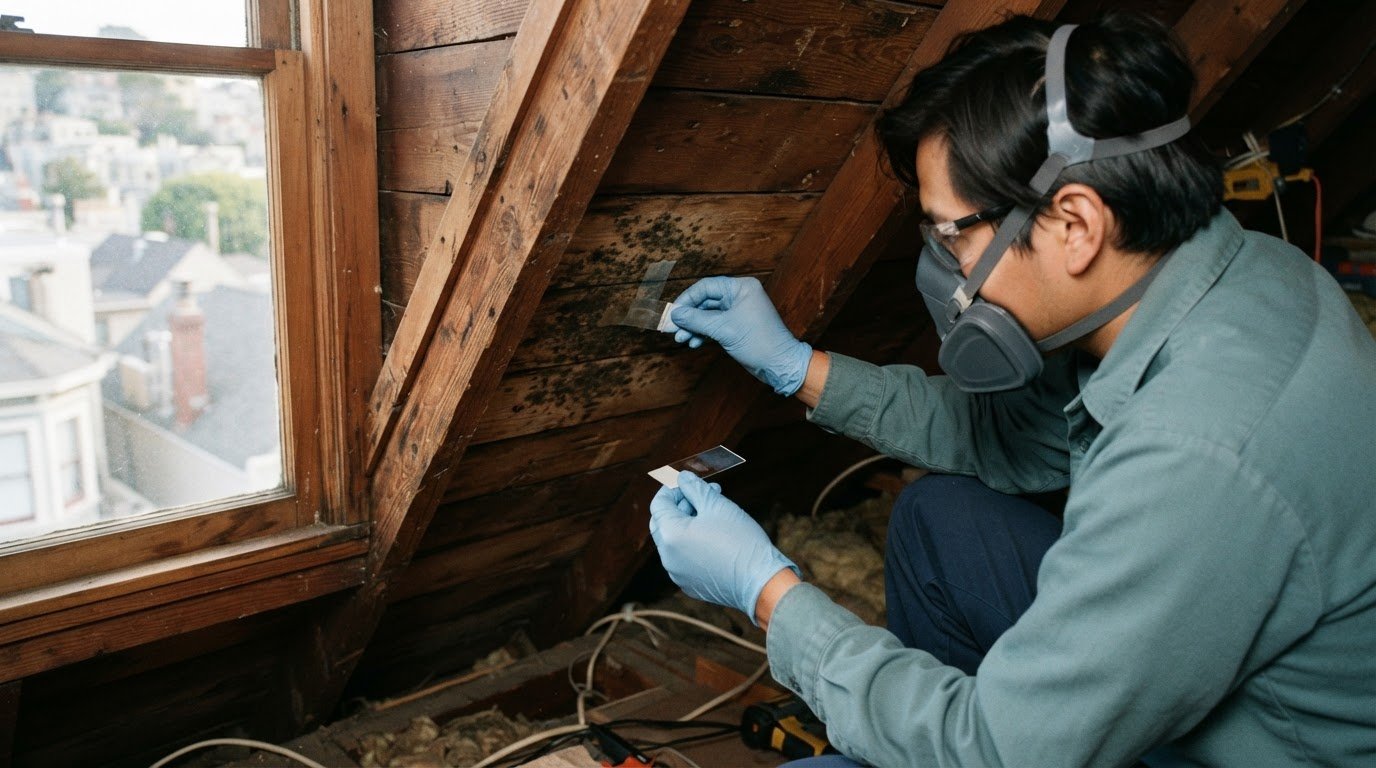
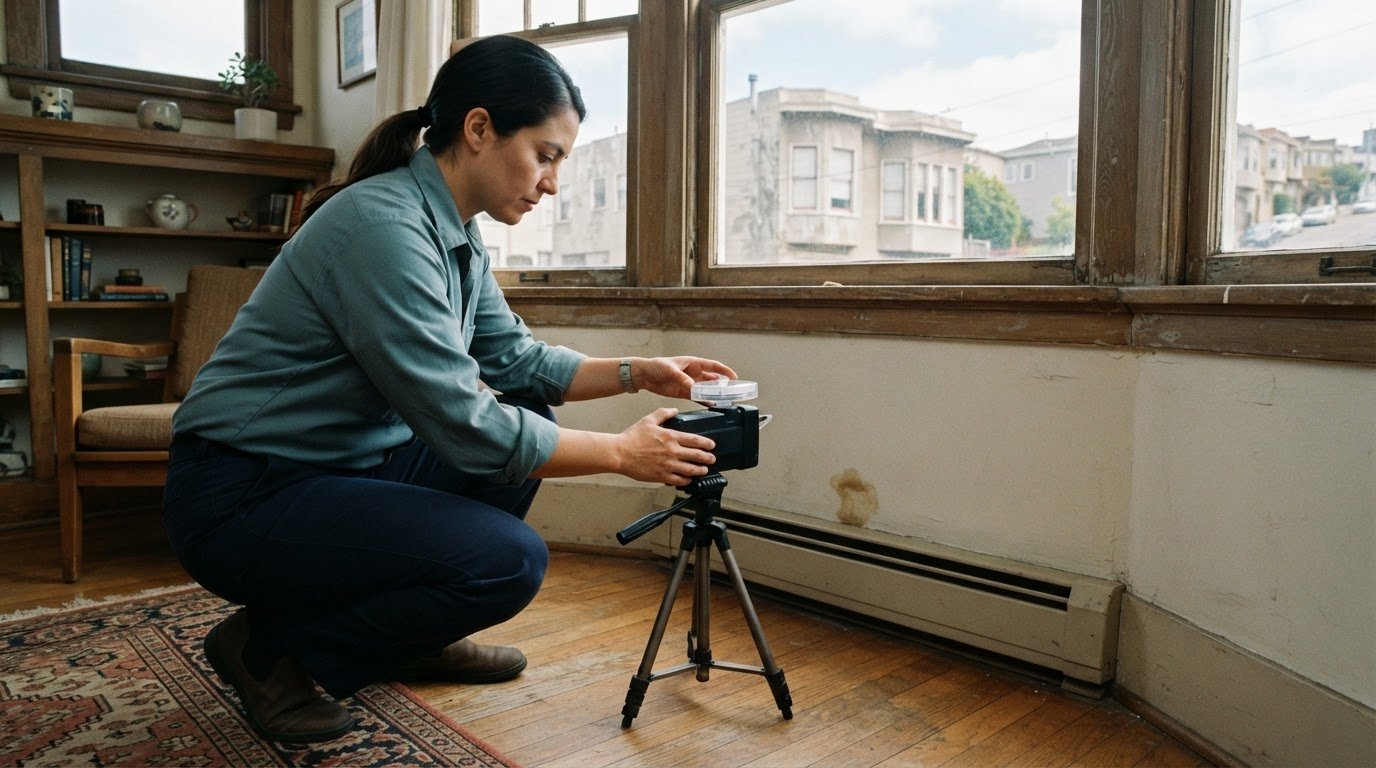
Water damage can create the conditions for mold to grow, and colonies can establish within 24-48 hours once those conditions are present. Residential mold testing in San Francisco can help clarify whether indoor samples show a pattern that differs from outdoor air, and what independent laboratory analysis identifies in the samples.
It’s understandable to worry when a leak, flood, or persistent dampness affects your home. Moisture is a key part of mold growth, so finding and addressing the source matters alongside testing. The San Francisco Department of Public Health recommends keeping indoor humidity at 50% or less to help prevent mold growth.
This article explains how water damage can lead to mold, what air and surface samples can reveal, and how indoor results are compared with an outdoor control. You’ll also learn what laboratory analysis can and can’t tell you, and how residential mold testing in San Francisco can inform next steps for your home.
Key Takeaways
- Learn how to assess whether water damage may have created conditions for mold and which areas may need closer inspection.
- See how indoor air samples are compared with outdoor air to help interpret results in context.
- Understand what air and surface samples, together with independent laboratory analysis, can reveal about a suspected mold issue.
- According to the U.S. Environmental Protection Agency, homeowners can clean mold areas smaller than 10 square feet themselves if they meet the stated conditions.
- Find out how mold testing and inspection can help guide decisions about remediation and indoor air quality.
Residential and commercial mold inspection in the San Francisco Bay Area
A San Francisco Bay Area inspection can assess visible growth, signs of moisture, and areas where mold may be concealed. Residential and commercial properties need an approach suited to their materials, rooms, and water history.
Conflict-Free Testing Without Remediation Sales
An inspection-only service focuses on observations, sampling when appropriate, and clear reporting rather than selling remediation. This separation can help homeowners evaluate findings without feeling pressured to approve additional work. Look for a written scope that identifies what the inspection covers, how samples are handled, and whether the report distinguishes observations from recommendations. A friendly, direct explanation should make those limits easy to understand.
For small areas, the U.S. Environmental Protection Agency recommends that homeowners can clean mold areas smaller than 10 square feet themselves if they meet the stated conditions. Larger or concealed growth, recurring moisture, or affected building materials may call for closer assessment before deciding on next steps.
Preparing for a Mold Inspection
Before the appointment, note where water entered, when the area became damp, and whether the moisture returned. Share those details during the inspection; they can help focus attention on nearby walls, ceilings, flooring, or plumbing. Keep access clear to the affected area and any visible staining, but avoid disturbing suspected growth. Photos taken before cleanup can also preserve a useful record of the condition.
Homeowners often ask whether California has rules for residential mold inspection and testing. Requirements depend on the work being performed, so distinguish a visual inspection, sample collection, and remediation rather than treating them as interchangeable. A report should describe its methods and findings clearly; a lab result alone does not establish a remediation plan or diagnose a health condition.
Choosing an Independent Certified Company
When evaluating an independent certified company, look for the specific credential, issuing organization, and scope of work it covers. Confirm that the proposed inspection explains how the inspector will document moisture, visible conditions, and any samples. Ask how results will be presented and whether the report separates measured findings from interpretation. Clear records make it easier to understand what was assessed without assuming every service includes the same steps.
Testing Beyond a Visual Inspection
Testing can add information when a musty odor persists, water damage remains hidden, or visible signs do not explain recurring concerns. A visual inspection identifies observable conditions; sampling may help characterize material or air in selected locations. Residential mold testing in San Francisco is most useful when the sampling question is clear and results are interpreted alongside the home’s moisture history.
Household mold exposure can raise health concerns, but a mold inspection or laboratory report cannot diagnose symptoms. Homeowners with health concerns should discuss them with a qualified healthcare professional. Insurance coverage for mold testing depends on the policy and circumstances surrounding the moisture; review the relevant policy language. If testing finds elevated results, use the report to locate the affected area, address the moisture source, and determine whether remediation and follow-up assessment are appropriate.
Comparing indoor samples with outdoor air
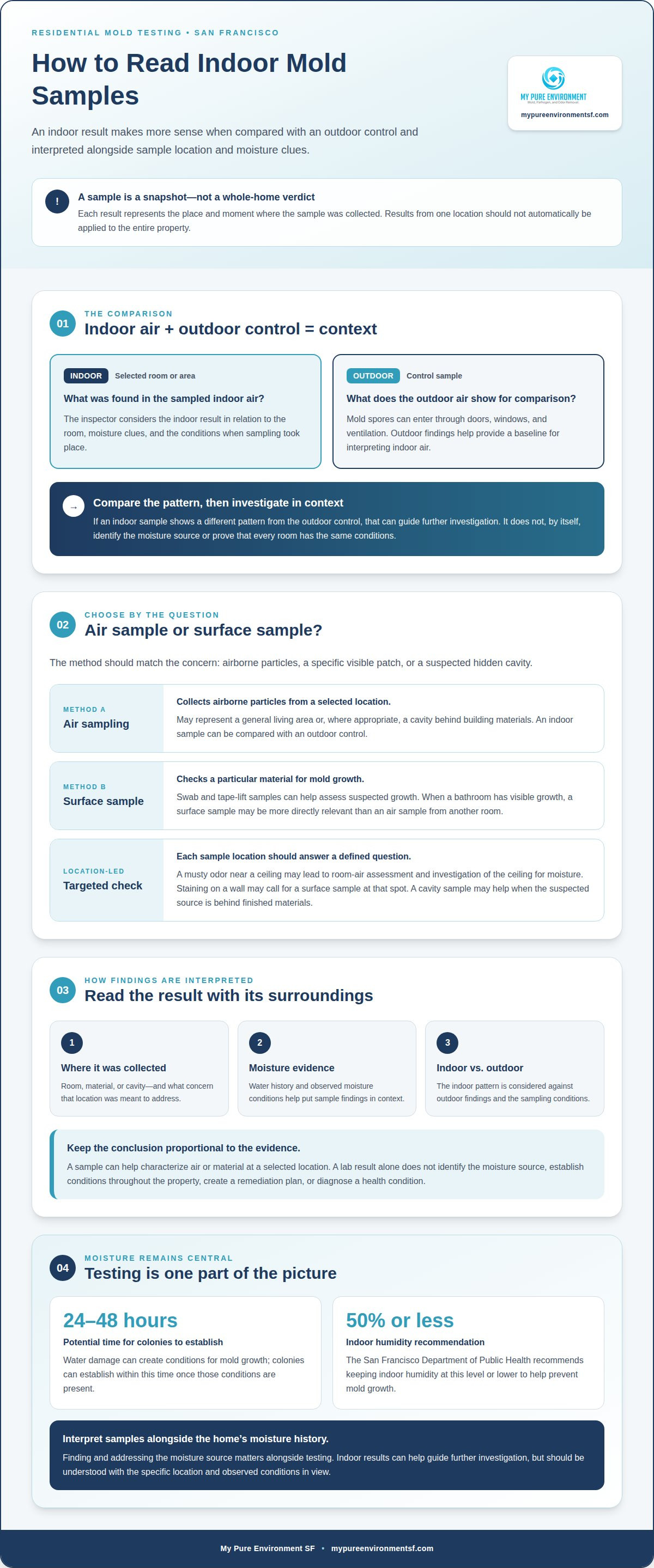
An outdoor control gives indoor air results context. Mold spores can enter through doors, windows, and ventilation, so detecting spores indoors alone doesn’t identify a building problem. An inspector compares the indoor sample with outdoor findings, then considers the rooms, moisture clues, and sampling conditions. This comparison helps show whether indoor results differ from the outdoor baseline.
For example, an indoor sample from a damp bedroom may be compared with an outdoor sample collected during the same inspection. If the indoor sample shows a different pattern, the result can guide further investigation. It doesn’t, by itself, identify the moisture source or prove that every room has the same conditions. A sample represents the place and moment where it was collected.
Air quality testing and surface sampling
Air sampling collects airborne particles from a selected location. It can represent a general living area or, where appropriate, a cavity behind building materials. Surface sampling answers a different question: whether a particular material has mold growth. Swab and tape-lift samples can help assess a suspected mold problem. The right method depends on whether the concern involves air, a visible patch, or a hidden cavity.
Sampling should follow the property’s evidence, not a fixed room count. A thorough plan might include an indoor living area, a room near past water damage, and an outdoor control. If a bathroom has visible growth, a surface sample may be more directly relevant than an air sample from another room. Inspectors interpret each result alongside its location and observed moisture conditions.
Property-specific sampling strategies
Each sample location should answer a defined question. For a musty odor near a ceiling, an inspector may assess the room air and investigate the ceiling area for moisture. For staining on a wall, a surface sample can characterize material at that spot. Sampling inside a building cavity may be useful when the suspected source is behind finished materials. Results from one location shouldn’t automatically be applied to the entire property.
Additional samples can help examine separate rooms or materials, but they can also affect the total testing charge. The price depends on the case and is given after a quote request; the number and type of samples, locations, and laboratory analysis shape the scope. A clear sampling plan explains why each sample is included before collection begins.
Independent lab analysis can identify what was present in the submitted sample, while the indoor-outdoor comparison helps interpret its setting. Neither result alone maps every affected area or specifies mold remediation. If you need a property-specific sampling plan, mold testing and inspection can help connect sample choices with the moisture concern.
Mold testing and independent laboratory analysis
Laboratory analysis adds information about samples collected during a mold assessment. Results should be read alongside the sample location, collection method, and conditions observed indoors.
Independent Laboratory Analysis
An independent laboratory analyzes submitted samples, while the inspection records where each sample came from and why it was collected. For example, a tape-lift from a stained surface addresses that material, while an air sample represents air collected in a selected room. The report helps assess a suspected mold problem, but a result from one location doesn’t describe every room.
Ask how the report connects each finding to its sample location and type. A trained inspector can explain what the results mean for the building conditions observed, including whether moisture may need further attention. Laboratory findings alone don’t identify the moisture source or determine the full scope of remediation. Those decisions also depend on the inspection and property evidence.
Terms such as “certified mold” should be tied to a specific credential and its issuing organization. A credential describes a professional’s training or qualification; it doesn’t replace clear sampling records or explain what a laboratory found. Review whether the documentation identifies the method used, the location sampled, and any limits on interpreting that result. These details make it easier to assess what the test actually covers.
Laboratory Report Turnaround
Turnaround depends on sample processing and report preparation. One customer testimonial reports receiving an inspection report and lab results within 2 business days. That example describes one reported experience, not a timeline that applies to every sample or project. Ask for the expected reporting sequence and whether the inspection findings and laboratory results arrive together.
A useful report should connect the laboratory result to practical decisions. For instance, a sample from a water-stained wall should be interpreted alongside the wall’s condition and moisture history, not treated as a complete picture of the home. If results raise questions, the inspector should explain which conclusions the sample supports and which areas may require additional assessment.
After receiving results, keep the report with photos, leak records, and notes about affected rooms. This creates a clear record for discussing next steps, including whether the moisture source needs attention or mold remediation should be considered. If treatment has taken place, a clearance test after treatment and before rebuilding can help assess the affected area’s condition. Independent analysis is most useful when its findings stay connected to the property and the decisions ahead.
Can mold grow after water damage in my SF home?
Yes. Water damage can supply the moisture mold needs, while building materials such as drywall provide a potential food source. Mold colonies can establish within 24-48 hours after conditions allow them to grow. A prompt response matters, but drying the visible surface alone may not address moisture trapped behind a wall or beneath flooring.
After a leak, inspect the affected area and nearby materials for staining, dampness, peeling paint, or a persistent musty odor. A thorough inspection considers where water traveled, which materials became wet, and whether moisture remains. For example, a ceiling stain below a bathroom may point to a leak pathway that extends beyond the visible mark. Testing can help assess specific areas, but findings need context from the water-damage investigation.
The San Francisco Department of Public Health recommends keeping indoor humidity at 50% or less to help prevent mold growth. That target supports prevention, but it doesn’t establish whether a past leak has left moisture inside building materials. Check humidity alongside visible conditions and the history of the affected room. Recurring condensation near a window, for example, calls for a different investigation than a one-time plumbing leak.
Drinking water testing is separate from indoor mold testing. Air or surface samples assess mold in a room or on a material; they don’t determine whether tap water is safe to drink. If the concern involves water quality at the tap, that requires testing designed for drinking water. If a pipe leak has wet a cabinet or wall, the mold investigation focuses instead on the damp building materials and moisture source.
Keep a record of the water event, affected rooms, visible changes, and any drying or repair already completed. These details help an inspector target the investigation instead of treating the entire home as one uniform space. After a test identifies mold, use the report to locate affected materials and consider whether remediation is appropriate. Addressing the moisture source is also essential, or the same area may remain vulnerable to renewed growth.
Testing can help clarify what is present, but it doesn’t replace prompt attention to active water damage. If moisture is still entering or materials remain wet, prioritize stopping the source and drying the affected area. Then use inspection findings and sample results together to determine the next steps for the home.
Which San Francisco mold testing companies are independent and certified?
Independence and certification describe different aspects of a mold inspection. Independence concerns whether the assessment can stand on its findings without depending on remediation sales. Certification refers to a professional credential issued by an organization. Neither label alone explains the inspection’s scope, sampling methods, or how results will be interpreted.
To assess an inspection, look for a clear description of who performs it, who analyzes samples, and who recommends next steps. For example, a report can distinguish the inspector’s observations from laboratory findings and remediation recommendations. That separation makes it easier to understand which conclusions come from a site visit and which come from sample analysis. It also clarifies how inspection findings relate to any recommended work.
Certification should be specific, not just a broad claim in promotional language. A useful credential description identifies the issuing organization, the credential’s name, and the work it covers. The scope matters: training relevant to inspection or sampling may not describe every other activity. A credential also doesn’t replace a documented inspection process. Look for records that connect each sample to its location and method, then relate results to conditions observed indoors.
A transparent inspection scope should explain what areas will be examined, whether sampling is proposed, and what the final report will contain. Consider a home with a musty smell near a water-stained wall. The inspection should identify whether the concern is visible growth, possible moisture behind the wall, or a sample intended to answer a specific question. A sample result should be presented with its location and context, rather than as a standalone verdict on the whole property.
Before an inspection, organize the key information: where water entered, which rooms were affected, and what changes you’ve noticed. During the visit, note how the inspector documents moisture clues and explains sampling choices. Afterward, review the report for its methods, sample locations, observations, and stated limitations. Those practical details provide a clearer basis for understanding findings than a credential label by itself.
In San Francisco, the most useful assessment is one that connects the inspector’s qualifications, independent analysis, and documented findings. If water damage or a persistent odor has left questions about your home, discuss your inspection concerns and the information that would help clarify them.
My Pure Environment SF: Mold Testing & Inspection
My Pure Environment SF provides Mold Testing & Inspection for homeowners seeking to understand suspected mold after water damage, visible growth, or a persistent indoor odor. Findings can help clarify whether Mold Remediation or Indoor Air Quality Improvement may be appropriate. For mold affecting a bathroom, Bathroom Mold Removal is also available.
Testing is a practical next step when you need an assessment of indoor conditions or clearer information about a suspected mold problem. The results can help guide decisions about addressing affected areas and improving indoor air quality.
To discuss your home’s mold testing needs, contact My Pure Environment SF.
Move from uncertainty to a clear next step
After water damage, the next decision is how to turn what you’ve observed into a practical plan for your home. Residential mold testing in San Francisco can clarify indoor conditions when you need more than a visual assessment, while the results can inform decisions about the affected space.
My Pure Environment SF offers Mold Testing & Inspection, Mold Remediation, and Indoor Air Quality Improvement. These services support homeowners who need an assessment, have identified an issue, or want to address indoor air quality concerns. The right next step depends on what the inspection and available findings show.
Share the areas affected and what you’ve noticed so the conversation can focus on your home’s needs. Contact My Pure Environment SF to discuss a path forward. Clear information can make the next decision feel more manageable.
Frequently Asked Questions
Can mold grow behind drywall?
Yes, mold can grow behind drywall when moisture reaches the material and remains there. A slow plumbing leak, water entering from an adjacent room, or damp insulation can leave hidden areas affected while the wall’s surface appears intact. A musty odor, bubbling paint, or recurring discoloration can prompt closer investigation. Testing and inspection help assess concealed concerns, but a sample from one opening represents only that specific location.
How is a mold test done?
A mold test starts by identifying the concern and choosing sample locations that can help answer it. Depending on the situation, an inspector may collect an air sample, a surface sample, or both. Air sampling can assess a selected indoor area; a swab or tape lift can examine a particular material. Samples go to a laboratory for analysis, and results should be interpreted alongside inspection observations and the building’s moisture history.
What does residential mold testing in San Francisco include?
The Complete Mold Inspection includes an onsite consultation, a visual home inspection, full laboratory testing, reports on each sample, and treatment recommendations. The sampling plan depends on the property and concern, such as a damp bathroom wall or an odor near a water-stained ceiling. Review the scope to understand which areas and samples are included and how findings will be explained. Testing assesses conditions; it doesn’t repair water damage.
How much does home mold testing cost in San Francisco?
Home mold testing costs depend on the inspection scope, sample types, number of samples, and locations being assessed. A home with one specific concern may require a different plan from a property with several affected rooms. The price depends on the case and is given after a quote request. The proposed scope should explain what testing and reporting cover, so you can understand how the work relates to your concerns.
What types of mold samples are used in residential mold testing?
Common sample types include air samples and surface samples collected with a swab or tape lift. Air samples assess particles in a selected indoor area or, where appropriate, a cavity behind building materials. Surface samples examine a particular material, such as a visibly stained section of drywall. The inspector chooses samples based on the question being investigated. Results describe the submitted samples, not every room or material in the home.
How long do mold testing results take, and what does a report include?
Turnaround depends on laboratory processing and report preparation, so timing varies with the testing plan. A useful report identifies sample locations and types, records inspection observations, and presents laboratory findings with context. It may also include recommendations based on the assessed conditions. Keep the report with photos and notes about affected rooms. Together, those records can help clarify which areas were examined and support decisions about follow-up work.
Should mold testing and remediation be performed by separate companies?
They don’t have to be performed by separate companies, but inspection findings should be documented clearly and remain understandable apart from any remediation proposal. Look for a report that distinguishes observations, laboratory results, and recommended work. Independent laboratory analysis can provide sample findings separately from remediation. If one company handles both stages, transparent records still help you understand why work is recommended and what conditions the testing identified.