
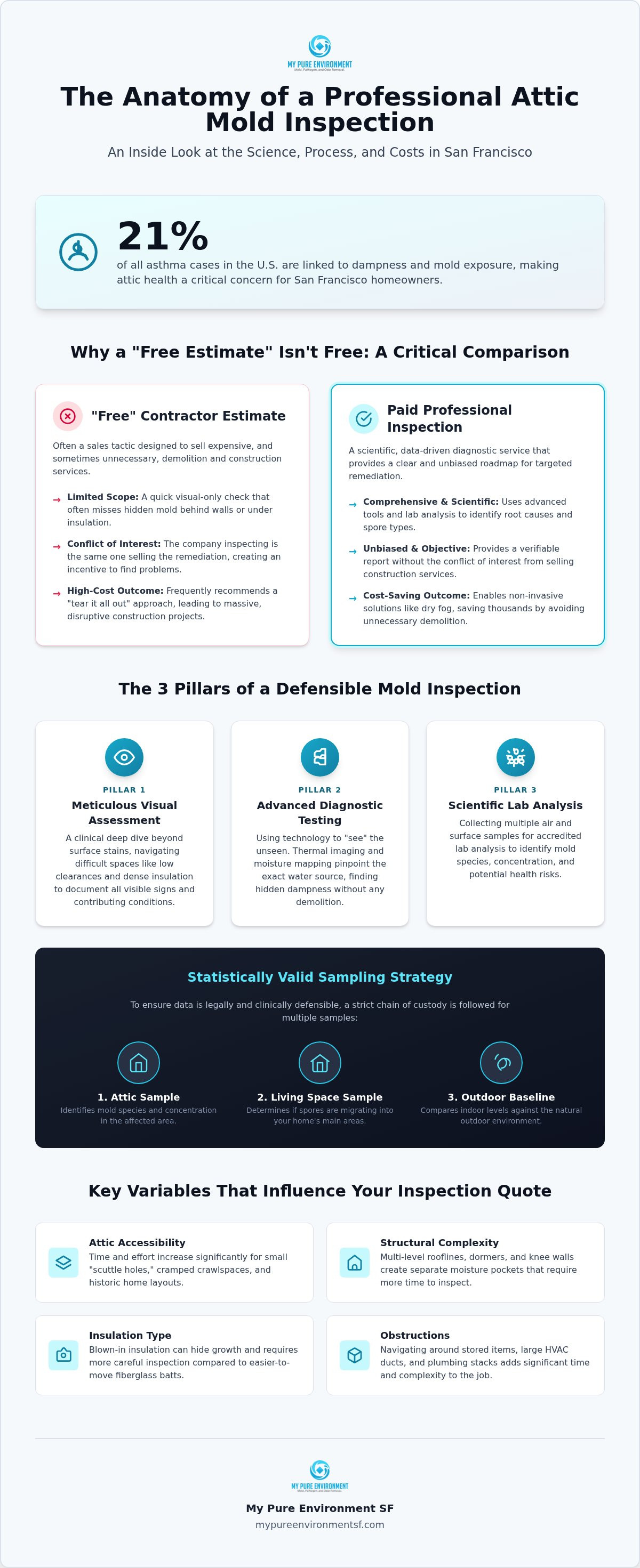
Did you know that 21 percent of asthma cases in the United States are linked to dampness and mold exposure? For San Francisco homeowners, the persistent coastal fog makes the attic a prime target for these silent invaders. It's natural to feel a sense of dread when you spot dark staining on your rafters, especially when you start worrying about the attic mold inspection cost and whether a professional will tell you to tear your roof apart. You want clarity, not a high-pressure sales pitch or a demolition crew at your door.
We understand that your primary goal is protecting your family's health and your property's value without unnecessary destruction. This guide provides a transparent look at how professional assessments are priced in the 2026 San Francisco market. You'll learn about the technical variables that influence the attic mold inspection cost, from DNA-based detection kits to thermal imaging. We also explore local health codes and the clinical testing methods that offer a path to remediation without invasive construction. By the end of this article, you'll have the data needed to make an informed, science-based decision for a healthier home environment.
Key Takeaways
- Learn why a specialized clinical assessment is necessary to distinguish between harmless surface staining and systemic fungal growth in complex attic environments.
- Discover the specific architectural and environmental variables, such as San Francisco’s high humidity and historic home layouts, that influence your total attic mold inspection cost.
- Understand the importance of choosing a diagnostic specialist who avoids the conflict of interest inherent in companies that provide "free" inspections just to sell construction services.
- Explore how modern, non-invasive remediation methods like dry fog can effectively treat mold in hard-to-reach spaces without requiring the removal of insulation.
- Gain a clear understanding of the regulatory requirements and health-focused strategies needed to maintain a safe, compliant, and breathable living space in the Bay Area.
Understanding Attic Mold Inspection Cost Factors in 2026
A standard home inspection often skims the surface of an attic's condition, but a professional mold assessment is a clinical deep dive. While a general inspector might note "discoloration" on a rafter, a specialist identifies the specific biological activity and its root cause. This distinction is the primary driver of the attic mold inspection cost. You aren't just paying for someone to look in your crawlspace; you're paying for a diagnostic roadmap that determines whether you need a simple treatment or a more intensive intervention.
Attics require specialized expertise because they're notoriously difficult to navigate. Between low clearances and thick layers of blown-in insulation, mold can easily hide from the untrained eye. A meticulous inspector must account for these accessibility challenges, often using specialized protective gear and high-output lighting to ensure every corner is documented. By establishing a clear baseline through a professional inspection, you often save thousands of dollars in labor by avoiding the "tear it all out" approach that many general contractors favor.
Visual Assessment vs. Diagnostic Testing
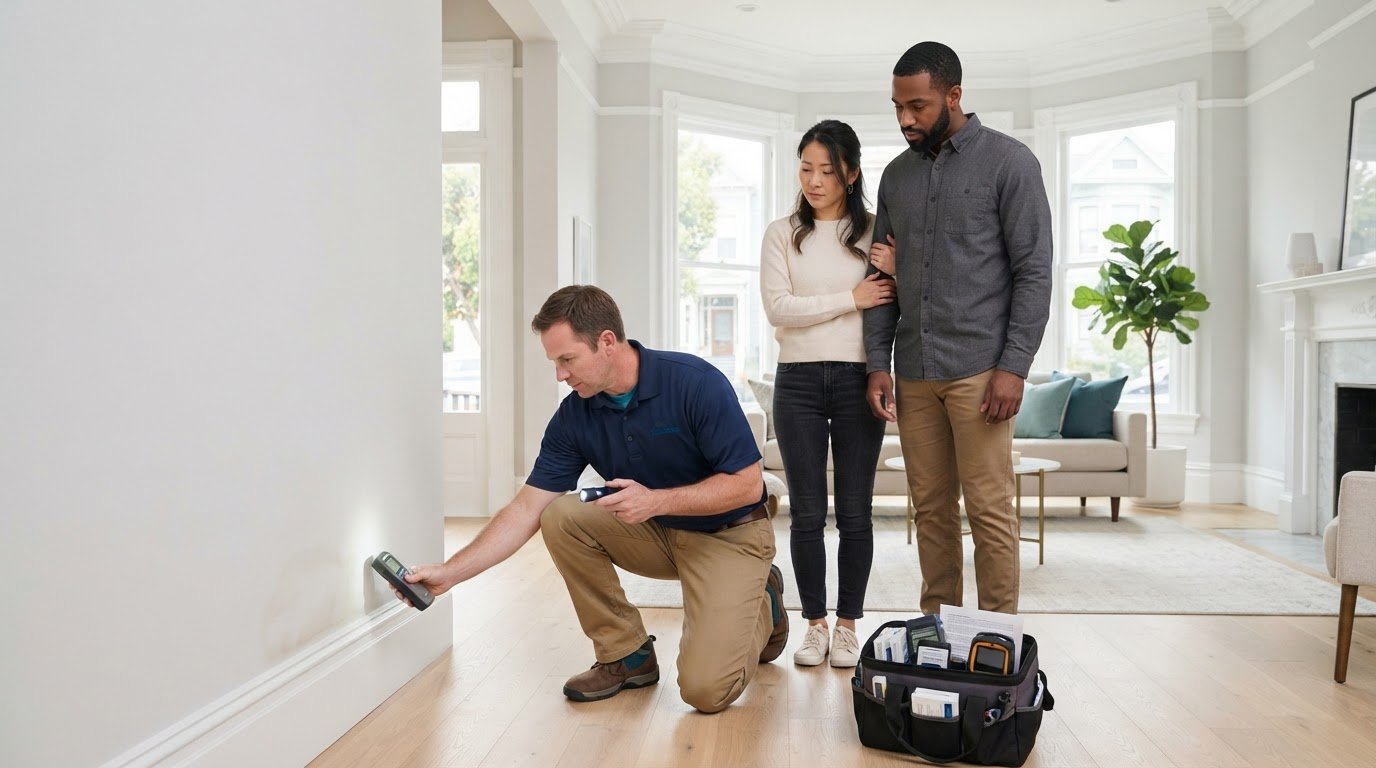
A visual assessment is exactly what it sounds like: an inspector looking for visible growth. While this is a necessary first step, it's rarely enough to ensure your home's safety. To truly understand What is Mold? and how it's behaving in your specific environment, diagnostic testing is essential. This process involves using moisture meters to find damp spots in wood and thermal imaging cameras to detect temperature anomalies behind walls. A visual-only check might be cheaper upfront, but it carries a high long-term risk of missing hidden spores that continue to impact your indoor air quality.
The Role of Laboratory Analysis in Pricing
The science of a mold inspection relies heavily on laboratory results. When an inspector collects air or surface samples, those specimens must be sent to an accredited lab for analysis. These lab fees are a significant component of the attic mold inspection cost. For a result to be statistically valid, the inspector must collect multiple samples, including:
- The Attic Sample: To identify the concentration and species of mold in the affected area.
- The Living Space Sample: To determine if spores are migrating into your bedrooms or kitchen.
- The Outdoor Baseline: To compare indoor levels against the natural environment in San Francisco.
Each sample follows a strict chain of custody to ensure the data is legally and clinically defensible. This rigorous process provides the transparency you need to move forward with remediation, ensuring that every dollar spent on treatment is backed by verifiable data.
Variables That Influence Your Attic Inspection Quote
Every home in San Francisco presents a different set of challenges for a specialist. While some attics are open and easily accessible, others are cramped crawlspaces that require significant physical effort to navigate. This accessibility is a major factor in your attic mold inspection cost. If an inspector has to squeeze through a tiny "scuttle hole" in a historic Victorian or navigate around a finished attic's knee walls, the time required for a thorough assessment increases. A multi-level roofline with complex dormers also adds to the duration of the visit, as each peak and valley creates a separate pocket where moisture can settle.
Structural obstructions and the type of insulation present also dictate the complexity of the job. Blown-in cellulose insulation often hides mold growth on the top of ceiling joists, whereas fiberglass batts are easier to peel back for a look underneath. If your attic is packed with stored holiday decorations or crisscrossed by massive HVAC ducting and plumbing stacks, the inspector must work systematically to ensure no hidden colonies are missed. These logistical hurdles are exactly why a flat-rate quote rarely covers the reality of a professional attic mold inspection in the Bay Area.
The Impact of Hidden Mold and Moisture Mapping
A high-quality inspection doesn't just find the mold; it finds the water. We use moisture mapping to identify the specific source of the problem, whether it's a pinhole roof leak or poor ventilation. Thermal imaging cameras allow us to see temperature differences behind attic walls without any demolition. This technology is vital for identifying dampness that hasn't yet resulted in visible growth. Finding the source early prevents the need for a second inspection later and helps mitigate the long-term health risks of mold exposure for your family.
Testing Depth: Air Spores vs. Surface Swabs
The depth of testing you choose will scale your final attic mold inspection cost. Air quality testing is the gold standard for determining if spores are migrating from the attic into your bedrooms or nursery. This provides a scientific look at the "breathability" of your home. In contrast, surface swabs or tape-lifts are used to identify the specific species of mold, such as toxic Stachybotrys. The number of samples requested directly impacts the laboratory fees, but it also provides the clinical data needed to create a precise remediation plan that avoids unnecessary construction.
Free Estimates vs. Paid Professional Inspections
Many homeowners are tempted by the promise of a "free estimate" when they suspect a problem in their rafters. It's vital to understand that a free estimate is typically a sales tool rather than a diagnostic one. While a restoration company might offer a quick walkthrough at no charge, their primary goal is often to secure a high-priced remediation contract. This creates a significant conflict of interest. When the same company inspecting your home also profits from the demolition and construction that follows, the incentive to find "emergency" issues is high. In contrast, a paid mold inspection cost covers the time and specialized equipment required for a clinical, unbiased assessment.
At My Pure Environment SF, we prioritize your indoor air quality and long-term health over high-pressure sales tactics. Because we specialize in mold and don't offer general construction or water damage restoration, we have no reason to "find" problems that don't exist. Our paid inspections provide you with a transparent data set that you can use to compare remediation bids from any provider. This technical authority ensures that if remediation is necessary, it's targeted and scientifically justified, rather than based on a surface-level visual guess.
What Should Be Included in a Professional Report?
A professional inspection should culminate in a comprehensive digital report. This document acts as a legal and scientific record of your attic's condition. A high-quality report should include:
- Accredited Lab Results: Detailed breakdowns of spore counts and species identification.
- Moisture Readings: Quantitative data from moisture meters and thermal imaging.
- Photographic Evidence: Clear images of affected areas and potential moisture entry points.
- Localized Remediation Plan: A specific roadmap that follows the mold remediation process steps.
This level of detail is indispensable for insurance claims or real estate disclosures. It provides a steady hand during a crisis, giving you the facts needed to protect your property's value. Having a documented plan ensures you don't pay for unnecessary demolition when a targeted treatment would suffice.
The Risk of DIY Testing Kits
It's common to see "petri dish" mold kits at hardware stores, but these often lead to unnecessary stress. Mold spores are naturally present in almost all air samples, both indoors and out. A DIY kit will almost always grow "something," but it won't tell you if that growth is a common outdoor spore or a toxic colony. These kits lack lab-grade calibration and professional interpretation. While the entry price is low, the cost of a false positive, or worse, a missed toxic infestation, can be devastating. Relying on a clinical specialist ensures that the data is accurate and the path to restoration is clear.
Local San Francisco Factors Affecting Attic Mold Costs
The unique geographical positioning of San Francisco creates environmental conditions found nowhere else in California. The city's famous "marine layer" brings consistent, high-humidity fog into residential neighborhoods, particularly in the Sunset and Richmond districts. This persistent moisture often settles in unconditioned attic spaces, where it becomes trapped against roof sheathing. For homeowners in these areas, the attic mold inspection cost may reflect the need for more frequent monitoring and specialized equipment to detect condensation patterns that occur only during specific times of the day.
Local building codes also play a role in how we assess these spaces. San Francisco has specific requirements for attic ventilation and insulation upgrades, especially during property transfers. An inspector must verify that these systems function correctly to prevent stagnant air conditions that favor fungal growth. If you suspect your attic isn't breathing properly, it's time to schedule a professional assessment to identify these hidden risks.
Victorian and Edwardian Attic Challenges
Historic Victorian and Edwardian homes present unique logistical hurdles. Steep roof pitches and narrow rafter spacing often limit physical access. Many attics are reached only through a tiny "scuttle hole," requiring borescopes or thermal cameras. Additionally, "knob and tube" wiring requires extreme caution. Navigating these energized circuits takes extra time, influencing the attic mold inspection cost. Preserving these structures requires a specialized approach to attic mold remediation san francisco.
Micro-Climates and IAQ in the Bay Area
San Francisco is a city of micro-climates. Humidity in Noe Valley differs vastly from the Presidio. When testing, we account for outdoor particulates like sea salt or smoke that can skew data. Understanding the link between mold and indoor air quality san francisco is vital in high-density urban areas where shared walls exist. A clinical inspection ensures these variables are factored into your home's health profile.
Reducing Remediation Costs Through Accurate Inspection
An accurate assessment is the most effective way to control your total project expenses. While the initial attic mold inspection cost might seem like an added line item, it's actually a safeguard against the "tear it all out" mentality common in the general construction industry. By using the moisture map generated during your clinical assessment, we can pinpoint exactly where the biological activity is concentrated. This allows for localized "spot" treatments rather than a full-scale demolition of your attic's structural components. Understanding these variables helps you manage the attic mold inspection cost while ensuring a thorough result.
Our approach at My Pure Environment SF focuses on maintaining the integrity of your home. We don't want to turn your house into a construction site or a water damage restoration zone. By identifying the specific moisture source, such as a failing vent or a localized leak, we address the root cause and treat the air and surfaces simultaneously. This scientific precision is what transforms a stressful discovery into a manageable, non-invasive restoration project that prioritizes your family's health.
The Advantage of Non-Invasive Dry Fog
Traditional remediation often involves removing every inch of insulation, which is both labor-intensive and expensive. Dry fog technology changes this equation entirely. The fog consists of microscopic particles that permeate fiberglass or cellulose insulation and reach into the tightest corners of historic San Francisco rafters without requiring any demolition. You avoid the high costs of structural rebuilding and the massive mess of a traditional "rip and replace" job. This non-invasive method is equally effective for specialized needs like bathroom mold removal sf, where preserving historic tile and cabinetry is a priority for homeowners.
Final Steps: Moving from Inspection to Pure Air
Once you receive your lab results and the diagnostic phase is complete, the path forward becomes clear. We move from the data-gathering stage into active remediation, focusing on restoring your indoor air quality to its optimal state. After the treatment is complete, we perform post-remediation verification (PRV) testing. This final step involves a second round of air sampling to prove that the attic is truly clean and that the spore counts have returned to a safe, baseline level. It’s our way of delivering on our promise of clinical accuracy and providing your family with the genuine peace of mind that comes from a scientifically verified healthy environment.
Securing Your Home’s Health and Value
Navigating the variables of property maintenance in the Bay Area requires a balance of scientific accuracy and local expertise. As we have explored, the attic mold inspection cost is an investment in unbiased data that protects your home from invasive, high-priced demolition. By choosing a clinical assessment over a sales-focused estimate, you gain a transparent roadmap tailored to the unique architectural needs of San Francisco’s historic Victorians and the moisture challenges of our coastal fog.
Our team specializes in these complex environments, providing a steady hand through every stage of the process. We prioritize non-invasive solutions, using advanced dry fog technology to restore your indoor air quality without tearing your structure apart. This methodical approach ensures your family’s well-being remains the central focus, moving you toward a healthier living space with confidence and clarity.
Take the first step toward a pure environment today. Schedule Your Clinical Attic Mold Inspection with My Pure Environment SF and experience a professional, non-alarmist path to restoration. Your peace of mind is our highest priority.
Frequently Asked Questions
Is an attic mold inspection covered by my homeowners insurance in San Francisco?
Homeowners insurance in San Francisco rarely covers a standalone inspection unless it's part of a claim for a sudden, covered peril like a burst pipe. Most policies exclude mold caused by humidity or slow leaks, which are common in the Bay Area. You should review your policy's "mold rider" specifically. Our clinical report provides the documentation needed if you choose to pursue a claim with your provider.
How long does a professional attic mold inspection typically take?
A thorough assessment typically takes between one and three hours to complete. This timeframe varies based on the attic's size and the complexity of the home's architecture. For instance, navigating the narrow rafters of a historic Victorian takes longer than a modern crawlspace. The duration also depends on the number of air and surface samples we collect to ensure a scientifically accurate data set for your report.
Can I stay in my house during an attic mold inspection?
You can absolutely remain in your residence during the process. A professional inspection is non-invasive and doesn't involve the demolition or chemical applications found in remediation. We focus on data collection using specialized tools like thermal cameras and moisture meters. Your daily routine won't be disrupted, as our specialists prioritize a clean, clinical workflow that maintains the boundaries between the attic and your living spaces.
What is the difference between a mold inspection and a mold test?
An inspection is a comprehensive physical evaluation of the environment to find moisture sources and growth patterns. A mold test is the scientific collection of air or surface samples for laboratory analysis. While they are different, they're often performed together to determine the total attic mold inspection cost. Combining these services ensures you receive both a visual roadmap and the biological data needed to protect your home.
Do I need an inspection if I can already see the mold in my attic?
Seeing mold is only the first step in a clinical assessment. An inspection is still necessary to determine the concentration of airborne spores and to identify if the growth has spread behind insulation or into wall cavities. Without a professional report, you risk an over-scoped remediation that involves unnecessary demolition. We identify the specific moisture source so the problem doesn't return after the visible growth is cleaned.
Will the inspector need to cut holes in my ceiling to see into the attic?
No, we don't need to cut into your ceilings or walls. Our specialists use modern, non-invasive technology like infrared thermal imaging and high-definition borescopes to see into tight cavities. These tools detect hidden moisture and fungal colonies without damaging your home's historic features. This approach is a core part of our commitment to a non-demolition philosophy, ensuring your property stays intact while we gather essential health data.
How often should I have my attic inspected for mold in the Bay Area?
We recommend a professional check every one to two years for homes in San Francisco's "fog belt" neighborhoods. Districts like the Sunset or Richmond face persistent humidity that can lead to slow, hidden moisture accumulation. It's also wise to schedule an assessment after significant rain seasons or if you've recently completed roof repairs. Regular monitoring helps you manage the long-term attic mold inspection cost by catching issues before they require intensive treatment.
What happens if the inspection finds mold behind my attic insulation?
Finding mold behind insulation doesn't automatically mean you need a full "rip and replace" project. We often utilize specialized dry fog technology that permeates the insulation to neutralize spores at the source. This non-invasive method treats the entire attic volume, including hard-to-reach corners, without the mess of a traditional demolition. Our goal is always to restore your indoor air quality using the most targeted and scientifically sound remediation plan possible.