

In San Francisco, landlords are generally responsible for detecting and cleaning up mold in rental units, and California habitability rules require owners to address dampness or mold that poses a health hazard. California also requires a written mold-risk disclosure to prospective tenants. Beginning January 1, 2022, landlords must provide the state renter booklet before a rental or lease agreement.
A visible patch can leave tenants unsure whether to report it, what repairs the landlord must make, or whether rent can be withheld. This guide explains landlord responsibility for mold in California and San Francisco, including disclosure duties, leak repairs, habitability standards, and evidence that may matter in a tenant claim. Written notice, inspections, and the source of moisture can all shape what happens next. Not every mold problem raises the same legal issues.
Key Takeaways
- California landlords have mold-related disclosure duties; California Legislature states that a tenant may be awarded statutory damages of up to $5,000 in a habitability lawsuit under Civil Code Section 1942.4.
- Leaks and moisture can affect whether a rental home meets habitability standards under California and San Francisco rules.
- Written notice, clear records of visible mold, and allowing access to address the issue can matter when a tenant raises a claim.
- When mold needs professional assessment or removal, Mold Testing & Inspection and Mold Remediation can help identify and address the problem.
California mold disclosure requirements
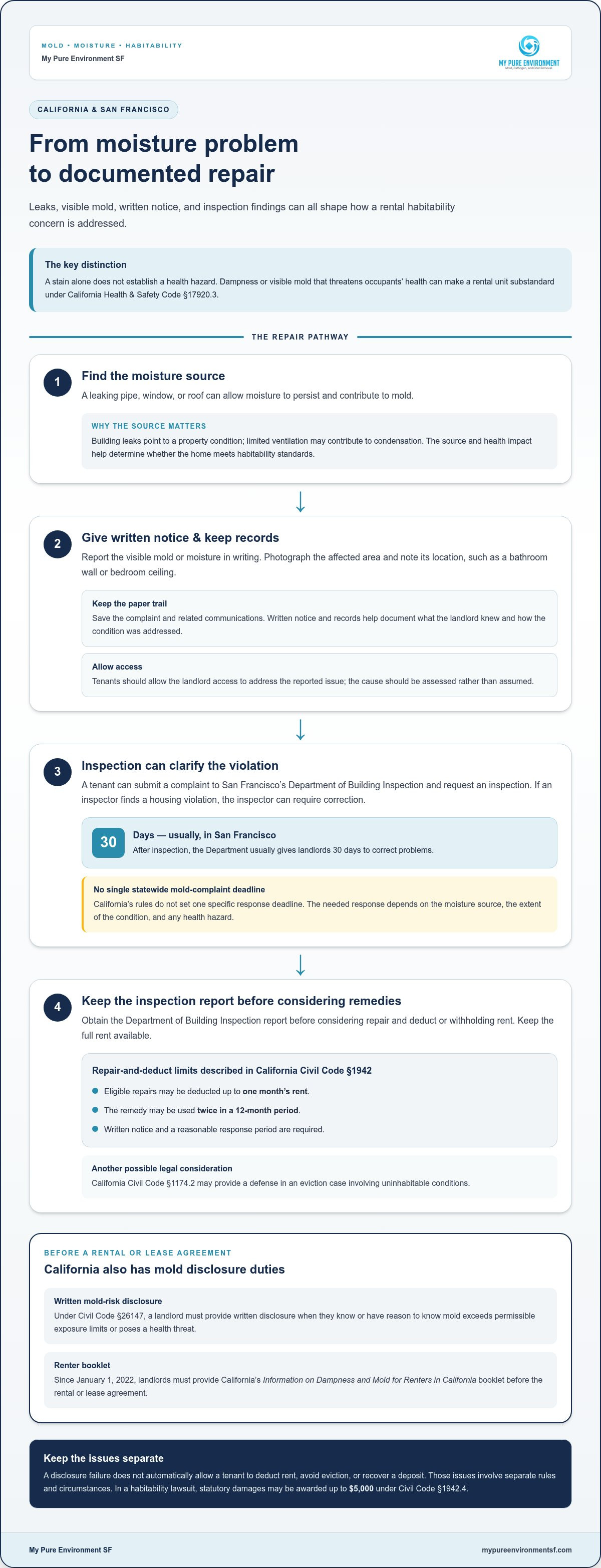
Mold is a habitability or health hazard when it poses a threat to occupants. Under California Health & Safety Code §17920.3, dampness or visible mold that creates a health hazard can make a residential rental unit substandard.
California Civil Code Section 26147 requires written disclosure when a landlord knows or has reason to know mold exceeds permissible exposure limits or poses a health threat. Written information can help prospective tenants understand potential mold health risks and impacts. Since January 1, 2022, landlords must provide the state’s Information on Dampness and Mold for Renters in California booklet before the rental or lease agreement.
In San Francisco, Health Code §581 classifies mold as a public health nuisance. A disclosure should describe known mold issues and health risks, rather than leaving prospective tenants to infer them from a musty apartment or visible staining. Keep the written explanation with the rental records; it can clarify what the landlord knew before signing.
California Legislature states that, under California Civil Code Section 1942.4, a tenant may be awarded statutory damages of up to $5,000 in a habitability lawsuit. A disclosure failure does not automatically permit a tenant to deduct rent, avoid eviction, or recover a deposit; those issues involve separate rules and circumstances.
Landlord duty to repair leaks and maintain habitability
California Civil Code Sections 1941-1942 and San Francisco housing and health codes establish habitability duties. Together, these rules shape landlord responsibility for mold in California and San Francisco when dampness or mold threatens occupants’ health.
Habitability Warranties
California’s implied warranty of habitability requires landlords to keep rental homes fit for people to live in. Habitability rules may require landlords to address dampness or mold that poses health risks. This warranty matters when moisture or visible growth affects a tenant’s apartment, because the issue may concern more than cleaning. The source and health impact help determine whether the home meets habitability standards.
Leak Repairs and Habitability
Landlords must maintain rental properties and address leaks that allow moisture to persist. A leaking pipe, window, or roof can create dampness and mold, affecting whether the unit remains habitable. Under Health & Safety Code §17920.3, dampness or visible mold that is a health hazard can make a home substandard, requiring the owner to correct the condition. San Francisco inspectors can also require repairs when they find a housing violation.
Response to Mold Complaints
California does not set one specific mold-complaint response deadline in these rules. The needed response depends on the moisture source, the condition’s extent, and any health hazard; San Francisco’s Department of Building Inspection usually gives landlords 30 days to correct problems after inspection. Tenants can submit a complaint to the department and request an inspection; an inspector can require correction if a violation exists. Keep the complaint and related communications in writing, and obtain the department’s report before considering repair and deduct or withholding rent. Understanding landlord responsibility for mold in California and San Francisco can help tenants assess the significance of an inspection finding.
Tenant claims and visible mold requirements
Visible mold can support a tenant complaint, but the moisture source, repair history, and relevant health concerns also matter. Written notice and records help document what the landlord knew and how the issue was addressed.
Visible Mold Requirements
Visible mold matters when it reflects a health hazard or uncorrected moisture problem, not simply because a surface looks stained. San Francisco Health Code §581 classifies mold as a public health nuisance. Tenants should photograph the affected area and report it in writing, noting locations such as a bathroom wall or bedroom ceiling. A health officer, code enforcement officer, or mold remediation company can confirm mold to support a claim.
Rent Withholding Remedies
Rent withholding is a potential remedy for serious habitability problems, but tenants should document the complaint and keep the full rent available. Under California Civil Code §1942, repair and deduct may cover eligible repairs up to one month’s rent, twice in a 12-month period, after written notice and a reasonable response period. Tenants should obtain a San Francisco Department of Building Inspection report before attempting repair and deduct or withholding rent. Section 1174.2 may provide a defense in an eviction case involving uninhabitable conditions.
Mold Caused by Tenant Behavior
Moisture linked to tenant behavior can affect responsibility, but the cause should be assessed alongside building conditions. For example, limited ventilation may contribute to condensation, while a roof or pipe leak points to a building source. Tenants should report visible mold and allow the landlord access to address it; landlords must consider the reported condition rather than assume its cause. For visible growth that needs professional attention, request mold remediation.
My Pure Environment SF: Mold Remediation
My Pure Environment SF provides Mold Remediation for professional mold removal and Mold Testing & Inspection to assess mold concerns. Indoor Air Quality Improvement can help address broader indoor air concerns, while Bathroom Mold Removal targets growth in bathrooms. These services can help clarify and address an environmental issue, but they do not replace a landlord’s legal repair duties.
For mold assessment or remediation, contact My Pure Environment SF to discuss your concern.
Take the Next Step Toward a Healthier Home
Keep clear records of the mold, moisture source, and communications with the landlord. An environmental assessment can help clarify conditions inside the rental unit. Landlord responsibility for mold in California and San Francisco is a legal issue; identifying and addressing mold is a separate practical step toward improving indoor conditions.
My Pure Environment SF provides Mold Testing & Inspection to assess mold concerns, Mold Remediation to address mold, and Indoor Air Quality Improvement for indoor environmental concerns. These services can help tenants and property owners understand the issue and consider a practical response alongside necessary landlord-tenant communication.
If mold is affecting your indoor environment, contact My Pure Environment SF to discuss the concern and available services. Taking an informed next step can help bring greater clarity to the situation and support a healthier living space.
Frequently Asked Questions
How can tenants file a mold complaint with San Francisco housing authorities?
Submit a complaint to San Francisco’s Department of Building Inspection and request an inspection. Keep the complaint and related communications in writing, and obtain the department’s report.
Who pays for mold inspection, testing, and remediation in a California rental?
San Francisco landlords are generally responsible for detecting and cleaning up mold, and property owners must correct dampness or mold that poses a health hazard. The material does not establish who pays for a tenant-arranged inspection or test.
What are the risks of retaliation or eviction after reporting mold in California?
In San Francisco, an eviction or rent increase attempted within six months of a tenant’s mold complaint will be examined by a judge for possible retaliation. When serious code violations remain uncorrected for at least 35 days after a government order, a landlord generally cannot demand or collect rent, evict for nonpayment, or raise rent.