
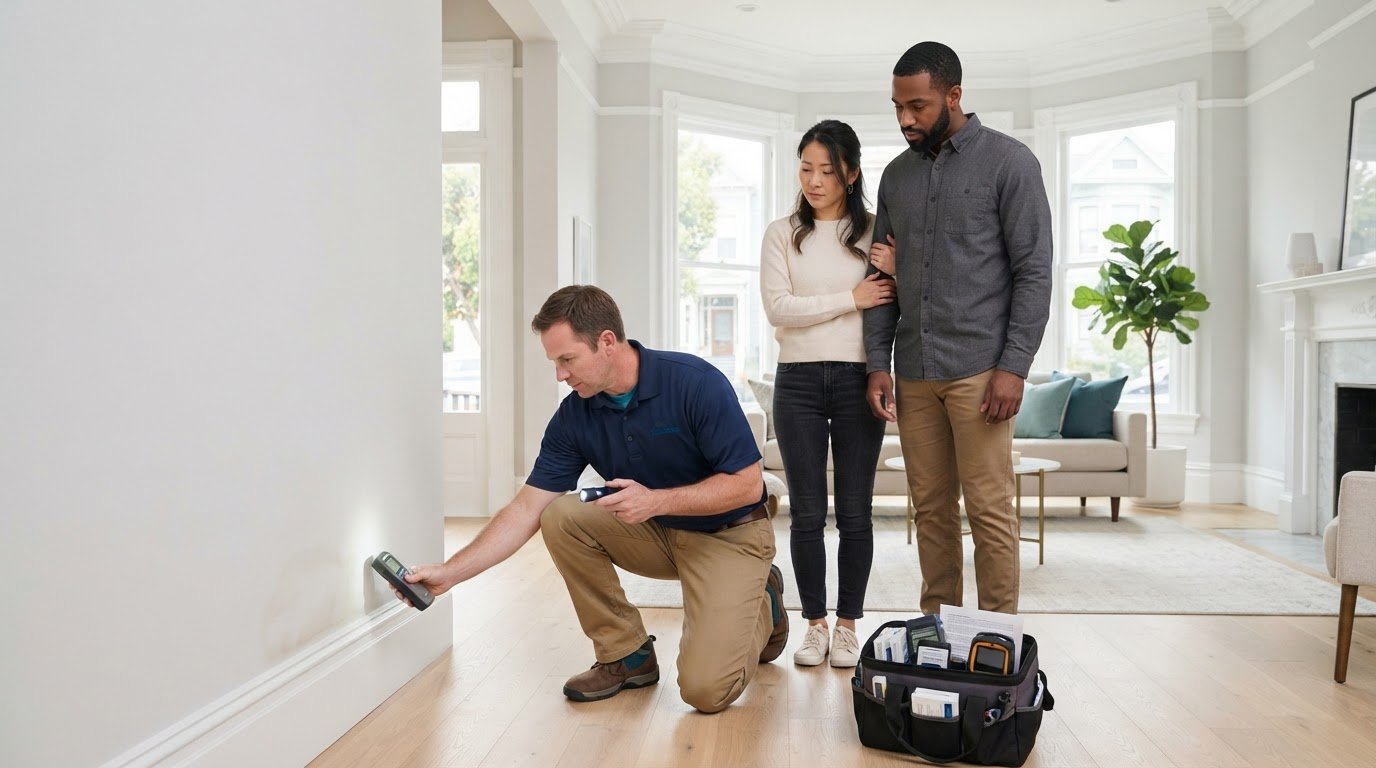
What if the dark mark on a San Francisco home’s wall is an old water stain, not active mold, or a sign of moisture hidden behind the surface? Before making an offer, a san francisco mold inspection for home purchase can help turn visible clues, musty odors, or a history of leaks into a clearer picture of what may need attention.
It’s understandable to worry that a standard home inspection or a short due diligence window won’t answer every question. A dedicated mold inspection can complement a broader property review by assessing areas of concern and determining whether testing may provide useful information. But results aren’t a simple pass-or-fail verdict, and testing can’t guarantee that a home is entirely mold-free.
This guide explains what an inspection may reveal, how to interpret observations and test results, and what the findings can’t establish on their own. You’ll also learn when a specialized inspection may be worthwhile and how to plan practical next steps, including whether further evaluation or remediation may be appropriate before proceeding with a purchase.
Key Takeaways
- A san francisco mold inspection for home purchase can focus on property clues that may need closer attention beyond a general review.
- Inspection scope should reflect what’s observed and your specific concerns, rather than assume every property needs the same assessment.
- Learn to distinguish visual observations, moisture indicators, sampling results, and property history when reviewing findings.
- Use a practical sequence to coordinate access, inspection timing, and follow-up with your purchase schedule.
- Understand how inspection, testing, and remediation serve different purposes when deciding what to do next.
Why a San Francisco Home Purchase May Call for a Dedicated Mold Inspection
Buying a home means evaluating many details while decisions and deadlines keep moving. A ceiling mark, musty closet, or seller’s mention of an earlier leak can raise questions that a general property review may not resolve. A focused assessment can clarify what is observable and whether moisture concerns warrant further investigation.
San Francisco homes vary in age, layout, and maintenance history, so the same clue can have different explanations. Discoloration might be an old stain, while a persistent odor or recurring dampness could point to an unresolved moisture issue. Neither appearance nor smell alone confirms mold. A san francisco mold inspection for home purchase is intended to inform your decision, not certify that a home is mold-free or predict every condition concealed within it.
When should a homebuyer consider a mold inspection?
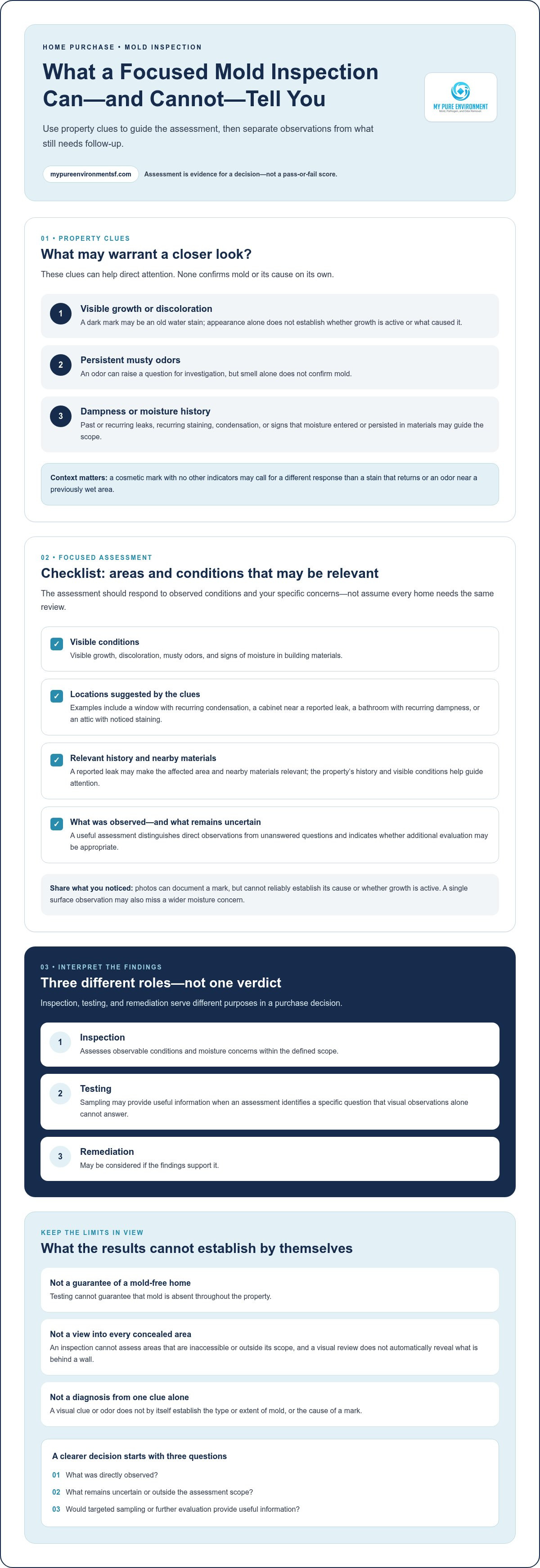
Consider further assessment if you notice visible growth, persistent musty odors, staining alongside signs of dampness, or evidence of past or recurring moisture. Context matters: a cosmetic mark with no other indicators may call for a different response than a stain that returns or an odor concentrated near a previously wet area. These clues merit investigation, but they don’t establish a diagnosis on their own.
Photos can document what you’ve seen, but they can’t reliably establish what caused a mark or whether growth is active. A single surface observation may also miss a wider moisture concern. The Indoor mold overview explains why assessment considers more than appearance alone. A professional inspection can help determine what the available evidence supports and whether testing could provide useful information.
How does a mold inspection differ from a general home inspection?
A general home inspection takes a broad look at a property’s condition and systems. A mold-focused assessment has a narrower purpose: examining suspected microbial growth and related moisture conditions in areas of concern. The assessments can complement each other, but they answer different questions. A broad review isn’t necessarily designed to investigate a particular odor, recurring stain, or suspected hidden moisture in depth.
A focused assessment should respond to the concern rather than treat every home as if it has the same risk. For example, a reported leak may make the affected area and nearby materials relevant to examine, while an unexplained odor may direct attention elsewhere. Findings can distinguish what was observed from what remains uncertain, and indicate whether targeted sampling or additional evaluation is appropriate.
That distinction matters before you make a purchase decision. Inspection, testing, and remediation are separate steps: an inspection assesses conditions, testing can provide sample results when warranted, and remediation may be considered if findings support it. Testing doesn’t guarantee that mold is absent throughout the home, and an inspection can’t assess areas that are inaccessible or outside its scope. The San Francisco mold inspection guide for homebuyers offers related context for evaluating inspection needs during a purchase.
Use the assessment as evidence for your next decision, not as a pass-or-fail score. Clear observations and a defined scope can help you identify what is known, what needs follow-up, and what questions remain before proceeding.
What a San Francisco Mold Inspection Can Examine Before Closing
A mold inspection is a focused assessment of visible conditions and moisture concerns, guided by what’s observed at the property and your specific questions. Rather than treating every room and building area identically, the scope can concentrate on relevant locations, such as a window with recurring condensation, a cabinet near a reported leak, or an attic where staining has been noticed. The goal is to document conditions and determine whether further investigation, including sampling, may be useful.
For a san francisco mold inspection for home purchase, it helps to know what the assessment can and cannot establish. A visual review may identify areas of concern, but it doesn’t automatically reveal what is behind a wall or prove the cause of every mark. The EPA Mold Resources provide broader information on mold assessment and testing, useful context for understanding why results need careful interpretation.
What conditions may an inspector assess?
An inspector may assess visible growth, discoloration, musty odors, and signs that moisture has entered or persisted in building materials. Relevant locations depend on the property clues: a bathroom may merit attention if there are signs of recurring dampness, while a roof area or attic may be relevant if the home’s history or visible conditions point there. A visual clue alone cannot establish the type or extent of mold.
Scope matters. An observation in one area may prompt attention to nearby surfaces or materials, but it doesn’t mean every part of the home has the same condition. Share what you noticed and any known moisture history so the assessment can focus on the concern. Findings should distinguish what was directly observed from what remains uncertain, helping you understand whether more information is needed.
When can mold sampling or laboratory testing add information?
Sampling may be useful when an assessment identifies a specific question that visual observations alone can’t answer. For example, it may help investigate a particular area or compare samples in a defined context. It isn’t automatically necessary for every inspection, and a laboratory result is not a complete survey of the home or a guarantee that mold is absent elsewhere.
Sampling answers a defined question, not every question about a home. Laboratory findings are evidence to interpret alongside site observations, moisture indicators, and the property’s history. A result without that context can be difficult to apply to a purchase decision. The San Francisco mold testing guide explains testing considerations in more depth.
Inspection, sampling, and remediation are related but distinct. An inspection assesses conditions; sampling can add evidence when a focused question warrants it; remediation may be considered if findings support that next step. My Pure Environment SF provides mold inspection and testing to help put observations in context before closing. Learn more about My Pure Environment SF’s mold inspection and testing services.
How to Interpret Mold Inspection Findings Without Treating Them as a Pass-or-Fail Score
An inspection report is most useful when you read it as a set of evidence, not a verdict on whether a home is “safe” or “mold-free.” Separate what the inspector observed from moisture indicators, sampling results, and recommended follow-up. This helps you see what is established, what remains uncertain, and which questions may matter before you proceed with the purchase.
Use the comparison below to understand what each type of information can contribute. A sample represents only the material or air collected at a specific location under the conditions described in the report. It doesn’t automatically describe other rooms, concealed areas, or conditions at a different time.
| Finding type | What it can tell you | What it can’t establish alone |
|---|---|---|
| Visual observations | Where discoloration, visible growth, or other concerns were noted. | The full extent or cause of a condition, especially in concealed areas. |
| Moisture indicators | Where dampness or signs of water intrusion may warrant attention. | Whether moisture is ongoing or when it occurred without further context. |
| Sampling results | What was identified in the sample collected and analyzed. | Conditions throughout the home or the source and extent of growth. |
| Property history | Reported leaks, repairs, or recurring concerns that can inform interpretation. | Whether a past issue is fully resolved or what will happen in the future. |
What does a positive mold sample mean?
A positive result indicates that the laboratory identified mold in the submitted sample. Interpret it alongside the sample location, collection method, conditions at the time, and the inspection’s observations. A result alone doesn’t identify the moisture source, map the extent of a concern, or determine a health effect. Review the report’s stated limitations and recommendations before deciding whether a particular area needs further evaluation.
What should buyers do with moisture or mold observations?
Start by separating current observations from questions about the past. A report may document visible growth or a moisture indicator, while a seller’s account or repair record may describe an earlier event. Neither alone predicts future conditions. Note the affected location, supporting evidence, and recommended follow-up so you can focus your next questions on specific findings rather than broad assumptions.
If the report recommends further evaluation, clarify what question that step is intended to answer. If observed conditions warrant discussing remediation, consider the scope and supporting evidence before making decisions. The San Francisco mold remediation overview explains how remediation relates to assessment findings.
There is no universal pass-or-fail threshold that can replace context. A san francisco mold inspection for home purchase can help organize evidence and identify reasonable next steps, but it can’t guarantee future conditions or establish that every part of a property is free of mold. Use the report to understand what was assessed, what wasn’t, and what follow-up may help you make an informed purchase decision.
A Practical Timeline for Arranging Mold Inspection During a Home Purchase
A focused inspection is easiest to use when it fits the purchase schedule and the property can be accessed safely. Start as soon as a concern comes up, then keep the process organized: describe what you noticed, coordinate access, understand the scope, and set aside time to review the findings. Timing and access depend on the transaction, so coordinate arrangements with the people managing the purchase and property.
- Record the concern. Note where you saw discoloration or staining, when an odor is noticeable, and whether the issue seems to recur or change. If you have photographs, keep them as context rather than treating them as a diagnosis.
- Gather relevant history. Collect available information about leaks, prior repairs, recurring dampness, or other moisture concerns. Note what is known and what is uncertain. A reported repair, for example, may help direct attention without establishing the home’s current condition.
- Coordinate scope and access. Share your observations and ask what areas the assessment is intended to examine, whether sampling may be useful, and what access is needed. Arrange entry to relevant areas, such as a room or attic tied to the concern, subject to the property’s access permissions.
- Review findings and choose follow-up. Read the report, including its observations, sampling details if applicable, limitations, and recommendations. Identify unresolved technical questions and whether further evaluation or a remediation assessment is appropriate.
How can buyers prepare for a mold inspection?
Preparation helps keep the assessment focused. Before the visit, make a short list of concerns, including each location, when the issue appeared, and whether it has returned. Bring available records about leaks or repairs, and note any odor or visible change that may not be present during the inspection. These details connect the assessment to the property’s known history without assuming what caused the condition.
For a san francisco mold inspection for home purchase, access arrangements can be as important as the information you bring. If a relevant area is locked, occupied, or otherwise unavailable, the inspector may not be able to assess it during that visit. Plan access with the appropriate parties and share the active transaction schedule so inspection arrangements and report review can be coordinated without assuming a particular turnaround.
What should buyers review after receiving findings?
Read the observations alongside any sampling information, stated limitations, and recommended next steps. Don’t isolate a single result from its location or the conditions recorded during the assessment. If something remains unclear, identify the specific point, such as an area that could not be accessed or a recommendation for additional evaluation. A technical report can inform your understanding of the property, but it doesn’t make the purchase decision for you.
Keep technical conclusions distinct from transaction choices. Whether and how findings affect your next steps is a separate decision, and questions about contract terms or legal rights should be addressed through the appropriate transaction professional. My Pure Environment SF provides mold inspection and testing for documented concerns. Learn about mold inspection and testing.
San Francisco Mold Inspection and Next Steps for a More Informed Purchase
A focused inspection can turn a buyer’s observations into a clearer understanding of conditions that may need attention. Its value is not a verdict on the entire property. Instead, findings can help distinguish what was seen or measured, what remains uncertain, and whether more evaluation is warranted before you decide how to proceed.
My Pure Environment SF provides mold inspection and testing in San Francisco, with remediation as a separate service when conditions and recommendations support that next step. Testing does not automatically mean remediation is needed. Consider a sampling result alongside inspection observations, moisture indicators, and available property history. Keeping these steps distinct helps you respond to evidence rather than assume that one result determines the whole course of action.
When might remediation be discussed after an inspection?
Remediation may come up when documented conditions and the inspection’s recommendations indicate that mold growth requires corrective action. The appropriate scope depends on the specific property and findings, not simply on the fact that a sample was collected or a result was reported. A science-based mold remediation guide can help explain how remediation relates to assessment findings and why the response should be tied to the condition observed.
How can buyers take the next step with My Pure Environment SF?
When requesting an inspection, share the concern that prompted it, relevant property context, and your purchase timing. For example, describe where you noticed staining or an odor, and include any available information about a leak or repair. These details can help frame the inspection and testing around the questions you need answered. Coordinate property access with the appropriate parties as part of your transaction planning.
Use the findings to identify what is known and what follow-up, if any, may be useful. If the report recommends further evaluation, consider what question that step would address. If remediation is discussed, relate it to the documented conditions and proposed scope. The inspection can inform your decision, but it cannot guarantee a mold-free home or determine what choice is right for your purchase.
A san francisco mold inspection for home purchase can offer a more grounded basis for weighing property concerns. For professional inspection and testing in San Francisco, arrange a San Francisco mold inspection with My Pure Environment SF.
Move Forward With Clearer Questions
A home purchase rarely offers perfect certainty. What matters is knowing which concerns have been assessed, which questions remain open, and what information would help you feel ready to decide. Keep those questions visible as you review the property, so assumptions don’t take the place of evidence.
A san francisco mold inspection for home purchase can be one part of that decision-making process. Use the findings to clarify what you understand about the home, then consider whether any remaining uncertainty calls for further assessment before you move ahead. The goal isn’t to force a simple yes-or-no answer from complex conditions. It’s to make your next step with a clearer sense of what is known.
My Pure Environment SF is based in San Francisco and provides mold inspection, testing, and remediation services for local clients. If you’re ready to discuss a property concern, arrange a San Francisco mold inspection.
Frequently Asked Questions
Do I need a mold inspection before buying a house in San Francisco?
A dedicated inspection isn’t automatically necessary for every purchase, but it can be useful when a property has a history of leaks, persistent musty odors, visible growth, or unexplained staining. Consider whether a focused assessment could answer a question that matters to your decision and whether the property’s access and purchase schedule allow it. A san francisco mold inspection for home purchase can provide relevant information, but it isn’t a guarantee about every condition in the home.
What does a home purchase mold inspection include?
The scope depends on the concern and property. An assessment may document visible conditions and moisture-related clues in areas relevant to your question. If testing is appropriate, the report should identify what was sampled and where, along with the results and any limitations. Before the visit, describe the rooms or features that concern you, such as a recurring ceiling mark, so the findings can be understood in context.
Is mold testing necessary if I can already see mold?
Not necessarily. Visible growth is an observation that may warrant attention, but sampling isn’t automatically needed to confirm that a visible concern exists. Testing may be useful if there’s a specific question the result could help address, such as whether further investigation is appropriate. Before choosing sampling, consider what decision it would inform. A lab result doesn’t by itself explain why growth appeared or what corrective action is needed.
Can a mold inspection find hidden mold inside walls?
An inspection may identify clues that raise concern about a concealed area, but a visual assessment can’t see through intact walls or confirm conditions inside a closed cavity. For example, a persistent odor or damaged surface near a wall may guide further evaluation, but it doesn’t prove hidden mold is present. Review which areas were accessible and whether the report recommends additional investigation. The appropriate next step depends on the evidence and property conditions.
How long does a mold inspection take before a home purchase?
Timing depends on the property, inspection scope, and access to areas of concern. As general planning context, a mold-specific inspection may take about two to six hours, and reports are generally delivered within 24 hours, though these are not guaranteed timelines for a particular inspection. Coordinate access and scheduling around your transaction, and allow time to review the findings before deciding whether follow-up questions or evaluation are needed.
What should I do if a mold inspection finds mold before closing?
Start by locating the documented finding in the report and noting the conditions recorded around it. Review any recommendation for further evaluation or remediation, and identify what remains unanswered, such as whether an observed moisture concern needs additional assessment. Keep technical questions separate from decisions about the transaction itself. If the findings may affect your purchase plans, discuss those plans with the appropriate professionals involved in your transaction.
Does a negative mold test mean a home is mold-free?
No. A negative result describes the sample collected, not every room, material, or concealed space in the property. Results also reflect conditions at the time and location of sampling. Consider the test alongside visible observations, moisture clues, and relevant property history. If concerns remain in an area that wasn’t sampled or accessible, the result alone can’t resolve them; the report’s scope and limitations help clarify what the finding does and doesn’t cover.