

What if a black-looking patch doesn’t tell you whether it’s “black mold” at all? Color can catch your attention, but it can’t reliably identify a mold species or show how far growth extends beneath a surface. That’s the key to surface mold vs black mold identification: appearance offers clues, not a diagnosis.
It’s understandable to feel uncertain when you spot dark growth, especially if you’re worried that touching or cleaning it could spread it. “Surface mold” describes where growth is visible, not a particular species. A dark patch can’t confirm what type of mold is present or whether it has spread into porous materials.
This article explains what visual details can and can’t tell you, what to document, and which moisture clues may help put a patch in context. You’ll learn how to record its location, size, and any musty odor or nearby signs of dampness without disturbing it, and when a professional inspection may help clarify the next step. The goal is a measured response based on evidence, not assumptions about color.
Key Takeaways
- For surface mold vs black mold identification, treat color and texture as observations, not proof of species or risk.
- Record where the patch appears, its approximate size, and any nearby signs of moisture or musty odor.
- Avoid scraping or dry-brushing an uncertain patch. Disturbing it can spread debris.
- Inspection can help assess visible growth, moisture context, and possible hidden concerns when growth is recurring or uncertain.
- Testing is not automatically needed. Its value depends on the specific question being investigated.
Surface Mold vs. Black Mold: What Do These Terms Actually Mean?
An unfamiliar dark patch on a wall, ceiling, or window frame can be unsettling. Its presence deserves attention, but color alone doesn’t establish what it is or indicate immediate danger. In surface mold vs black mold identification, the first distinction is between a description of where growth appears and a casual description of its color. Neither label identifies a species on its own.
Mold is a broad group of fungi found in many environments. For general context about mold and its characteristics, see What is Mold? Indoors, the practical questions are what conditions may be supporting growth and whether it keeps returning.
What people mean by “surface mold”
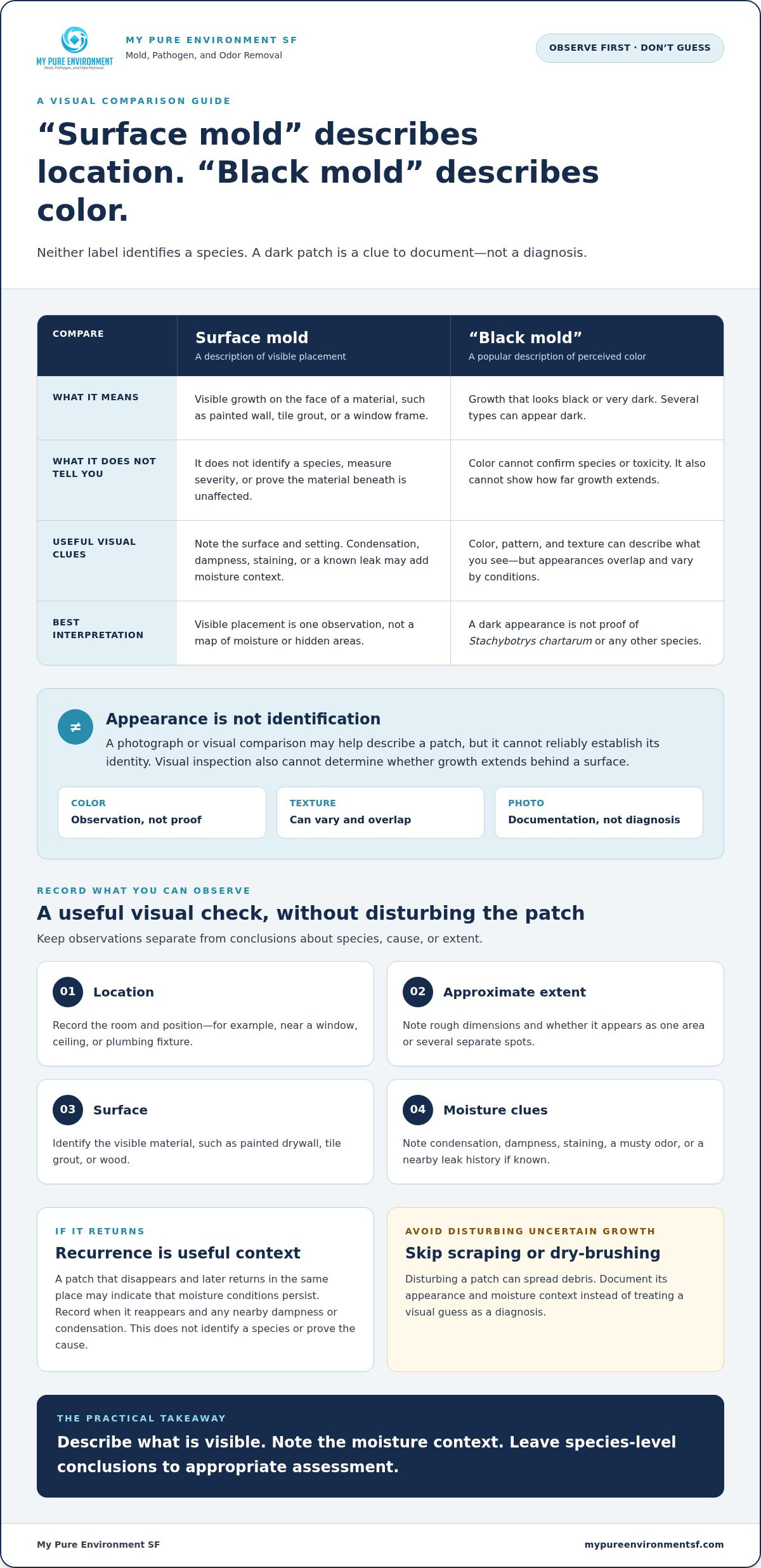
“Surface mold” usually means visible growth on the face of a material, such as a painted wall, tile grout, or window frame. It describes where someone sees growth, not a distinct mold species, a measure of severity, or proof that the material beneath is unaffected.
A visible patch and its moisture context are separate observations. Condensation on a window, a damp area near plumbing, or a history of a leak may help explain why a surface stays moist. But seeing growth on the surface doesn’t reveal how moisture has moved through a wall or whether concealed areas are affected. The patch is evidence to document, not a complete map of conditions behind it.
Recurrence is useful context. If a patch disappears and later returns in the same place, the moisture conditions may persist even if the visible area seems small. Note when it reappears and any nearby dampness or condensation. An inspection can help assess uncertain or recurring growth and the conditions around it.
What “black mold” can and cannot tell you
“Black mold” is a popular label for growth that looks black or very dark. Several types of mold can appear dark, while a single type may look different depending on the surface and growing conditions. A photograph or visual comparison may help describe a patch, but it cannot reliably establish its identity.
Stachybotrys chartarum is one species often associated with the phrase “black mold.” Its presence cannot be confirmed by color. Visible color alone cannot confirm mold species or toxicity. A dark stain could be mold, another kind of discoloration, or a mixture of materials. A light-colored patch is no more identifiable by sight alone.
Keep the terms precise: “surface” describes visible placement, while “black” describes perceived color. Neither label tells you how far growth extends, what caused it, or what response is appropriate. For useful surface mold vs black mold identification, record what you can observe and treat species-level conclusions as questions for appropriate assessment, not guesses based on appearance.
Why Mold Color and Texture Cannot Identify a Species
A patch’s appearance can be useful evidence, but it isn’t a reliable identification tool. Mold growth can look different as it develops and across different surfaces. Lighting, surrounding material, moisture conditions, and the age of a patch can all affect what you see. Two patches that look alike may not be the same type, while growth from the same group may look different in separate locations.
Appearance can guide investigation, but it cannot identify a mold species. A visual check also can’t establish the level of exposure or show whether growth extends behind a surface. Those are different questions from simply describing what’s visible.
Why dark, green, or fuzzy patches are not diagnostic
Color, pattern, and texture are observations, not reliable identifiers. Some growth appears flat or powdery; other patches look raised, fuzzy, or uneven. These traits can overlap among different molds and change with the material they grow on. Genera such as Aspergillus and Cladosporium include molds with varied appearances, so neither a color chart nor a resemblance to an online photograph can confirm which is present.
Photos can still help record a patch’s appearance over time, but they aren’t proof of species or toxicity. A close-up may show texture while hiding the surrounding wall, nearby moisture, or the extent of the area. Treat images as documentation, not a diagnosis. The EPA’s EPA Mold Guidelines provide broader information on mold and moisture control; they don’t make visual species identification dependable.
What visual inspection can reasonably reveal
A careful visual inspection can help describe the situation and identify areas that may need closer investigation. Record what you can observe without disturbing the growth:
- Location: Note the room and the patch’s position, such as near a window, ceiling, or plumbing fixture.
- Approximate extent: Record its rough dimensions and whether it appears as one area or several separate spots.
- Surface: Identify the visible material, such as painted drywall, tile grout, or wood.
- Moisture clues: Note condensation, dampness, staining, or a nearby history of leaks if known.
These details help distinguish direct observations from assumptions. For example, a recurring patch near a window and visible condensation are useful clues about location and moisture conditions. They don’t prove the cause, identify a species, or establish how much mold may be present elsewhere.
For surface mold vs black mold identification, the practical value of looking closely is to decide what deserves further attention, not to name the organism. An inspection can assess the visible area and its context. Testing may be considered when identification is needed to answer a specific question. If a patch is uncertain or keeps returning, professional mold testing and inspection can help investigate the conditions without relying on appearance alone.
Surface Mold vs. Dark Mold: Compare the Clues Without Guessing
A useful comparison starts by separating labels from evidence: “surface” describes where growth is visible, while “black” describes its perceived color. Neither term explains the cause or confirms a species. Instead, compare observations with what they can reasonably establish, then use the pattern and moisture context to decide what deserves further investigation.
| Clue | Example to record | What it may establish | What it cannot establish |
|---|---|---|---|
| Visible appearance | A dark, pale, or fuzzy-looking patch | How the area looks at the time you observe it | Mold species, toxicity, or extent behind the surface |
| Location | Growth on bathroom grout or an attic surface | Where visible growth is concentrated | Why it formed or whether hidden areas are affected |
| Moisture clues | Condensation, staining, dampness, or a known leak nearby | Conditions that may warrant attention | A specific mold type or a confirmed source of moisture |
| Change over time | A patch returns or changes after a damp period | A pattern worth documenting and investigating | A definitive diagnosis from recurrence alone |
Clues that suggest a moisture problem needs attention
Recurrence, nearby condensation, staining, and a known leak help build a timeline, not identify a species. Note when you first saw the patch, whether it grows or reappears, and whether changes follow a leak or damp conditions. These details can help an inspection focus on relevant areas without turning a moisture clue into a conclusion about the mold.
How location changes the questions to investigate
Location helps shape what to look at next. In a bathroom, recurring growth may make moisture and ventilation relevant questions, but it doesn’t prove either is the cause. For room-specific context, see the San Francisco bathroom mold removal guide.
In an attic, record visible staining, damp materials, and where growth appears without assuming what caused them. Building and moisture conditions vary from one San Francisco property to another, so avoid drawing conclusions from location alone. The practical value of surface mold vs black mold identification is organizing observations: note the surface, position, moisture clues, and changes over time. Together, those details can help clarify whether inspection or further assessment is a sensible next step, while keeping appearance separate from diagnosis.
Handling Surface or Black Mold in a San Francisco Home
Finding a suspicious patch doesn’t require an immediate guess about its species. A measured response helps preserve useful information and avoids disturbing the area unnecessarily. Focus first on what you can observe, then consider the moisture context and whether the pattern calls for further assessment.
- Leave the patch undisturbed. Don’t scrape, dry-brush, or touch an uncertain area. Disturbing growth can spread debris into the surrounding space.
- Document what’s visible. Record the location, approximate size, surface, and date you noticed it. Take clear photographs from a safe distance rather than collecting a sample yourself.
- Consider moisture context. Note nearby dampness, condensation, staining, or a known leak. These clues can help describe the situation, but don’t identify a mold species.
- Choose a next step based on the pattern. Recurring, expanding, or possibly concealed growth, especially with unresolved moisture, may warrant a more careful assessment.
Document the patch without disturbing it
Make a simple record while the area is still undisturbed. Include whether the patch is on drywall, grout, wood, or another visible surface, and note nearby features that may provide context, such as a window or plumbing fixture. If you’ve seen the same spot before, record whether it returned after cleaning or drying and when you noticed the change.
Photograph the patch and its surroundings from a distance, using a wider view to show its location and a closer view to record visible details. Avoid touching, scraping, or taking a DIY sample. Keep notes factual: “dark mark below the window” is more useful than an unsupported label naming a species.
Decide when a professional assessment may help
Consider an assessment if growth keeps returning, appears to extend behind or inside a material, is spreading, or occurs alongside moisture that hasn’t been resolved. An inspection can evaluate the visible area and relevant surrounding conditions. It can help clarify what needs further investigation, but a single test shouldn’t be treated as a guarantee that every source or concern has been found.
A bathroom patch that reappears or a dark mark near a past leak can each justify looking beyond color alone. The right questions depend on the location and history, not whether the patch looks “black.” For more on the process, explore mold inspection and testing in San Francisco.
My Pure Environment SF provides mold inspection and testing in San Francisco to help assess uncertain or recurring growth and its context.
When Mold Testing or Remediation Is the Next Step
After noting a patch and its surroundings, the next question is what information you need. Seeing visible growth is an observation. An inspection evaluates the area and relevant conditions. Laboratory testing may provide additional information when the assessment shows it would help answer a specific question. These steps are related, but they aren’t interchangeable, and testing isn’t automatically necessary for every visible patch.
For surface mold vs black mold identification, the useful goal isn’t to order a test simply because a patch looks dark. It’s to understand what needs investigation and whether mold-related work is appropriate. My Pure Environment SF provides mold inspection, testing, and remediation in San Francisco, with the next step guided by the conditions found.
What inspection and testing can add
A professional assessment can put a visible patch in context: where it is, what materials surround it, whether there are signs of moisture, and whether other areas merit attention. This offers more information than color, texture, or a photograph alone, though it doesn’t make appearance a definitive species diagnosis.
Laboratory testing can be a tool when there’s a specific question that assessment can’t answer through observation alone. Whether it’s useful depends on the situation and the purpose of the investigation. Results describe the sample or conditions tested; they don’t, by themselves, establish health effects or identify every moisture source. A thoughtful testing decision starts with a clear question, rather than assuming that more testing always means more certainty.
How assessment can inform remediation
Inspection findings help determine whether mold remediation is an appropriate next step and which areas may require attention. A small visible patch may call for a different response than recurring growth, suspected concealed conditions, or signs of a continuing moisture concern. The appearance of the patch alone shouldn’t decide the scope of work.
My Pure Environment SF provides mold remediation, including specialized bathroom and attic mold services. For a broader overview of the process, the professional mold remediation guide for San Francisco explains how assessment can inform remediation planning.
Keep the decision proportional: document what you’ve observed, consider the moisture context, and seek assessment when the growth is recurring, expanding, or uncertain. Testing may be part of that process if it answers a defined question. Remediation is the next step when findings indicate mold-related work is appropriate, not simply because a patch appears black.
For a measured next step, explore mold inspection and remediation services in San Francisco.
Choose a Clear Next Step
Uncertainty about a patch doesn’t have to turn into a guess or a rushed cleanup. Let the information you’ve gathered guide what happens next: if the growth returns, spreads, or remains unexplained, an assessment can help bring the visible concern and its context into focus. The aim of surface mold vs black mold identification isn’t to name a species by sight; it’s to make a measured decision based on what’s actually known.
My Pure Environment SF helps San Francisco property owners investigate mold concerns through inspection and testing, then determine whether remediation is appropriate. Indoor air quality improvement can also be part of a broader approach to understanding a home’s environmental conditions. Each situation starts with its own evidence, so the next step should fit the concern rather than assumptions about a dark color.
To discuss a mold concern in San Francisco, contact My Pure Environment SF about mold inspection and remediation services.
Frequently Asked Questions
Can you identify black mold by looking at it?
No. A dark appearance can’t confirm that a patch is Stachybotrys chartarum or any other particular species. In surface mold vs black mold identification, sight is useful for recording where growth appears, but not naming it. For example, a dark area on a painted ceiling could also be a stain or another material. If the distinction matters for a specific decision, professional assessment can help determine whether testing would answer that question.
Is all black mold toxic?
No. “Black mold” refers to color in everyday use, not a reliable hazard classification. Some molds can produce substances called mycotoxins under certain conditions, but a dark patch alone doesn’t establish what’s growing or whether toxins are present. Don’t assume that a black-looking mark proves a specific health risk, and don’t use color to dismiss visible growth either. Focus on the indoor conditions and seek professional advice if you’re concerned about exposure.
Can surface mold grow back after cleaning?
Yes. Growth may return if the conditions that supported it persist, even if cleaning temporarily removes what’s visible. For instance, a window-frame patch that reappears during recurring condensation suggests it’s useful to track when the area gets damp, not just how it looks after cleaning. If a patch returns repeatedly, note the timing and nearby moisture clues. Recurrence is a reason to investigate the conditions, not evidence of a particular mold species.
Can I clean a small patch of surface mold myself?
Sometimes, a small, accessible patch on a hard, nonporous surface may be suitable for careful cleaning, provided there’s no larger moisture concern. Avoid disturbing uncertain growth, and follow current public-health cleanup guidance rather than mixing cleaning products or improvising. The U.S. EPA recommends professional remediation when mold covers more than 10 square feet. Consider professional help sooner if growth is concealed, recurring, or connected to unresolved moisture.
When should I get a professional mold inspection?
Consider an inspection if visible growth keeps returning, is spreading, seems to extend into a wall or ceiling, or appears alongside a persistent damp area. In a San Francisco home, a recurring bathroom patch or an unexplained attic stain can be documented for an assessment without guessing at the cause. An inspection can evaluate the visible concern and surrounding conditions, helping clarify whether testing or mold remediation may be appropriate.
Does mold testing confirm whether a patch is black mold?
Testing may identify mold types in the material or air sample collected, depending on the method and the question being investigated. It doesn’t automatically confirm the identity or extent of every patch in a home, because a sample represents the specific material or air captured. A useful testing plan starts with a defined concern, such as comparing an area or investigating possible hidden growth. Results should be interpreted alongside inspection findings, not color alone.