

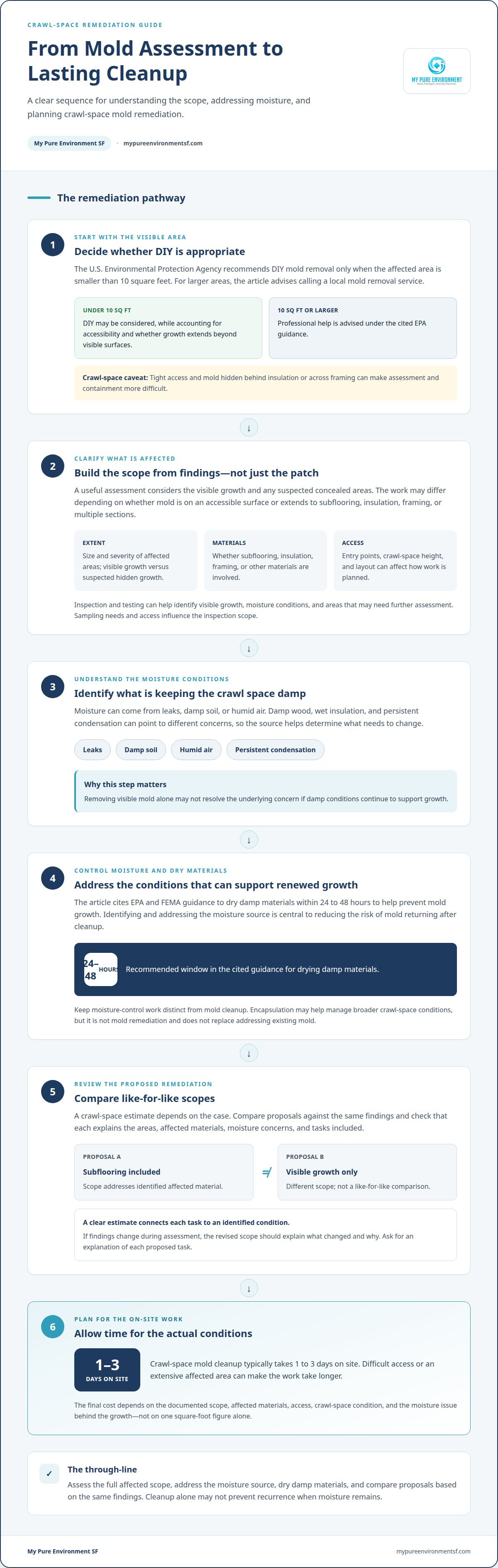
Crawl-space mold cleanup typically takes 1 to 3 days on site, but the work can take longer when access is difficult or the affected area is extensive. The cost to remove mold from a crawl space in San Francisco depends on the scope of remediation, the crawl space’s condition, and the moisture issue behind the growth.
It’s understandable to want a clear budget before work begins. The final price depends on the case and is provided after a quote request; key cost factors include the size and severity of the affected area, access, and the materials that need remediation.
This guide explains what can affect the project’s cost and duration, why addressing the moisture source matters, and what professional remediation involves. You’ll also learn when mold testing and inspection can help clarify the problem before remediation begins.
Key Takeaways
- The U.S. Environmental Protection Agency recommends DIY mold removal only for areas smaller than 10 square feet; larger infestations call for professional help.
- A square-foot estimate is only one part of a crawl-space remediation budget; the work involved also depends on access, affected materials, and the moisture source.
- Addressing the cause of moisture is central to reducing the risk of mold returning after cleanup.
- Crawl-space height and layout can affect how easily a remediation team reaches and treats affected areas.
- Learn what to expect from mold testing and professional remediation, and which project details can shape the scope of work.
When to hire a professional rather than attempt DIY remediation
DIY decisions should account for the affected area, the crawl space’s accessibility, and whether mold extends beyond visible surfaces. These details also shape the remediation scope and the estimate.
Project Scope and Cost Ranges
Project scope describes the affected areas and materials. Growth on an accessible surface differs from suspected growth across subflooring, insulation, or multiple sections of a crawl space. A useful assessment considers more than the visible patch, because mold may extend beyond what you can see. For example, suspected hidden growth may call for a more thorough inspection before the next step is clear.
Professional Remediation and EPA Guidance
The U.S. Environmental Protection Agency recommends removing mold yourself only when it covers less than 10 square feet; otherwise, the page advises calling a local mold removal service. A crawl space can make assessment and containment difficult, especially when mold is hidden behind insulation or across framing. The permit question is scope-specific: distinguish remediation from any structural or electrical alterations, then determine applicable San Francisco requirements for the actual work.
Avoiding Remediation Overpayments
When comparing remediation proposals, look at whether they address the same findings and affected materials. Check which areas and materials are included, how moisture concerns are considered, and what the proposed work covers. Ask for an explanation of each task. If one proposal addresses subflooring and another only the visible growth, their scopes are not comparable.
Factors Affecting Remediation Prices
The remediation approach depends on the extent of mold, the affected materials, and access to the crawl space. Tight entry points and affected insulation can change how the work is planned. Moisture also matters: if damp conditions continue, addressing visible mold alone may not resolve the underlying concern. Keep mold remediation distinct from separate moisture-control work or repairs.
Before moving forward, match each estimate to the same crawl-space findings. Note whether the inspection identified visible mold only or also suspected concealed areas, and whether the proposed work explains how affected materials will be handled. These details help clarify why project scopes differ without treating a low initial estimate as a like-for-like comparison.
The cost to remove mold from a crawl space in San Francisco is therefore tied to the documented scope, not a single figure that fits every property. A useful estimate connects each proposed task to an identified condition. If the crawl-space findings change during assessment, the revised scope should explain what changed and why.
San Francisco Bay Area crawl-space remediation costs
Crawl-space budgets depend on whether the work addresses mold, moisture control, or both. Encapsulation is a separate project that can add substantial expense.
Crawl-space mold can affect indoor air quality and damage nearby building materials, particularly when damp conditions persist. The practical concern is both the affected area and whether moisture continues to support mold growth.
Typical Mold Removal Costs
Typical mold removal costs reflect the conditions found and the remediation work required, rather than a single price for every crawl space. The price depends on the case and is provided after a quote request; the affected materials, extent of growth, access, and moisture conditions shape the scope. An estimate should connect proposed work to the observed conditions.
DIY and Professional Labor Costs
DIY labor may look less expensive when homeowners count only hours, but materials and tools also add to the project. That figure is for encapsulation, not mold remediation. Professional work has a different scope, including assessment and treatment of affected areas.
Inspection and Testing Costs
Inspection and testing help identify visible growth, moisture conditions, and areas that may need further assessment. In San Francisco, the price for mold inspection and testing depends on the case and is provided after a quote request; the inspection scope, sampling needs, and access influence the work. Moisture testing contributes information about damp conditions, while mold testing can help assess suspected contamination.
Encapsulation adds a barrier to help manage crawl-space conditions, but it is not mold cleanup.
Mold remediation and moisture-control upgrades address different aspects of crawl-space problems. Encapsulation may be considered for broader crawl-space moisture management, but it does not replace addressing existing mold.
Choosing professional mold inspection can help clarify the conditions and work involved before remediation proceeds.
Moisture-source repair and mold prevention
Removing visible growth addresses only part of a crawl-space mold problem. Lasting prevention depends on controlling moisture, drying damp materials, and keeping conditions from supporting renewed growth.
The U.S. Environmental Protection Agency and Federal Emergency Management Agency recommend drying damp materials within 24 to 48 hours to prevent mold growth. In a crawl space, moisture can come from leaks, damp soil, or humid air. Identifying the source helps determine what must change before remediation can be considered complete.
An assessment considers visible mold and surrounding conditions. Damp wood, wet insulation, and persistent condensation can point to different moisture concerns. For example, a plumbing leak calls for a different response than moisture entering through exposed ground. Identifying the source matters because cleaning surfaces without addressing ongoing moisture can leave conditions that support mold growth.
Drying is another key part of prevention. Crawl-space wood should be dry before remediation proceeds, and the moisture source should be addressed. The research guidance for crawl spaces advises keeping humidity below 60% before remediation. After remediation, it recommends targeting relative humidity of 45% to 55% and wood moisture content below 16%.
Moisture readings provide useful information beyond appearance alone. A surface may look clean while materials remain damp. Measurements can help assess conditions and show whether drying has progressed toward the recommended humidity range. They also help explain what further moisture-control steps may be needed.
Dehumidification can support moisture control after cleanup. A permanent dehumidifier is recommended as part of crawl-space repairs, particularly where humidity remains difficult to control. Its role is to reduce moisture in the space, not to repair a leak or replace the need to address damp materials. Space encapsulation may also be considered as a moisture-management measure, depending on the crawl space and its conditions.
A practical prevention plan connects the key steps: identify the moisture source, address it, dry affected materials, and remediate mold. Treating mold without addressing ongoing moisture may leave conditions that support renewed growth. Clear records of findings, affected materials, and source repairs help explain the project’s progress and scope.
For example, a crawl space with damp subfloor wood and elevated humidity has two related concerns to address. Drying the wood without controlling ongoing moisture may not be enough. Likewise, controlling humidity without addressing affected materials leaves part of the problem unresolved. A complete plan considers the moisture source, drying, and mold remediation.
Cost per square foot
Square footage can be one budgeting reference, but it does not describe every crawl-space project. The affected area, material condition, access, and work required all shape the scope.
On the market, crawl-space mold removal or remediation typically ranges from $2,300 to $4,000, with a median of about $2,800. This market range is a reference, not a quote for a particular property. A square-foot calculation alone may miss work needed beyond the visibly affected footprint.
For example, a 500-square-foot crawl space and a 3,500-square-foot crawl space can involve different encapsulation efforts. Mold remediation also depends on where growth appears and which materials are affected. A smaller area with difficult access may require a different scope from a larger, open space. The floor area gives context, not a complete description of the work.
Use the measured area to understand how a proposed scope is organized. Check whether it matches the areas and materials described. If one proposal includes affected framing while another covers only a smaller surface, comparing totals without those details can be misleading.
Water damage can also change the relationship between measured area and remediation work. A leak may affect materials beyond the visible mold, while a contained patch may involve a narrower area. The estimate should explain which observed conditions support the proposed scope. That explanation helps homeowners distinguish mold treatment from separate repairs or moisture-control work.
A per-square-foot figure also doesn’t show whether the estimate includes inspection, containment, material removal, cleaning, or follow-up assessment. Those tasks depend on the project findings. Ask for an itemized scope that identifies the affected locations and materials, then compare the same elements across estimates. This makes differences easier to understand than a single rate alone.
The market range of $2,300 to $4,000 offers a broad point of reference, while the median of about $2,800 summarizes that market sample. Neither figure predicts the cost of a specific crawl space. The project’s conditions, access, and remediation requirements determine how closely an estimate aligns with that range.
To understand a proposed scope, start with the affected area and review the work associated with each section. Visible growth in one part of a crawl space may warrant assessing nearby materials too. Another property with more floor area but fewer affected materials may have different needs. Measurements are most useful alongside clear findings and task descriptions.
In San Francisco, treat square footage as one reference, not a complete project calculation. A useful assessment connects the affected area to the materials and conditions identified, providing a clearer basis for understanding the proposed work than a generic rate.
Crawl space size and height
Crawl-space dimensions affect access to the materials that need attention. Floor area matters, but height, entry points, and obstacles also shape how accessible the space is. A wide area with limited clearance can be more challenging to assess and work in than its footprint suggests.
Spaces under 2 feet tall are more difficult to maneuver in. Restricted clearance can limit movement and make it harder to position equipment near affected framing. For example, a team may need to work in sections rather than move freely beneath the floor. That difference can affect the time and effort required, even when the visible mold occupies a small area.
Height can change the work in the opposite direction, too. A 9-foot-tall crawl space may require a ladder to remove subfloor insulation. The extra vertical clearance doesn’t automatically make remediation simpler, because insulation and other materials may still need careful access. An assessment should account for the space’s full shape, not just its height or floor area.
Insulation matters because mold may affect material attached beneath the subfloor. Its location and condition influence how accessible the affected section is. Insulation across the ceiling presents different access considerations from exposed joists. An assessment should identify suspected affected materials and their location.
Layout also matters. Support posts, ducts, pipes, and narrow access openings can restrict movement through the crawl space. For instance, a post between the entry point and a mold-affected section may limit the route available for moving equipment and removed materials. These features don’t change the measured floor area, but they can change how the remediation team reaches each section.
When describing a crawl-space concern, note the floor area, the tightest clearance, and any obstacles near affected materials. An assessment can then consider how those conditions relate to the proposed work. If the scope mentions area but overlooks a low passage or insulation that may limit access, it may not fully reflect the space’s conditions.
Size and height also affect encapsulation planning, which is separate from mold remediation. Restricted clearance, entry location, and obstacles can influence access, along with the condition of insulation and framing. These details help explain why crawl spaces with similar floor areas may need different approaches.
For an assessment that considers access, height, and affected materials, request crawl-space mold remediation.
My Pure Environment SF
My Pure Environment SF helps San Francisco homeowners assess crawl-space mold concerns and plan next steps. When mold or its extent is unclear, Mold Testing & Inspection can help clarify what needs attention. For confirmed mold, Mold Remediation addresses affected areas, while Indoor Air Quality Improvement supports broader indoor air quality concerns.
The right starting point depends on what you’ve observed, such as visible growth, musty odors, or signs of damp materials. Sharing those details helps frame the concern and the scope of assessment. Pricing depends on the case and is provided after a quote request, with project scope, access, affected materials, and moisture conditions shaping the work.
For help understanding your crawl-space mold concerns, contact My Pure Environment SF.
Move Forward With a Clearer Scope
A useful next step is to note what you’ve observed, where it appears, and whether there are signs of ongoing dampness. These details can help focus an assessment on the conditions that matter, rather than relying on visible mold alone.
The cost to remove mold from a crawl space in San Francisco depends on the work the property actually needs. A project-specific assessment can connect the findings to a clear scope, so you can understand the proposed work before deciding how to proceed. If the source of moisture or the extent of affected materials remains unclear, professional evaluation can help guide that decision.
My Pure Environment SF can help you take the next step with your crawl-space concerns. Contact My Pure Environment SF to discuss your situation and move toward an informed plan.
Frequently Asked Questions
How long does it take?
My Pure Environment SF says its remediation jobs typically take 3 to 4 hours. The time for a crawl-space project depends on the affected materials, access, and the work required. A tight entry or extensive insulation may affect the scope. An assessment helps establish which conditions the team needs to address and the expected work for that specific space.
Is Mold Remediation Covered by Insurance?
Coverage depends on what caused the mold and the terms of the homeowner’s policy. Mold resulting from a covered water loss, such as a burst pipe or appliance failure, is typically handled as part of the water-damage claim. Some policies cap mold coverage with sublimits of $5,000 to $10,000. Review the policy language to understand applicable coverage and limits.
What is the average cost to remove mold from a crawl space in San Francisco?
There isn’t one price that applies to every San Francisco crawl space. The project’s affected materials, access, extent of growth, and moisture conditions shape its scope. The price depends on the case and is provided after a quote request. A useful estimate connects each proposed task to conditions identified during assessment, so you can understand what the work addresses.
How much does crawl space mold remediation cost per square foot in San Francisco?
A square-foot rate alone can’t account for every crawl-space condition. Two spaces with similar floor areas may differ in access, affected materials, and the work needed around insulation or framing. The price depends on the case and is provided after a quote request; the measured area, access, affected materials, and moisture conditions help determine the scope. Check that the estimate explains what its measured area includes.
What factors affect crawl space mold removal costs, such as area, severity, and accessibility?
Area, severity, and accessibility all affect the assessment. Growth on exposed framing differs from suspected mold behind insulation, where concealed materials may need further evaluation. A narrow entry can also limit access to an affected section. Moisture conditions matter because mold concerns involve more than the visible surface.
Does homeowners insurance cover crawl space mold remediation in California?
California homeowners’ insurance coverage for mold depends on the policy and the cause. Mold connected to a covered sudden water loss may be included in the related claim, while gradual mold associated with long-term neglect is typically excluded. Some policies also set a mold sublimit. The policy wording, cause-of-loss terms, and coverage cap determine how a particular crawl-space claim is treated.
What steps are included in professional crawl space mold remediation, and how long does it take?
My Pure Environment SF’s process can begin with visual inspection and lab testing, followed by reports and recommendations through its Complete Mold Inspection. Its Dry Fog Mold Remediation uses patented dry-fog technology, and the company describes its jobs as typically taking 3 to 4 hours. The appropriate scope depends on the assessment findings and the affected areas in the crawl space.
How much does professional crawl space mold remediation cost, and when is it safer than DIY?
The price depends on the case and is provided after a quote request; affected materials, access, moisture conditions, and project scope shape the estimate. Professional remediation is the practical choice when mold covers a broad or concealed area, when crawl-space access is restricted, or when affected insulation and framing require assessment. My Pure Environment SF also offers Mold Testing & Inspection to help assess suspected growth.

