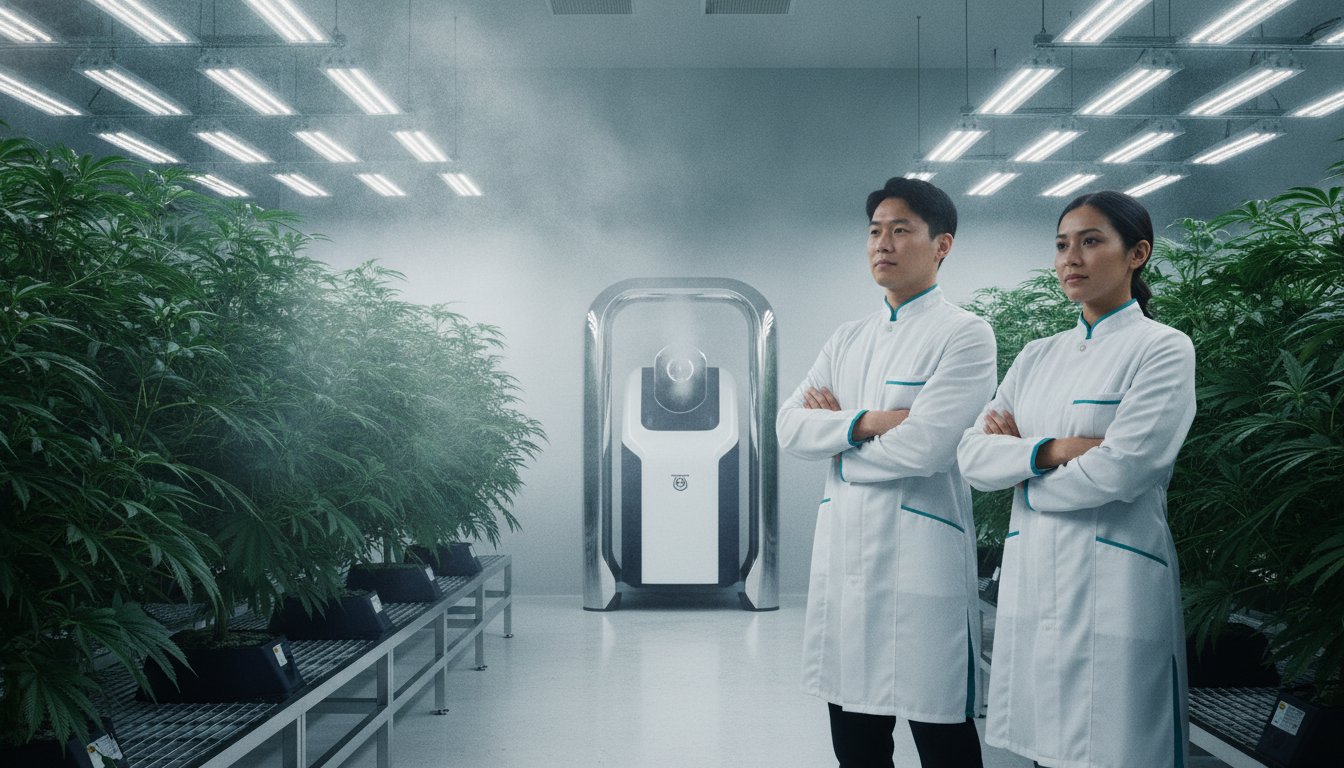
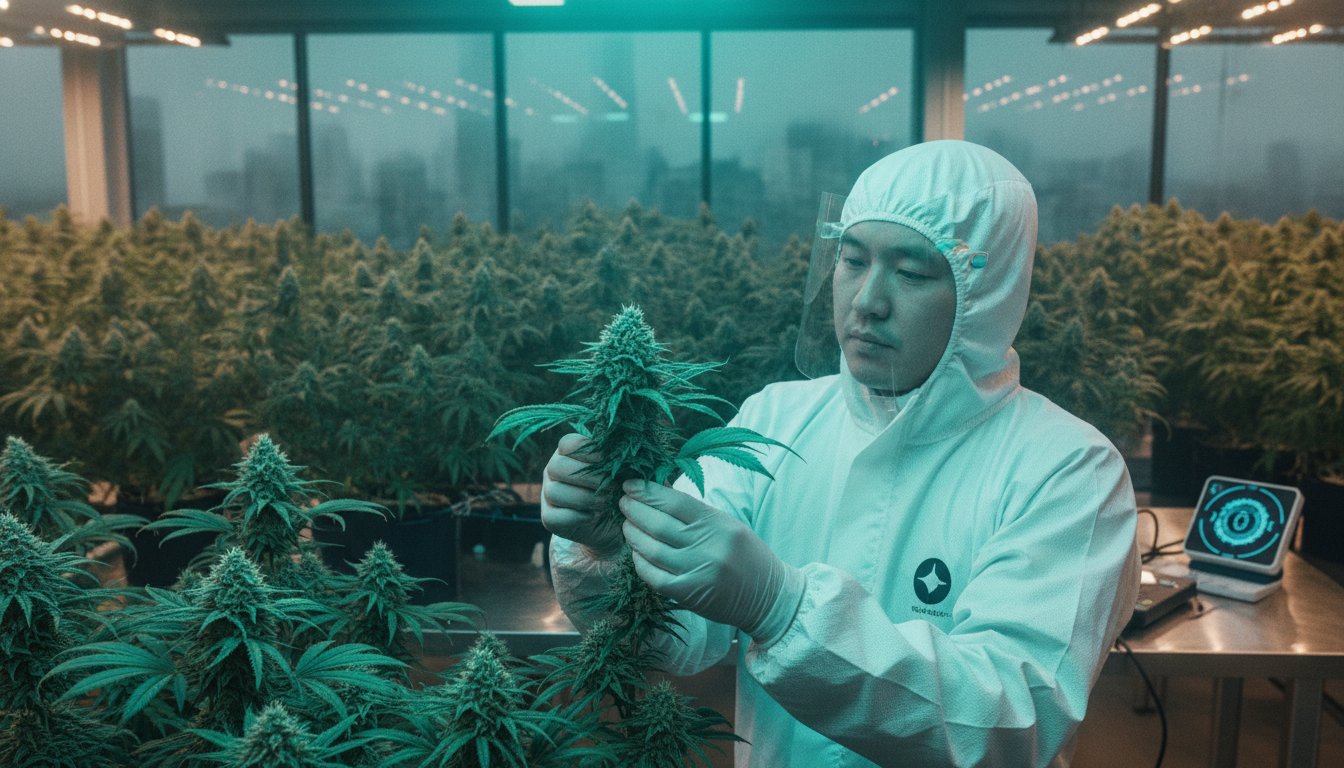
A single undetected spore can transform a high-value canopy into a total financial loss in less than 48 hours. For commercial cultivators, managing mold growth in cannabis crops isn't just a maintenance task; it's a critical safeguard against the devastating reality of bud rot and failed laboratory tests. You've likely spent months perfecting your genetics and nutrient cycles, only to face the anxiety of potential regulatory fines or health risks for your consumers. It's a high-stakes environment where environmental precision is the only path to a successful harvest.
We understand that the pressure to maintain California safety standards while maximizing yield can feel overwhelming. This guide provides the scientific methods you need to identify, manage, and prevent fungal contamination before it takes hold. You'll learn how to implement long-term environmental stability in your grow room through advanced detection and non-invasive remediation techniques. We'll explore the biological triggers of common pathogens like Botrytis and Aspergillus, providing a clear roadmap to ensure your 2026 harvest remains pure, compliant, and profitable.
Key Takeaways
- Master the visual inspection protocols for identifying early-stage pathogens like Bud Rot and Powdery Mildew before they compromise your colas.
- Understand how to neutralize the "Golden Triangle" of environmental triggers, particularly the unique humidity challenges posed by coastal fog.
- Establish a systematic "Clean Room" mentality to prevent mold growth in cannabis crops through specialized sanitation and deep-cleaning cycles.
- Explore non-invasive dry fogging methods that neutralize airborne spores throughout your facility without damaging sensitive cultivation equipment.
- Protect your financial investment and ensure total compliance with 2026 California testing thresholds for consumer safety.
Understanding the Biology of Mold Growth in Cannabis Crops
The cannabis plant is a uniquely hospitable host for fungal pathogens. Its dense, resinous flower structures and high moisture content during the final weeks of bloom create an ideal environment for spores to thrive. While we often think of mold as a surface issue, the reality of mold growth in cannabis crops is far more complex and invasive. Fungal spores are microscopic and omnipresent; they drift through the air and land on plant tissue, waiting for a specific trigger of humidity or temperature to germinate.
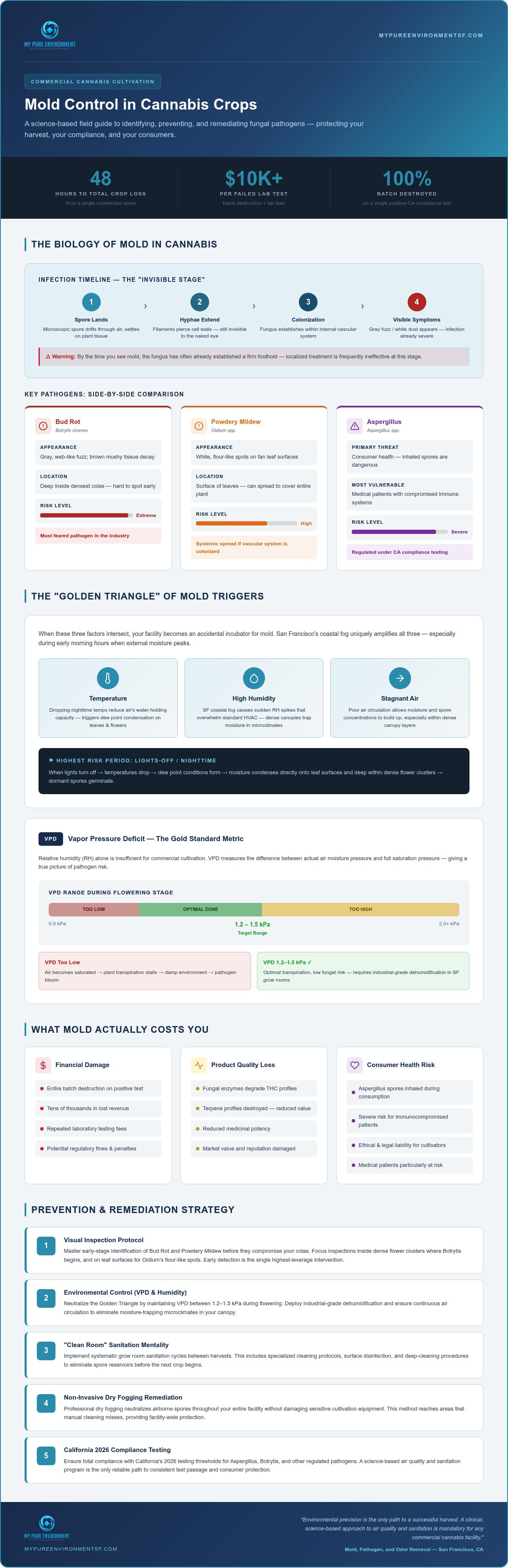
Once a spore lands, it enters a dangerous "invisible" stage. It extends microscopic filaments called hyphae that pierce the plant's cell walls. This colonization happens long before you see a single speck of gray fuzz or white dust. By the time visual symptoms appear, the fungus has often already established a firm foothold within the plant's internal structures, making the infection much harder to manage.
Common Pathogens: Bud Rot vs. Powdery Mildew
Identifying the specific threat is the first step toward effective management. Botrytis cinerea, commonly known as bud rot, is perhaps the most feared pathogen in the industry. It typically begins deep within the densest colas, where it manifests as a gray, web-like fuzz and turns healthy tissue into a brown, mushy decay. In contrast, Oidium, or powdery mildew, presents as white, flour-like spots on the surface of fan leaves that can eventually cover the entire plant. A systemic infection occurs when the fungal pathogen moves beyond the initial entry point to colonize the plant's internal vascular system, making localized treatment ineffective.
The Impact on Consumer Safety and Product Quality
The presence of mold does more than just ruin the aesthetics of your harvest. Fungal enzymes actively degrade the THC and terpene profiles of the plant, significantly reducing its market value and medicinal potency. Beyond the financial loss of a degraded crop, there's a serious ethical and legal responsibility regarding consumer safety. Pathogens like Aspergillus pose a severe health risk, particularly to medical patients with compromised immune systems who may inhale spores during consumption.
In the California market, the financial cost of a failed compliance test is steep. A single positive result for prohibited molds often leads to the destruction of the entire batch, costing cultivators tens of thousands of dollars in lost revenue and laboratory fees. This underscores why a clinical, science-based approach to air quality and sanitation is mandatory for any commercial facility. Understanding these biological risks is the foundation of a proactive prevention strategy that protects both your patients and your bottom line.
Environmental Triggers: Why Mold Thrives in Your Grow Room
Fungal pathogens don't appear in a vacuum. They rely on what cultivators call the "Golden Triangle": specific temperature ranges, high humidity, and stagnant air. When these three factors intersect, your facility becomes an accidental incubator for mold growth in cannabis crops. In San Francisco, this challenge is uniquely amplified by our coastal environment. The city's signature fog can cause sudden humidity spikes that overwhelm standard HVAC systems, particularly during the early morning hours when external moisture levels are at their peak.
Nighttime is often the most dangerous period for a crop. When the lights turn off, temperatures naturally drop, which reduces the air's capacity to hold water vapor. This shift often leads to "dew point" conditions where moisture condenses directly onto leaf surfaces and deep within dense flower clusters. This localized moisture provides the exact trigger a dormant spore needs to germinate and begin its invasive life cycle. High plant density further complicates this by trapping moisture within the canopy, creating microclimates that are far more humid than the rest of the room.
Managing Humidity and Vapor Pressure Deficit (VPD)
Relying on relative humidity (RH) alone is often insufficient for high-stakes commercial cultivation. Vapor Pressure Deficit (VPD) offers a more accurate look at the risk levels within your facility. VPD measures the difference between the pressure exerted by the moisture currently in the air and the pressure at full saturation. To discourage fungal growth during the critical flowering stage, most experts recommend maintaining a VPD between 1.2 and 1.5 kPa. If the VPD falls too low, the air becomes too saturated, effectively stalling plant transpiration and creating a damp environment where pathogens thrive. High-density San Francisco grow rooms frequently require industrial-grade dehumidification to maintain these precise targets against the coastal dampness.
The Crucial Role of Airflow and Ventilation
Stagnant air pockets are the primary cause of localized microclimates. Within a dense canopy, transpiration can trap moisture between leaves, creating a humid zone that isn't reflected by your wall-mounted sensors. Strategic fan placement is essential to eliminate these dead zones. You want your fan leaves to "shiver" gently, which keeps the air moving without causing the stress of wind burn. Proper air exchange is equally vital to mitigate the risk of mold growth in cannabis crops; a commercial facility should cycle its entire air volume every few minutes to remove excess moisture and prevent spore accumulation. If you're concerned about hidden environmental imbalances, consulting with experts in mold and cannabis services can provide the technical assessment needed to stabilize your environment.
How to Identify Early Signs of Mold Growth
Early detection is the primary defense against systemic failure. Waiting for visual blooms often means the infection has already transitioned into an invasive phase. A daily visual inspection protocol should be a mandatory part of your team's workflow, focusing on the environmental hotspots where moisture naturally accumulates. The base of the colas and the undersides of fan leaves are the most common sites for initial mold growth in cannabis crops.
While your eyes are the first tool, they shouldn't be the only one. Digital microscopy allows your cultivation team to identify fungal structures at 40x or 60x magnification before they're visible to the naked eye. Additionally, don't ignore your senses. A sudden shift toward musty, earthy, or damp odors in a room that previously smelled of clean terpenes is a reliable indicator of early decay.
Step-by-Step Visual Inspection Protocol
Effective scouting requires more than a casual walk-through. Use high-intensity LED lights held at an angle to the leaf surface; this reveals the subtle sheen of developing mildew that flat lighting often hides. To check for internal Botrytis, use sanitized gloves to gently peel back the bracts at the base of the largest colas, looking for any discoloration or softening of the stem. Documenting these findings is vital for long-term health. By creating a mold map of your facility, you can identify specific zones where microclimates consistently trigger mold growth in cannabis crops, allowing for targeted environmental adjustments. Early-stage Oidium typically presents as subtle, circular patches of translucent or white film that resemble a light dusting of flour on the upper surface of fan leaves.
Advanced Spore Analysis and Laboratory Testing
Visual inspections have limitations, especially when dealing with airborne pathogens like Aspergillus. When visual signs are absent but environmental sensors suggest high risk, air spore traps provide a quantitative look at the biological load in your facility. Surface swabbing of tables, trays, and ventilation ducts also helps establish a baseline for cleanliness between cycles. Utilizing specialized mold testing san francisco ensures you have the laboratory data needed to protect your harvest. This scientific verification removes the guesswork, providing a clear path toward remediation and regulatory compliance.
Prevention Protocol: Sanitizing Grow Rooms for Mold Control
Prevention in a commercial facility is a systemic discipline rather than a reactive chore. Establishing a "Clean Room" mentality is the most effective way to limit mold growth in cannabis crops before spores can find a hospitable surface. This begins with strict biosecurity protocols for every person entering the cultivation area. Employees should wear dedicated Tyvek suits, hairnets, and utilize foot baths at every threshold to prevent the tracking of outdoor pathogens into sterile zones. These measures act as a primary barrier, ensuring that your team doesn't become the unintended vector for an outbreak.
Between harvest cycles, the biological load of the previous crop must be completely removed. This involves more than just sweeping floors; it requires a deep-clean of every surface, including irrigation lines, trays, and vertical racking. Standing water is a significant risk factor, especially in the humid coastal climate of San Francisco. Any runoff or drainage issues must be addressed immediately to prevent localized humidity spikes that trigger spore germination. Additionally, implement a strict quarantine period for any new clones or mother plants. Isolation for at least 14 days allows you to identify systemic issues before they are introduced to your main flowering rooms.
Sterilization Techniques for Equipment and Surfaces
Effective sanitation requires a multi-layered approach to air and surface health. While manual wiping with hydrogen peroxide or peroxyacetic acid is helpful for visible residues, it often fails to address the microscopic spores drifting through the air. Focusing on sanitizing grow rooms for mold prevention means looking at the entire environment, including HVAC ducts and filters. Spores often recirculate through ventilation systems, settling on plants long after the surfaces have been cleaned. Atmospheric treatments, such as dry fogging, provide a comprehensive solution by reaching every crevice and neutralizing airborne pathogens without leaving damp residues on sensitive electronics or equipment.
Genetic Selection and Plant Immunity
A plant's internal defenses are just as important as the external environment. Selecting mold-resistant cultivars is a strategic choice for facilities dealing with high-density canopies or coastal moisture. Beyond genetics, you can strengthen plant cell walls by incorporating silica into your nutrient regimen and utilizing beneficial microbes like Bacillus subtilis to outcompete harmful fungi. Be cautious with your feeding schedule; over-fertilization with excess Nitrogen can lead to soft, lush plant tissue that is much easier for fungal hyphae to penetrate. If your facility requires a comprehensive biosecurity audit or professional intervention, our team provides specialized mold and cannabis services to ensure your environment remains sterile and compliant.
Professional Remediation for Cannabis Facilities
When an outbreak crosses the threshold from a localized issue to a facility-wide concern, the standard operating procedures of your cultivation team may no longer be enough. Professional intervention is required when mold growth in cannabis crops threatens the structural and environmental integrity of your entire operation. It's vital to understand the distinction between attempting to "reclaim" a contaminated crop and "remediating" the facility itself. While some methods focus on post-harvest decontamination of the flower, professional remediation targets the root cause by sterilizing the air and surfaces of the grow room. This ensures the next cycle isn't doomed before it begins by neutralizing the hidden reservoirs of spores that manual cleaning often misses.
Compliance and Regulatory Safety Standards
Navigating the 2026 Department of Cannabis Control (DCC) microbial requirements requires a data-driven approach. These standards are designed to protect consumer health, particularly against pathogens like Aspergillus that can be dangerous to immunocompromised patients. Professional mold remediation for cannabis facilities acts as a safeguard for your business license by providing a clear, documented path to environmental purity. The process concludes with Post-Remediation Verification (PRV), where third-party testing confirms that spore levels have returned to safe, localized baselines. This level of transparency is essential for maintaining trust with regulators and ensuring your product consistently hits retail shelves without the risk of a mandatory recall.
Advanced Atmospheric Remediation Technology
The most effective way to neutralize a systemic spore load is through advanced atmospheric technology like dry fogging. This method creates a cold-sterilization mist that reaches every hidden crevice, including the internals of your HVAC system and the undersides of multi-tier racking. Because the particles are so small, they don't condense into liquid, making this method completely safe for your sensitive electronic grow equipment. You don't have to worry about short-circuiting expensive LED arrays or damaging precision climate sensors. After the treatment, your facility is left in a state of clinical purity, allowing for a seamless transition back to active cultivation. Secure your facility's future with professional cannabis mold services to ensure your environment remains a high-performance, pathogen-free space.
Future-Proofing Your Cultivation Environment
Protecting your yield from mold growth in cannabis crops is a continuous commitment to environmental precision and biosecurity. We've explored how a systemic approach—balancing Vapor Pressure Deficit, implementing strict sanitation protocols, and utilizing early detection technology—can prevent the catastrophic losses associated with fungal outbreaks. As California's regulatory landscape continues to evolve in 2026, maintaining a clinical standard of air quality isn't just about safety; it's a vital component of your business's longevity and reputation.
If you're facing a persistent issue or simply want to ensure your facility meets the highest standards of purity, our team is here to act as your protective guide. As San Francisco's leading air quality specialists, we bring specialized cannabis industry expertise and non-destructive dry fogging technology to every project. This science-based approach allows us to neutralize pathogens without risking your sensitive electronic equipment. Request a Professional Cannabis Facility Mold Inspection today to gain the peace of mind that comes with a truly stable grow environment. Your commitment to excellence deserves a harvest that is both bountiful and pure.
Frequently Asked Questions
Can you save a cannabis plant that has mold growth?
Generally, it's not possible to save a plant once an infection becomes visible. Fungal pathogens like Botrytis are often systemic, meaning the microscopic filaments have already colonized the internal vascular tissue before the gray fuzz appears. Attempting to trim away affected areas usually releases millions of spores into your grow room. It's a safer professional practice to cull the infected plant immediately to protect the health of your remaining canopy.
Is it safe to smoke cannabis with a small amount of mold?
Inhaling mold spores, especially Aspergillus, can cause severe respiratory infections and lung damage. This is particularly dangerous for medical patients with compromised immune systems. Any mold growth in cannabis crops renders the product unfit for consumption and legally unsellable. While it's tempting to trim away visible spots, the microscopic hyphae have usually already penetrated deep into the flower tissue. Prioritizing consumer safety and your brand's reputation is the only professional path forward.
How do I tell the difference between trichomes and powdery mildew?
Distinguishing between the two requires a close, clinical look, preferably with a digital microscope. Trichomes are clear or milky resin glands with a distinct mushroom-like head that sparkle under direct light. In contrast, powdery mildew looks like a flat, dull dusting of white flour or a fuzzy, web-like growth on the leaf surface. If the white spots appear circular and lack the structural "stalk" of a resin gland, you're likely looking at Oidium.
What is the best humidity level to prevent bud rot in late flower?
Maintaining relative humidity between 40% and 50% is the standard recommendation for the final weeks of flowering. However, focusing on Vapor Pressure Deficit (VPD) between 1.2 and 1.5 kPa provides a more accurate measure of risk. In San Francisco, industrial-grade dehumidification is often necessary to counter the sudden humidity spikes caused by coastal fog. Precise environmental control ensures that moisture doesn't condense on the plants during the critical nighttime temperature drops.
Does UV-C light actually kill mold spores on cannabis crops?
While UV-C light can neutralize surface spores, it has significant limitations in a commercial grow setting. It cannot reach spores hidden deep within dense colas or those circulating within your HVAC ductwork. UV-C is best used as a supplemental tool within a broader biosecurity protocol. It isn't a substitute for systemic atmospheric remediation, such as dry fogging, which treats the entire volume of air and every crevice of the facility simultaneously.
What happens if my cannabis crop fails a state mold test?
Failing a state-mandated microbial test for pathogens like Aspergillus or Salmonella typically results in an immediate administrative hold on the batch. You'll be notified by the Department of Cannabis Control (DCC), and the product cannot be moved or sold. Depending on the specific failure, you may be required to destroy the entire batch or undergo a rigorous, state-approved remediation process. These failures are costly and underscore the importance of proactive environmental management.
How often should I sanitize my commercial grow room?
Professional standards require a comprehensive deep-clean and sterilization of the entire facility between every single harvest cycle. This includes scrubbing all trays, irrigation lines, and vertical racks to remove the biological load. Daily sanitation of tools and footwear is also mandatory to prevent cross-contamination. For facilities in damp climates like San Francisco, periodic professional air quality inspections help identify hidden spore reservoirs before they can trigger an outbreak in your flowering rooms.
Can mold spores travel through a facility's HVAC system?
Spores are highly mobile and easily enter ventilation systems, where they can be distributed across multiple rooms. If a single room experiences an outbreak, the HVAC system can act as a highway for pathogens to settle on healthy plants. This systemic vulnerability is a leading cause of widespread mold growth in cannabis crops. Regular maintenance and atmospheric sterilization are essential to ensure your air filtration remains a barrier rather than a vector.