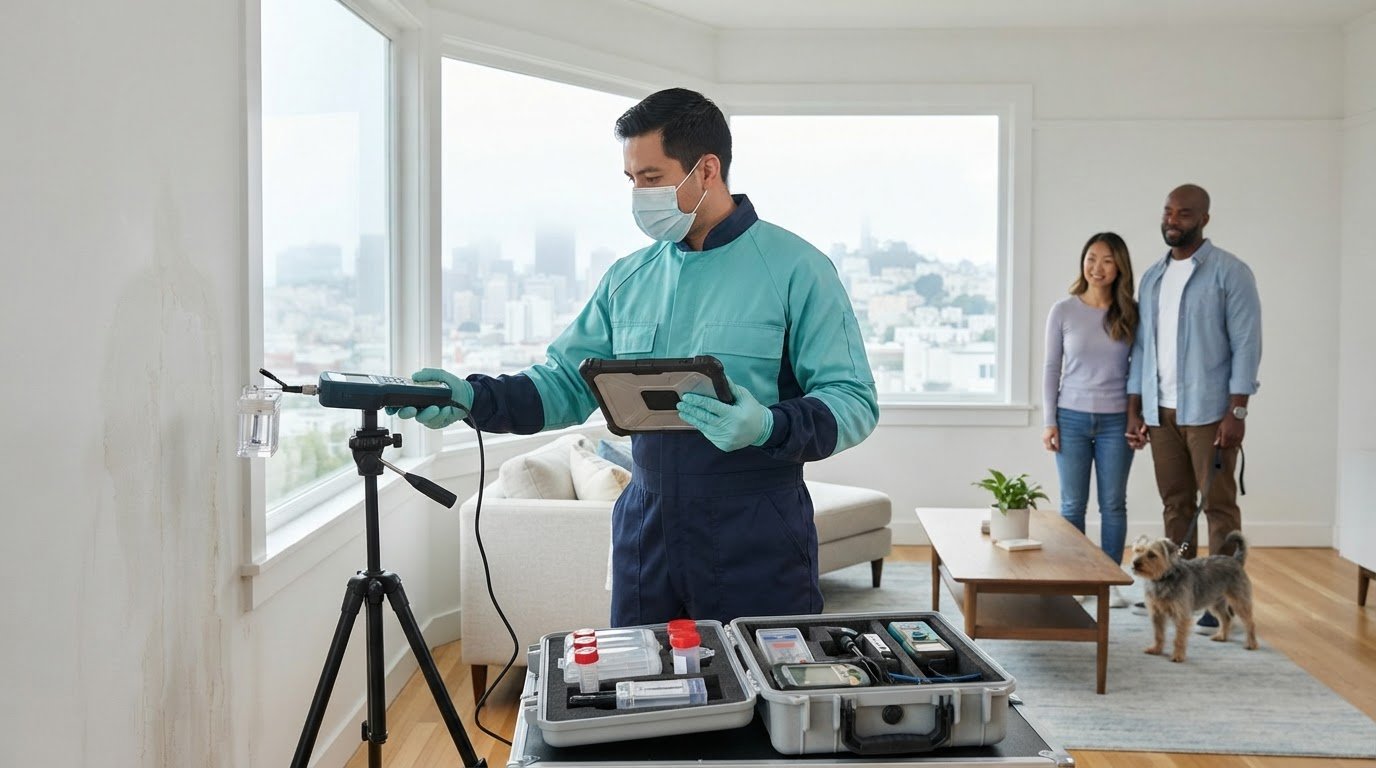

Simply scrubbing visible mold off a wall might be the very reason it returns just a few weeks later. When you discover a dark patch in your attic or under a sink, the natural instinct is to "remove" it as quickly as possible to mitigate health risks. However, understanding the nuances of mold remediation vs mold removal is the difference between a temporary cosmetic fix and a permanent solution for your property. Most homeowners feel a deep sense of anxiety when facing potential toxic exposure, and it's frustrating when traditional cleaning methods fail to provide lasting results.
We understand that your primary goal is a safe environment without the stress of unnecessary demolition or recurring costs. In this guide, you'll learn the critical technical differences between these two approaches so you can choose a long-term solution that actually restores your indoor air quality. We'll walk through why mold often returns after a basic cleaning, how specialized laboratory testing identifies the root cause, and what a professional roadmap for restoration looks like. By the end, you'll have the clarity needed to move from a state of concern to total confidence in your home's systemic health.
Key Takeaways
- Understand the distinction between cleaning visible growth and the comprehensive process of returning indoor spore levels to a safe, natural baseline.
- Learn how microscopic mold hyphae penetrate porous materials like drywall, explaining why surface scrubbing often fails to prevent recurring growth.
- Explore the technical differences of mold remediation vs mold removal and how specialized tools like air scrubbers help restore your property’s systemic health.
- Identify specific warning signs that necessitate a professional inspection, particularly during San Francisco property transactions or when musty odors persist.
- Discover why a specialized environmental expert provides a more thorough, health-focused outcome than a standard general contractor.
Why the Terms "Mold Removal" and "Mold Remediation" Are Often Misunderstood
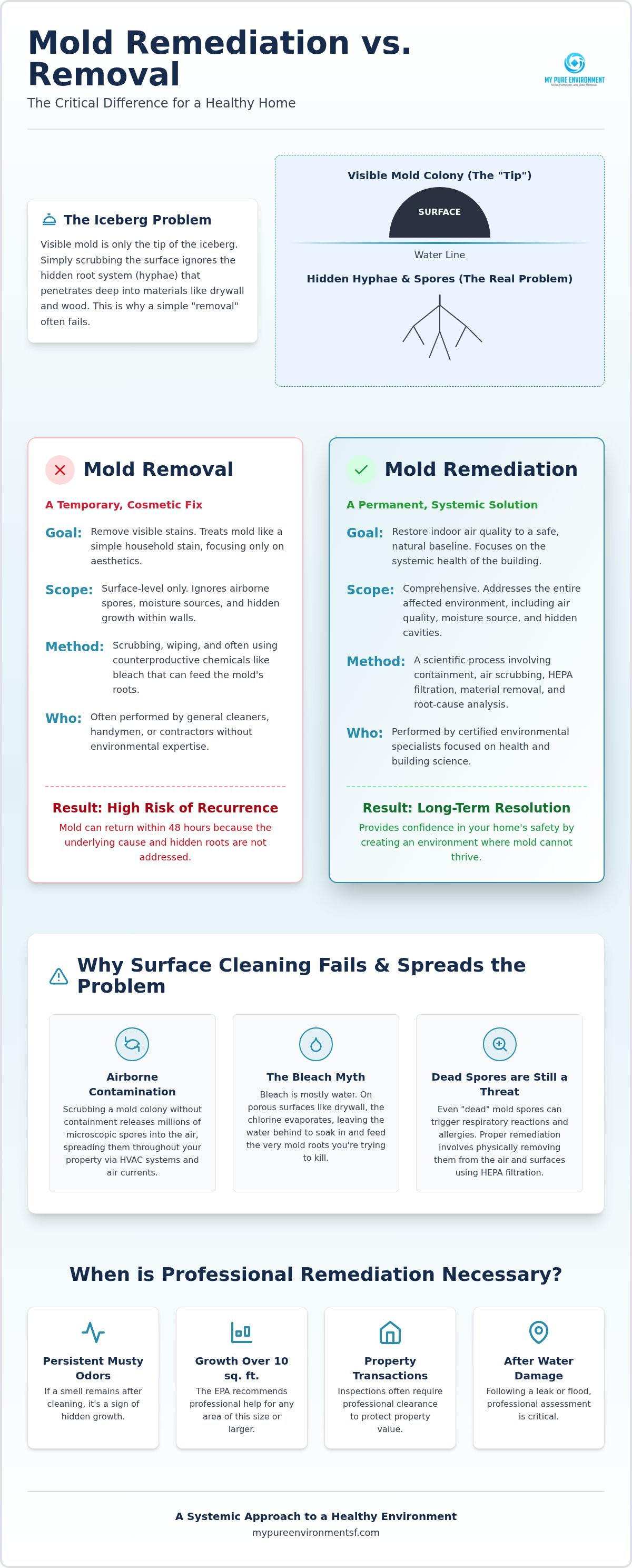
Property owners often use these terms interchangeably, but they represent two vastly different service levels. When evaluating mold remediation vs mold removal, it's essential to recognize that one is a surface treatment while the other is a comprehensive environmental correction. "Mold removal" is technically the physical act of scrubbing visible growth off a surface. It's frequently used as a marketing hook by general cleaners or handymen who treat mold like any other household stain. This distinction is critical for San Francisco homeowners who face unique moisture challenges due to coastal humidity and older building stock. In contrast, "mold remediation" is a scientific process designed to return microscopic spore levels to a safe, natural baseline. It addresses the systemic health of the building rather than just the aesthetic issue.
This clinical perspective is vital because mold isn't just a stain; it's a living organism. While a general contractor might focus on the visible patch on your drywall, a remediation specialist focuses on what you can't see. The goal is simple. We aim to restore the indoor air quality, ensuring that the environment is safe for every occupant. Specialists look beyond the surface to understand how the mold is interacting with the building's ecosystem. We treat the property as a whole system, identifying how air currents and moisture levels contribute to the growth. By addressing the invisible air quality, we ensure the visible stains don't return. This approach moves beyond simple cleaning and focuses on environmental science, prioritizing long-term safety over a quick fix. Without this comprehensive view, you are merely treating a symptom rather than the underlying cause.
The "Total Removal" Myth
Because mold is a biological part of our ecosystem, The Science of Mold confirms that spores exist in virtually every environment in San Francisco. A professional's goal isn't to eliminate every single spore, but to manage the "active" colonies. Even "dead" spores can trigger respiratory reactions if they aren't properly filtered from the air. Since spores are a natural component of both outdoor and indoor air, achieving a 0% mold count is scientifically impossible and technically unnecessary for a healthy living space.
Why Terminology Matters for Your Wallet
Choosing a service based on a "removal" quote often leads to recurring expenses. If a contractor only wipes down a surface without performing a root-cause analysis, mold can return within 48 hours. Many insurance companies recognize this risk; they frequently require documented remediation standards over simple cleaning to ensure the job was completed correctly. Understanding the nuances of mold remediation vs mold removal protects your property value by focusing on a permanent, systemic resolution.
The Science of Mold: Why Surface Cleaning Isn’t Enough
Visible mold is rarely the full extent of the problem. To understand the necessity of mold remediation vs mold removal, you must look beneath the surface. Mold functions similarly to a weed with an extensive root system. These microscopic roots, known as hyphae, penetrate deep into porous materials like drywall, wood framing, and insulation. While a quick wipe might clear the dark spots you see, the hyphae remain embedded, waiting for the next spike in humidity to trigger a new colony. This biological reality is why surface treatments often provide only a temporary aesthetic fix rather than a permanent solution for your property.
Many property owners reach for bleach or standard household cleaners at the first sign of growth. This is often counterproductive. Bleach is primarily composed of water; on porous surfaces, the chlorine stays on the surface while the water soaks into the material, effectively feeding the mold roots you're trying to kill. The EPA guidelines on mold cleanup emphasize that if an area is larger than ten square feet, simple cleaning is insufficient. Professional intervention is required to ensure the structural integrity of the building isn't compromised by these hidden root systems.
The Hidden Danger: Airborne Spores
Mold reproduces by releasing microscopic spores into the air. These spores are light enough to travel through HVAC systems, wall cavities, and even simple air currents between rooms. When you scrub a mold patch without proper containment, you risk launching millions of these spores into the air, leading to cross-contamination in previously unaffected areas. This is why we prioritize indoor air quality improvement. Addressing the "invisible" mold in your breathing zone is just as important as removing the visible stains on the walls. If you're concerned about what might be lingering in your air, a professional mold testing and inspection can provide the scientific data you need for peace of mind.
Moisture: The Engine of Mold Growth
In San Francisco, the environment itself often works against property owners. Our famous coastal fog and high humidity levels create a perfect breeding ground for persistent growth. Older Victorian homes are particularly vulnerable; their lack of modern insulation often leads to significant condensation on cold exterior walls. Successful remediation must include a plan for moisture control. Whether the source is a slow pipe leak, poor bathroom ventilation, or simple fog-related condensation, the moisture engine must be stopped. Without addressing these underlying environmental factors, any attempt at mold remediation vs mold removal will likely result in the problem returning during the next damp season.
Comparing Remediation vs. Removal: Scope, Methods, and Results
Understanding the operational differences between mold remediation vs mold removal requires looking at the specific methods used during the process. A standard removal approach is often a "Scrub and Go" tactic. A general cleaner wipes down the visible surface and considers the job finished. This ignores the microscopic reality of the environment. In contrast, professional remediation utilizes an "Identify and Neutralize" strategy. This method treats your property as a clinical space, focusing on eliminating the biological threat at its source while protecting the surrounding areas from accidental cross-contamination. It's the difference between a cosmetic update and a systemic health restoration.
Specialists utilize industrial-grade equipment to achieve these results. High-efficiency particulate air (HEPA) vacuums, air scrubbers, and high-capacity dehumidifiers are essential components of a successful project. These tools don't just clean; they filter the air to a microscopic level. Adhering to CDC mold cleanup recommendations ensures the process remains safe for both the technicians and the property occupants. By creating strict containment zones using physical barriers and negative air pressure, we prevent spores from migrating into unaffected rooms during the cleaning process. This methodical approach ensures that the mold remediation vs mold removal debate is settled by the long-term results of a purified environment.
Remediation Step-by-Step
The process is methodical and designed for long-term air quality restoration. It follows a structured path to ensure no detail is overlooked.
- Step 1: Professional Inspection and Lab Testing. We begin by identifying the specific species and the extent of the infestation through scientific air and surface sampling.
- Step 2: Containment and Air Filtration. We isolate the work area and deploy air scrubbers to catch airborne spores, preventing them from settling elsewhere in your home.
- Step 3: Neutralization of Spores. We apply specialized treatments to neutralize both visible growth and invisible airborne particles, ensuring a systemic return to health.
The Non-Invasive Advantage
Traditional methods often rely on a "rip and replace" philosophy. This involves tearing out drywall and flooring, which increases both cost and property downtime. Modern remediation offers a more sophisticated path. Technologies like Dry Fog allow us to reach mold colonies hidden deep within wall cavities and crawl spaces without any demolition. This approach is highly efficient and significantly reduces the time your property is under service. Dry Fog protects personal belongings from cross-contamination by neutralizing spores on surfaces without leaving a wet residue. By choosing a non-invasive route, you preserve the structural integrity of your home while achieving a level of purity that surface removal simply cannot match.
How to Determine the Right Solution for Your San Francisco Property
Selecting the appropriate response for your San Francisco home requires a clear understanding of environmental risks. Because our city's microclimates vary from the foggy Sunset District to the warmer Mission, moisture levels fluctuate significantly. If you encounter persistent musty odors or experience recurring respiratory symptoms, a simple surface wipe is insufficient. These are signs of a systemic issue. Choosing between mold remediation vs mold removal is about identifying if the threat is just on the surface or embedded in the building's infrastructure. Understanding these differences helps you avoid the cycle of temporary fixes that fail to address the root cause.
Landlords and property managers face specific pressures in the SF market. Maintaining a healthy environment isn't just about aesthetics; it's a legal necessity. Attempting a "DIY removal" on porous materials like drywall often makes the situation worse. Without professional containment, scrubbing a colony releases millions of spores into the air, effectively aerosolizing the hazard and contaminating your entire ventilation system. This cross-contamination can lead to much higher restoration costs later. To ensure you're taking the right steps, we recommend a professional mold testing and inspection to establish a clear baseline before any work begins.
When is Removal "Enough"?
Surface removal is generally acceptable for non-porous materials. If you find a small spot on a metal window frame or a glass surface, a standard cleaning protocol may suffice. Industry guidelines often mention a "10-square-foot rule" as a threshold for professional intervention, but this metric can be deceptive. If that small patch is located on a porous surface like drywall or wood, the roots are likely much deeper than what is visible. In confined areas like attics or crawl spaces, even minor growth suggests a lack of proper ventilation that requires a remediation approach to prevent a total building failure.
The Role of Professional Testing
Science-based testing is the only way to move from guesswork to a targeted solution. Lab analysis differentiates between common nuisance molds and toxic varieties that require specialized handling. This data is especially critical during San Francisco real estate transactions, where transparency is paramount. Once the work is complete, post-remediation testing serves as a clinical verification that the air is safe for occupancy. For those needing a deeper dive into the process, our Complete Guide to Mold Testing in San Francisco provides a comprehensive look at how we utilize laboratory data to protect your property's value and your family's health.
The Specialized Approach: Why My Pure Environment SF Focuses on Remediation
Selecting a specialized environmental expert rather than a general contractor is a decision that prioritizes systemic health over temporary aesthetic repairs. While a general builder might treat mold as a simple construction defect, we approach every project as a clinical restoration of the building's ecosystem. When evaluating the benefits of mold remediation vs mold removal, our focus remains on the invisible air quality. We define success by the "Pure" state of the environment, utilizing laboratory verification to ensure that spore counts have returned to safe, natural baselines. This technical precision is essential for high-stakes environments, such as cannabis cultivation facilities, where environmental purity is a regulatory requirement for product safety and commercial offices where employee health is paramount.
Our commitment to non-toxic and non-invasive methods ensures that your property is restored without introducing harsh chemical residues. We recognize that property owners are often anxious about the potential for massive demolition and the associated costs. By focusing on advanced neutralization techniques, we provide a steady hand during what can be a stressful time. We don't just clear the visible spots; we address the entire environment to ensure the air you breathe is free from microscopic hazards. This specialized focus allows us to act as protective guides, moving you from concern to a state of total environmental confidence.
Specialized Attic and Bathroom Remediation
San Francisco's historic architecture and modern commercial spaces both face significant ventilation hurdles. Our specialized attic and bathroom services address these challenges without the typical "construction zone" chaos. In many local homes, bathroom mold removal often stops at the surface of the tile, leaving colonies to thrive in the wall cavities. We provide a systemic solution that neutralizes these hidden threats using non-invasive technologies. This ensures that your attic or bathroom is restored to a healthy state without requiring you to move out or endure weeks of demolition and rebuilding dust. We treat the root cause, ensuring the moisture issues specific to these high-humidity areas are fully addressed.
Protecting the SF Community
Our local expertise allows us to provide customized solutions that account for the Bay Area’s diverse microclimates. We understand how the salt air of the Richmond District affects building materials differently than the conditions in the SoMa district. By staying current with San Francisco’s specific environmental regulations, we offer property owners a level of protection that general restoration companies simply cannot match. We are committed to using non-toxic methods that are safe for pets, children, and sensitive occupants. If you suspect your property is compromised, take the first step toward a healthier space and Schedule a Professional Mold Inspection with My Pure Environment SF to receive a detailed, science-based assessment.
Restoring the Systemic Health of Your Environment
Understanding the technical nuances of mold remediation vs mold removal is the first step toward reclaiming your home's air quality. While simple removal might address visible staining, only a comprehensive remediation strategy tackles the microscopic spores and root systems that threaten your property's long-term health. By prioritizing air quality as the primary metric of success, you move beyond temporary fixes and toward a permanent, scientific resolution. Our team focuses on non-invasive methods that protect your structural integrity while ensuring every room meets clinical standards of purity.
As specialized SF mold experts, we provide a steady hand through the complexities of environmental restoration. We offer comprehensive lab-backed testing and inspection to verify that your space is truly safe for occupancy. Don't let the anxiety of potential demolition or recurring growth disrupt your peace of mind. Our non-invasive remediation options allow for thorough treatment without the construction mess. Take the final step toward a healthier living or working space today. Get a Professional Mold Assessment in San Francisco and breathe easier knowing your environment is in expert hands.
Frequently Asked Questions
Is mold remediation really necessary if I can only see a small spot?
Yes, because visible mold is often just the surface manifestation of a deeper colony. While removal might clean the visible stain, remediation ensures that the root system, or hyphae, is neutralized within porous materials like drywall. This scientific approach is vital because microscopic spores may already be compromising your indoor air quality. Addressing the systemic issue now prevents a more expensive structural failure and recurring growth later.
How much more does mold remediation cost compared to simple removal?
Remediation typically involves a higher initial investment than simple removal because it includes comprehensive laboratory testing, specialized containment, and industrial air filtration. While removal is a surface level cleaning, remediation utilizes advanced equipment like HEPA vacuums and air scrubbers to restore the entire environment. This thorough process provides better long term value by preventing the cycle of recurring mold and the need for repeated, ineffective surface cleanings.
Can I stay in my home during the mold remediation process?
Most property owners can remain in their homes while the work is performed, particularly when we utilize non-invasive methods. We establish strict containment zones using negative air pressure to isolate the work area, ensuring spores don't migrate into your daily living spaces. If the infestation is exceptionally widespread or involves critical areas like the only bathroom, we may suggest temporary relocation to ensure your comfort and safety during the process.
How long does professional mold remediation typically take?
The timeline for professional mold remediation vs mold removal varies based on the extent of the growth and the materials affected. Most residential projects are completed within one to five days. This includes the time needed for containment setup, neutralization, and the necessary dwell time for specialized treatments. We prioritize a methodical pace that ensures every microscopic spore is addressed without rushing the clinical restoration of your indoor air quality.
Does mold remediation involve tearing down my walls?
Not all remediation requires demolition. While traditional "rip and replace" methods involve removing drywall, we focus on non-invasive technologies like Dry Fog that reach behind walls without tearing them down. This approach preserves your home's structural integrity while still neutralizing the mold roots embedded in porous materials. We only recommend demolition when the structural components are so compromised that they can no longer be safely restored to a healthy state.
Will my insurance cover mold remediation or just mold removal?
Coverage depends entirely on your specific policy and the underlying cause of the mold. Many insurance providers cover remediation if the growth resulted from a sudden, accidental event like a burst pipe. They often prefer documented remediation over simple removal because it provides a permanent solution that reduces the likelihood of future claims. We recommend reviewing your policy with your agent to understand your specific coverage for environmental hazards and restoration.
How do I know if the mold remediation was actually successful?
Success is verified through professional post remediation laboratory testing. This scientific analysis compares the indoor spore counts against outdoor baseline levels to ensure the air quality has been restored to a safe, natural state. A successful project results in a "clean bill of health" from an independent lab, providing you with clinical proof that the systemic environment is no longer compromised by elevated mold levels or hidden active colonies.
What happens if I ignore mold and just try to clean it myself?
Attempting to DIY clean mold without professional containment often aerosolizes millions of spores, spreading the contamination to unaffected rooms. This can worsen indoor air quality and lead to increased respiratory health risks for occupants. Ignoring the root cause allows the hyphae to continue compromising the structural integrity of your property, eventually turning a minor surface issue into a significant and costly environmental crisis that requires extensive restoration efforts.