Could the very fog that defines the San Francisco skyline be quietly compromising the air quality inside your home? Living in the Bay Area brings a unique set of environmental challenges, where persistent coastal moisture meets historic, aging architecture. It's understandable to feel a sense of urgency when you discover a suspicious dark patch, leading many to search for reliable black mold testing san francisco. You want to protect your family's respiratory health, but the fear of invasive, expensive demolition often leads to hesitation. Many residents also find themselves caught in the complex web of tenant and landlord responsibilities specific to our city's regulations.
We agree that your peace of mind shouldn't depend on guesswork or alarmist tactics. This guide serves as your professional resource, offering a clear path toward a healthier living environment. You'll learn how to identify the specific causes of mold in our local microclimates and perform a structured self-assessment to decide if professional intervention is necessary. We outline a non-invasive solution path that emphasizes scientific accuracy and systemic health, ensuring you can address indoor air quality concerns without the stress of traditional construction methods.
Key Takeaways
- Understand how San Francisco's unique microclimates and persistent coastal fog create high-risk environments for mold growth in residential properties.
- Distinguish between Stachybotrys chartarum and common mildew by identifying specific visual cues and the characteristic olfactory profile associated with toxic growth.
- Learn how professional black mold testing san francisco employs air quality sampling to detect invisible spores and confirm the specific genus of mold present.
- Clarify your rights under California Senate Bill 655 and local health guidelines to understand the legal responsibilities of both landlords and homeowners.
- Explore modern, non-invasive remediation techniques that restore indoor air quality without the need for traditional, high-impact demolition.
The San Francisco Factor: Why Black Mold Thrives in the Bay
San Francisco's geography creates a unique incubator for fungal growth that differs significantly from inland California. While other regions experience distinct dry seasons, our city's coastal position ensures that indoor humidity levels often remain within the ideal range for spore germination. The "Summer Fog" isn't just a local quirk; it's a consistent delivery system for moisture that penetrates building envelopes. When external humidity consistently exceeds 60 percent, standard ventilation systems often struggle to keep indoor air dry. This environmental pressure makes professional black mold testing san francisco a common necessity for residents who prioritize systemic health and air purity.
Aging Infrastructure and Moisture Traps
Our city's iconic Victorian and Edwardian homes were constructed long before modern vapor barriers or advanced insulation existed. These buildings often utilize lath-and-plaster walls, which are notoriously porous and slow to dry. Once moisture enters these structural layers through a minor roof leak or a failing window seal, it becomes trapped. The organic materials within the plaster and the wooden lath provide an abundant food source for mold. In multi-unit residential buildings, these issues are often compounded by shared plumbing stacks that may have developed slow, pinhole leaks over decades. Additionally, coastal salt air can degrade exterior sealants over time, creating microscopic pathways for moisture to bypass the building's protective envelope.
Microclimates and Mold Pressure
The risk profile for indoor air quality changes significantly depending on your specific neighborhood. Residents in the Sunset and Richmond districts live within the primary "fog belt," where the marine layer lingers longer and temperatures remain cooler. This creates a high-pressure environment for condensation on poorly insulated exterior walls. In contrast, neighborhoods like SOMA or the Mission might experience more direct sunlight, but their dense urban construction often limits natural cross-ventilation, leading to stagnant, humid air indoors.
Many homeowners believe mold is a seasonal winter concern, but in San Francisco, it's a year-round reality. The lack of extreme temperature swings means that if a moisture source exists, mold can grow continuously. Identifying these local nuances is essential for a clinical, non-alarmist approach to property maintenance. High-risk areas often include:
- The Fog Belt: Sunset, Richmond, and West Portal districts with high condensation rates.
- Dense Urban Corridors: SOMA and the Tenderloin, where limited airflow traps indoor humidity.
- Coastal Slopes: Sea Cliff and Pacific Heights, where wind-driven rain and salt air challenge building integrity.
Understanding these environmental factors allows for a more targeted approach to black mold testing san francisco. Instead of guessing, we look at the intersection of climate and architecture to identify exactly where your home's defenses might be failing.
The Homeowner’s Black Mold Self-Assessment Checklist
Identifying mold in a city as humid as San Francisco requires a methodical approach. You don't need specialized equipment to perform a preliminary check of your property's health. While common mildew is a frequent nuisance in bathrooms, toxic black mold, or Stachybotrys chartarum, presents differently. It typically appears as a dark, slimy, or sooty substance, often growing in clusters on porous materials like drywall or wood. If you notice these patterns, it's often a sign that moisture has deeply penetrated your building's structure, signaling a potential need for professional mold testing and inspection.
Smell is another critical diagnostic tool. Mold releases microbial volatile organic compounds (MVOCs) that produce a distinct musty or earthy odor. If a room smells damp even when it looks clean, mold may be colonizing hidden areas. Pay attention to physical cues as well. If family members experience unexplained respiratory congestion, sneezing, or skin irritation that improves when they leave the house, the indoor air quality may be compromised. These systemic health indicators are often what lead residents to seek out black mold testing san francisco to confirm their suspicions.
Visual Inspection Checklist
Begin your assessment by focusing on areas with limited airflow where moisture naturally accumulates. Use a bright flashlight to inspect the following high-risk zones:
- Closets and Cabinets: Inspect the corners of closets that share a wall with the building's exterior, especially in older Victorian layouts.
- Behind Furniture: Pull sofas and beds away from walls to check for "ghosting" or dark spotting on the drywall.
- Water Staining: Look for yellow or brown "halos" on ceilings and baseboards. These patterns indicate active or past moisture intrusion that could support fungal growth.
The "Hidden Mold" Red Flags
Mold doesn't always wait for a major flood to take hold. In San Francisco, persistent window condensation is a primary driver of fungal growth. If you see water pooling on single-pane windows every morning, that moisture eventually seeps into the surrounding trim and drywall. Other red flags include:
- Bubbling Paint or Wallpaper: This often indicates that moisture is trapped behind the surface, allowing mold to grow unseen in the wall cavity.
- Warping Materials: Floorboards that cup or baseboards that pull away from the wall suggest significant underlying dampness.
- Deteriorating Grout: While common in showers, persistent blackening that returns quickly after cleaning may indicate a deeper moisture issue behind the tile.
By conducting this self-assessment, you can gather the necessary facts to determine if a more clinical evaluation is required. This proactive approach helps reduce health anxiety by replacing uncertainty with a clear, factual understanding of your home's current state.
Professional Methodologies: How Mold Testing Actually Works
Professional black mold testing san francisco moves beyond visual observation to provide a clinical data set for property owners. While your self-assessment identifies potential red flags, a professional inspection utilizes scientific instrumentation to confirm the presence, genus, and concentration of fungal spores. This process is essential because many mold species are invisible to the naked eye or hidden within the structural cavities of your home. By utilizing a methodical, data-driven approach, we can provide a clear "yes or no" regarding the need for remediation without relying on guesswork.
The diagnostic process typically begins with a thorough walkthrough using advanced tools to find the underlying moisture source. We don't just look for the mold; we look for the conditions that allow it to thrive. This comprehensive evaluation ensures that once the environment is restored to a state of purity, the issues don't return. For a deeper look into the logistical steps involved in a professional visit, consult our San Francisco Mold Testing Guide.
Air Spore Testing vs. Surface Samples
Air quality sampling is the most effective way to detect hidden mold colonies in attics, crawlspaces, or wall cavities. We use calibrated pumps to draw a specific volume of air through a collection cassette, which is then analyzed under a microscope. Mold spore air testing establishes a clinical baseline for indoor health by comparing interior concentrations with local outdoor air samples. If interior counts are significantly higher than the ambient outdoor air, it indicates an active growth source within the building.
Surface sampling, which includes swabbing and tape lifts, is used when visible growth is present. This method is critical for confirming the specific genus of the mold, such as Stachybotrys or Aspergillus/Penicillium. Knowing the specific type of mold helps us understand the potential health risks and determine the most effective remediation strategy. Laboratory analysis then categorizes these findings into "normal," "slightly elevated," or "elevated" counts, providing a transparent roadmap for restoration.
Advanced Diagnostic Tools
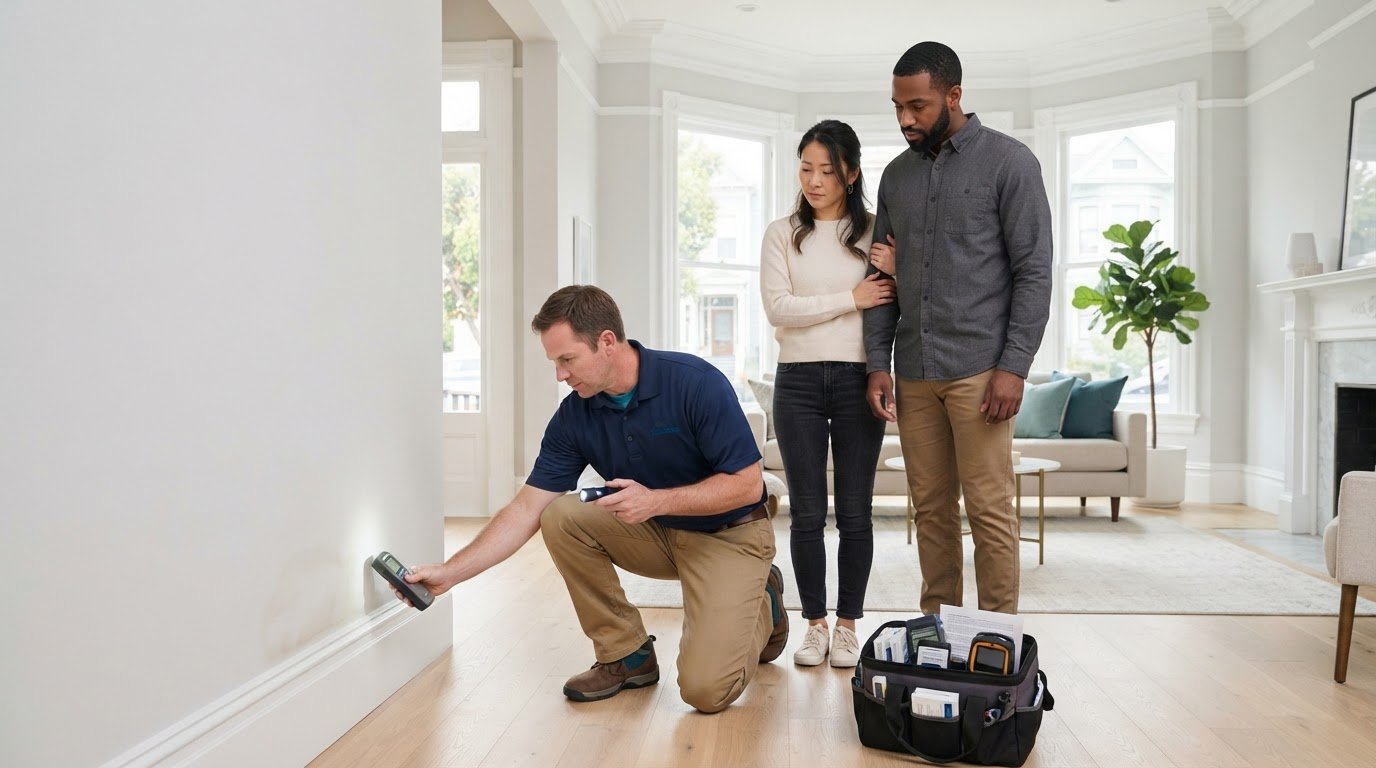
We prioritize non-invasive techniques to protect the integrity of your home. Infrared or thermal imaging cameras are vital in this regard; they allow us to detect temperature differentials caused by moisture trapped behind drywall or under flooring. These cameras can "see" a leak before it ever manifests as a visible stain or peeling paint.
Once a thermal anomaly is detected, we use moisture meters to confirm the saturation levels of the building materials. These precision instruments identify the specific "food source" and moisture pocket fueling the fungal growth. By combining these advanced tools with professional black mold testing san francisco, we provide a thorough, clinical assessment that avoids unnecessary demolition and focuses strictly on the areas requiring attention.

San Francisco Tenant and Landlord Rights Checklist
In San Francisco, mold is not just a structural concern; it is a matter of public health regulated by specific local and state mandates. The San Francisco Department of Public Health (SFDPH) classifies visible mold as a nuisance, which requires property owners to take corrective action. This regulatory environment is further strengthened by California Senate Bill 655. This law explicitly identifies mold as a condition that makes a building substandard, provided the growth is visible and endangers the health of the occupants. For residents concerned about their living conditions, seeking professional black mold testing san francisco can provide the clinical evidence needed to initiate these formal processes.
Landlords are legally obligated to maintain a habitable environment. Once they receive a written report of mold, they typically have a 30-day window to complete the necessary remediation. However, tenants also carry responsibilities. You must ensure proper airflow by using bathroom exhaust fans and opening windows when possible. Reporting moisture issues immediately is essential, as neglect on the tenant's part can complicate a legal dispute. Clear communication and transparency are the best ways to ensure a swift return to a healthy environment.
Navigating an SF Mold Dispute
Conflicts often arise when there is disagreement over the severity of the growth or the underlying cause. Following a structured path helps protect your rights:
- Step 1: Documentation. Take high-resolution photos of all visible growth and moisture stains. Supplement this with a professional lab report to confirm the genus of the mold.
- Step 2: Formal Notification. Send a written notice to the landlord or property management company. Email is acceptable, but a certified letter provides a stronger paper trail.
- Step 3: Regulatory Escalation. If the owner fails to act within the 30-day period, contact the San Francisco Department of Building Inspection (DBI). An inspector can issue a formal notice of violation if the property is found to be substandard.
Who Pays for Testing in San Francisco?
The question of who covers the cost of an inspection is a common point of friction. Generally, if a tenant suspects a health hazard, the landlord should provide an inspection. However, many tenants choose to hire an independent specialist first to ensure the results are unbiased. A neutral, third-party report is far more persuasive in a legal or regulatory setting than a self-assessment. When both parties agree on a specialized provider for black mold testing san francisco, it creates a transparent baseline for the remediation process. This scientific accuracy removes the emotional weight from the situation, allowing the focus to remain on safety and restoration.
From Detection to Purity: The My Pure Environment SF Solution
Moving from the identification of a moisture issue to the restoration of indoor air quality requires a clinical, methodical approach. Our comprehensive Mold Testing & Inspection process is designed specifically for the unique architectural and environmental demands of the Bay Area. While previous sections of this guide helped you identify red flags and understand your legal rights, this stage focuses on providing a definitive, data-driven resolution. We don't just find the problem; we provide a clear, non-invasive path back to a healthy living environment. By combining scientific accuracy with a commitment to building health, My Pure Environment SF ensures that your home returns to a state of purity without the stress of traditional construction.
We prioritize non-invasive techniques because we understand that the fear of expensive demolition often prevents homeowners from seeking help. Traditional methods frequently involve tearing out drywall and flooring based on visual suspicion alone. In contrast, our approach utilizes advanced diagnostics to target only the necessary areas. This clinical focus is why many residents trust us for black mold testing san francisco when they want a solution that respects the integrity of their property while prioritizing respiratory safety.
The Dry Fog Advantage for SF Victorians
Historic homes in neighborhoods like the Haight or Pacific Heights present specific challenges during remediation. Because the microscopic fog particles we use are smaller than a mold spore, they can penetrate the porous surfaces of historic lath-and-plaster without the need for structural cutting. This technology reaches deep into wall cavities and behind ornate trim where traditional methods fail. It's a modern, systemic solution that protects historic building materials while ensuring the complete elimination of viable spores. For a deeper understanding of how we apply these scientific principles, you can read about our Professional Mold Remediation in San Francisco.
Scheduling Your SF Mold Assessment
When you schedule a consultation, you'll work with a meticulous specialist who acts as a protective guide through the restoration process. We don't believe in a one-size-fits-all approach. Instead, we develop customized plans that address the specific needs of your property, whether the issue is localized in a bathroom or spread through an attic or crawl space. During the initial visit, we'll verify the moisture sources identified in your self-assessment and provide a transparent overview of the necessary steps to improve your indoor air quality.
Our goal is to move you from health anxiety to peace of mind through clear, factual communication. If you've identified any of the red flags mentioned in this checklist, it's time to replace guesswork with scientific data. Professional black mold testing san francisco is the first step toward reclaiming your home's health and ensuring long-term environmental safety. Don't wait for a minor moisture issue to become a structural or systemic health concern. Take the proactive step toward a cleaner, safer home and schedule your San Francisco mold inspection today.
Restoring Your Home’s Environmental Health
Understanding the intersection of San Francisco's persistent coastal fog and historic lath-and-plaster architecture is the first step toward a safer home. You've learned how to identify the specific visual and olfactory indicators of growth and how professional diagnostics provide the clinical data necessary for a permanent resolution. Choosing professional black mold testing san francisco ensures that you move forward with factual evidence rather than anxiety. This methodical approach replaces the stress of the unknown with a clear, science-backed path toward restoration.
My Pure Environment SF specializes in non-invasive Dry Fog technology, offering a modern alternative to traditional demolition that preserves the integrity of historic building materials. Our clinical, science-backed testing and remediation processes are tailored to the unique needs of Bay Area properties. You don't have to navigate these environmental challenges alone. Taking a proactive, clinical approach today ensures a cleaner, purer living space for your family tomorrow.
Get Peace of Mind with a Professional Mold Inspection
Frequently Asked Questions
Is black mold common in San Francisco apartments?
Yes, fungal growth is relatively common in San Francisco apartments due to the city's persistent marine layer and historic building stock. The high relative humidity in coastal neighborhoods like the Sunset often exceeds 60 percent, creating ideal conditions for spores. When combined with the lack of modern vapor barriers in older multi-unit buildings, moisture often becomes trapped within walls. Professional black mold testing san francisco helps residents determine if these environmental factors have led to systemic growth.
Can I use a DIY mold test kit from a hardware store?
While DIY kits are accessible, they often provide misleading results for homeowners. These settle plates simply confirm that mold spores exist in the air, which is true of almost every indoor and outdoor environment. They don't provide the clinical data needed to distinguish between normal background levels and an active infestation. Without laboratory-grade air pumps and professional analysis, these kits lack the scientific accuracy required to make informed health or remediation decisions.
How much does professional black mold testing cost in San Francisco?
The cost of a professional assessment varies based on the size of the property and the number of samples required to establish a clinical baseline. A comprehensive inspection typically includes a visual evaluation, moisture mapping with infrared cameras, and laboratory analysis of air or surface samples. While we don't provide fixed pricing here, most property owners find that the investment in scientific data prevents the much higher costs of unnecessary or invasive demolition.
What happens if a mold test comes back positive in my rental?
If a lab report confirms elevated mold levels, the property is often classified as substandard under California Senate Bill 655. You should provide the landlord with a formal written notice along with the professional findings. Under local guidelines, the property owner typically has a 30-day window to address the underlying moisture source and perform remediation. If they fail to act, you can escalate the matter to the San Francisco Department of Building Inspection for further enforcement.
Is all black-colored mold "toxic" black mold?
No, the color of a mold colony is not a definitive indicator of its toxicity. Many common, non-toxic molds appear dark or black, while some hazardous species can be grey or greenish. Only a clinical laboratory analysis can confirm if a sample is Stachybotrys chartarum, the species most associated with toxic health effects. This is why professional black mold testing san francisco is essential for moving beyond visual assumptions to technical certainty regarding your home's air quality.
How long does a professional mold inspection take?
A standard residential inspection typically takes between one and three hours to complete. This duration allows the specialist to perform a thorough walkthrough, conduct moisture mapping with thermal imaging, and collect necessary air and surface samples. Larger commercial properties or historic buildings with complex layouts may require additional time. Following the onsite visit, samples are sent to a certified laboratory, with detailed reports usually available within a few business days of the initial assessment.
Can mold testing detect mold hidden inside my walls?
Yes, professional methodologies are designed to detect hidden fungal growth without invasive cutting. Air quality sampling can capture elevated spore concentrations that indicate a colony living behind drywall or under floorboards. Additionally, we use infrared cameras to identify temperature differentials caused by moisture pockets within wall cavities. These non-invasive tools allow us to pinpoint the exact location of a problem before it manifests as a visible stain or peeling paint on the surface.
Does home insurance cover mold testing and remediation in SF?
Coverage for mold usually depends on the underlying cause of the moisture intrusion. Most policies cover remediation if the mold resulted from a sudden and accidental event, such as a burst pipe. However, mold caused by long-term humidity, lack of ventilation, or gradual seepage is often excluded. We recommend reviewing your specific policy or speaking with an insurance adjuster to understand your coverage limits for environmental hazards in San Francisco's consistently damp climate.