Did you know that nearly 47 percent of homes in the United States contain visible mold or a persistent musty odor? In a city like San Francisco, where foggy microclimates and historic Victorian architecture create the perfect environment for dampness, professional mold testing san francisco services are often the only way to gain clarity. Whether you're managing a classic Edwardian or a modern apartment complex, the presence of fungal growth is more than just an aesthetic issue; it's a systemic health concern that requires a scientific approach to resolve.
You probably recognize the frustration of a lingering smell that won't go away or the anxiety of a landlord-tenant dispute over air quality. It's natural to feel overwhelmed by the fear of toxic black mold and its impact on your well-being. This guide simplifies the process of detection so you can secure lab-backed results and peace of mind. We'll explore professional inspection methods, local environmental risks, and how to identify the exact moisture source. By the end, you'll have a clear roadmap for safe removal and a healthier living environment.
Key Takeaways
- Understand why a professional clinical assessment is necessary to identify the specific fungal ecology within San Francisco's unique architectural landscape.
- Learn why DIY hardware store kits often provide misleading results and how lab-backed mold testing san francisco services offer the accuracy needed for legal or health concerns.
- Identify how the city's microclimates and historic building envelopes contribute to hidden moisture in critical areas like attics and crawl spaces.
- Discover the importance of outdoor control samples in establishing a baseline for indoor air quality and ensuring your remediation plan is based on hard data.
- Gain a clear roadmap for transforming your property's environmental health by using professional testing as a diagnostic blueprint for restoration.
Why Professional Mold Testing is Essential for San Francisco Properties
Professional mold testing is more than a cursory glance at a damp corner. It's a clinical assessment of your indoor fungal ecology, designed to identify the concentration and species of spores present in your air. In a city like San Francisco, where the coastal fog and high humidity create a persistent moisture load, the structural integrity of your property depends on accurate data. Many property owners rely on visual checks, but these often fail to capture the full scope of the problem. For a deeper look at the biology and risks involved, you can consult this comprehensive guide to indoor mold. Accurate mold testing san francisco ensures that you aren't just treating a symptom, but addressing a systemic environmental issue.
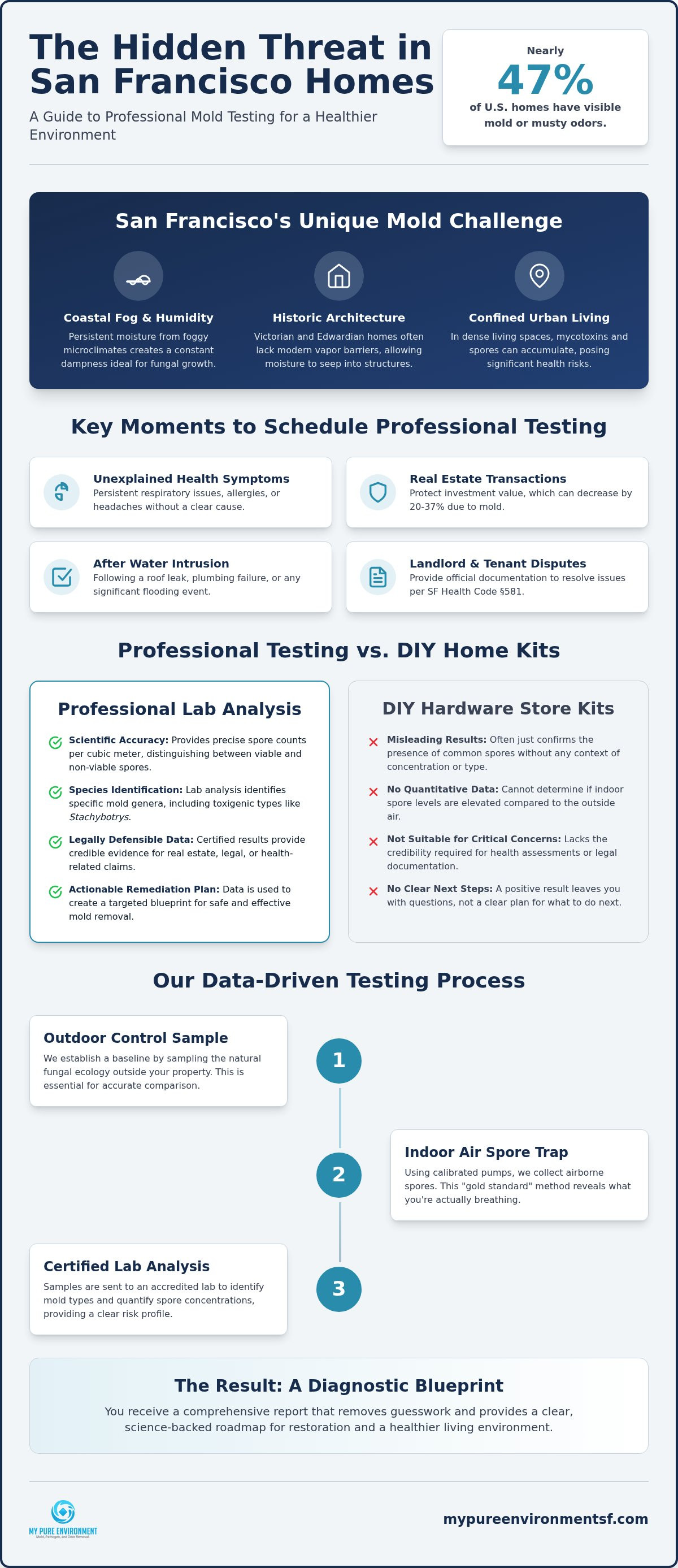
San Francisco’s iconic Victorian and Edwardian homes offer architectural charm but present specific vulnerabilities. These older structures often lack modern vapor barriers, allowing moisture to seep into building envelopes during the dense fog seasons. This creates a "perfect storm" for colonization. While visible growth is a clear signal, the most significant risks often come from hidden air quality threats. In confined urban living spaces, the accumulation of mycotoxins, which are toxic compounds produced by certain fungi, can lead to systemic health issues that visual inspections simply can't detect. Identifying these microscopic threats is the first step toward restoring a healthy indoor environment.
The Limitations of Visual Inspections
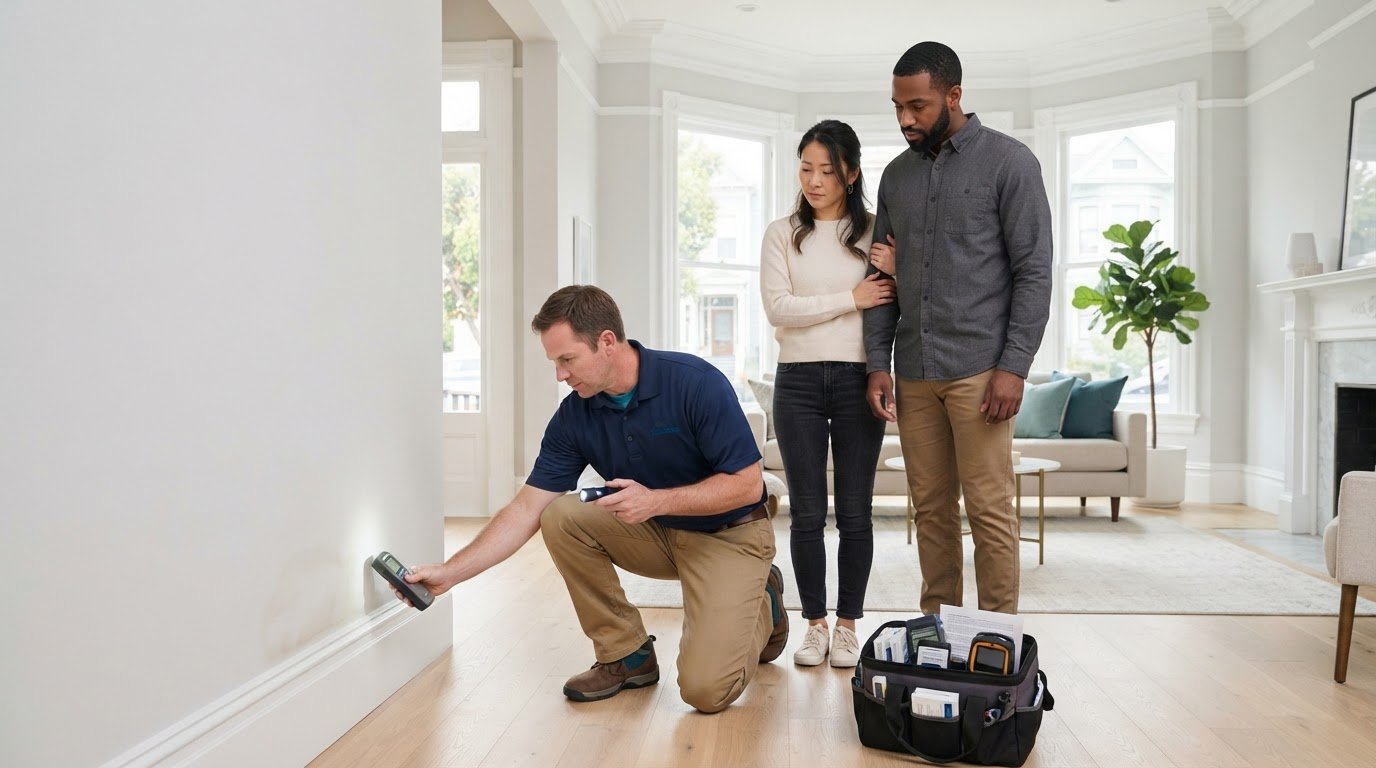
Relying solely on what you can see is a common mistake. Mold often thrives behind drywall, within insulation, or beneath floorboards where it remains invisible to the naked eye. A persistent musty odor is frequently the only early indicator of a deep-seated infestation. Professional inspectors use specialized sensors to detect elevated moisture levels in materials that appear dry. This precision allows us to find the source before it compromises your home's structural health. We focus on airborne spore counts because what you breathe is just as important as what you see on the walls.
When to Schedule a Professional Test
Timing is critical for effective mold testing san francisco. You should consider a professional assessment if you notice unexplained respiratory symptoms or after any significant water intrusion, such as a roof leak or plumbing failure. Real estate transactions also necessitate testing to protect investment value. Research indicates that a home's resale value can decrease by 20 percent to 37 percent due to mold issues. Additionally, San Francisco Health Code §581 classifies mold as a health nuisance. This makes professional documentation essential for landlords and tenants to resolve disputes and meet legal disclosure obligations before a lease is signed.
Understanding the Science: Types of Mold Testing and Analysis
Laboratory analysis transforms environmental samples into a diagnostic map of your property. By using specialized equipment, we identify the concentration of spores and distinguish between viable (living) and non-viable (dead) counts. This distinction is crucial; even dormant spores can contain allergens or mycotoxins that impact health. For property owners seeking a deeper understanding of these procedures, the EPA guidance on mold sampling clarifies that there are currently no federal limits for mold spores, making professional interpretation of lab results essential. Accurate mold testing san francisco relies on these diverse methodologies to create a comprehensive safety profile.
A critical component of mold testing san francisco is the collection of outdoor control samples. San Francisco's coastal air naturally carries a variety of fungal spores. Without an outdoor baseline, it's impossible to determine if the indoor levels are elevated or simply a reflection of the local environment. Data-driven results remove the guesswork, allowing for a remediation plan based on hard science rather than assumptions.
Air Spore Trap Testing
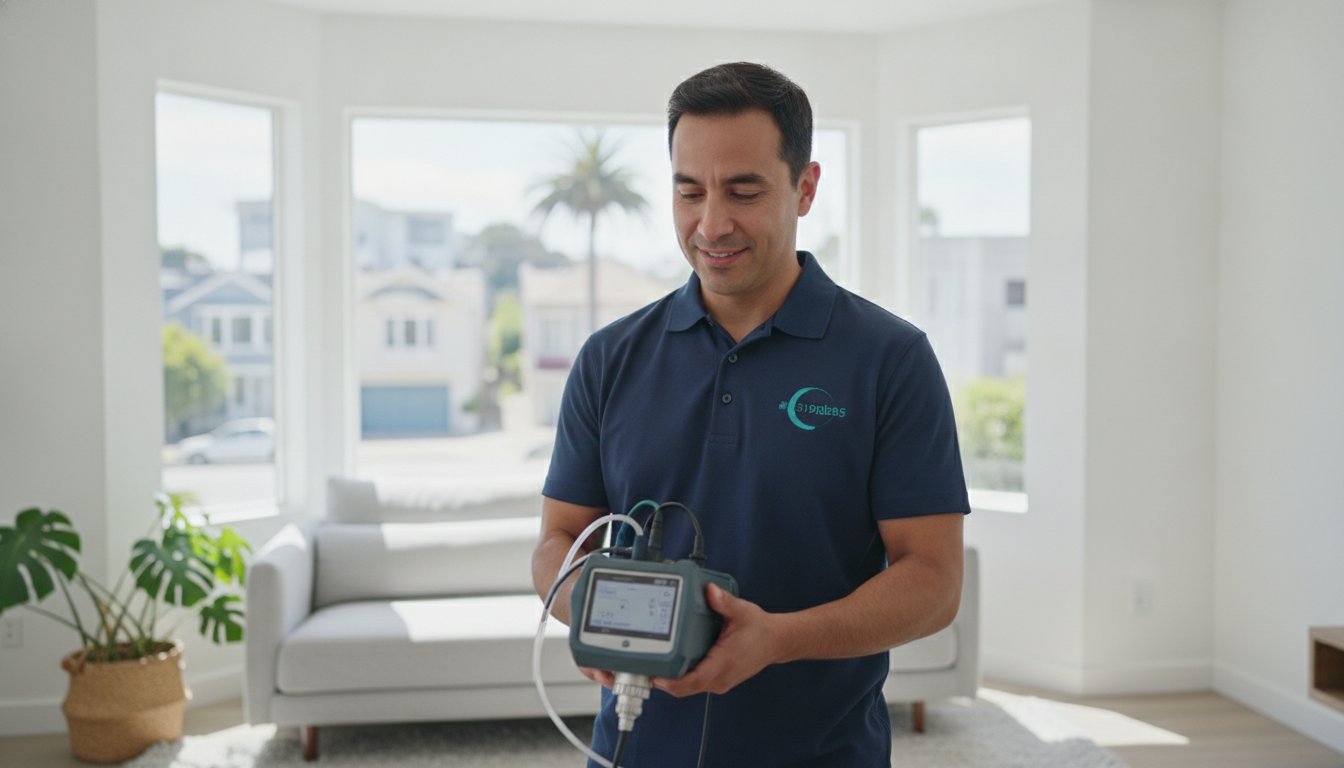
Air testing is widely considered the "gold standard" for evaluating indoor air quality. We use calibrated air pumps to draw a specific volume of air through a collection cassette. These samples reveal the concentration of spores per cubic meter, helping us identify specific genera like Stachybotrys (often called black mold) or Aspergillus. This method captures what the naked eye misses, providing a clear picture of the air you breathe daily.
Surface and Bulk Sampling
When visible growth is present, surface sampling confirms its identity. Swabs or tape lifts are used to collect physical specimens for microscopic analysis. In cases where mold has deeply penetrated porous materials, bulk sampling involves removing a small piece of the material itself. These methods are essential for confirming cross-contamination and ensuring that cleaning protocols are targeted effectively.
ERMI and DNA-Based Testing
For a more granular analysis, the Environmental Relative Moldiness Index (ERMI) uses DNA sequencing to identify 36 specific mold species. This deep-dive approach is particularly valuable for occupants with Chronic Inflammatory Response Syndrome (CIRS) or other environmental sensitivities. While fungal sequencing is a more significant investment, the precision it offers is unmatched for complex health-related cases. If you suspect your home's air is impacting your health, professional mold testing and inspection can provide the laboratory-backed evidence required for a permanent solution.
Professional Inspection vs. Home Test Kits: Comparing Accuracy and Value
A common misconception among property owners is that a cheap hardware store kit provides the same level of safety as a professional assessment. In reality, these retail kits often create more confusion than clarity. Most DIY options rely on "gravity plates," which are petri dishes left to sit in a room for several hours. This method is fundamentally flawed because it only captures spores heavy enough to settle, failing to account for the lighter, more buoyant particles suspended in your breathing zone. For those considering these options, university extension advice on mold testing emphasizes that identifying the moisture source is far more important than simply confirming spores exist. Effective mold testing san francisco requires a clinical approach that connects air quality data with the physical conditions of the building.
When dealing with San Francisco's complex landlord-tenant laws, lab-certified results aren't optional. A settling plate from a retail store holds no weight in a legal dispute or an insurance claim. You need a document that stands up to scrutiny, interpreted by a specialist who understands the difference between normal fungal ecology and a hazardous environment. Data-driven reports provide the leverage needed to ensure repairs are handled correctly and promptly.
The Hidden Costs of DIY Mold Kits
Budget-friendly kits frequently lack laboratory accreditation, leading to high rates of false negatives. If a kit fails to grow mold, it doesn't mean your home is safe; it might simply mean the specific species in your air didn't thrive on that particular agar. More importantly, a kit can't tell you why mold is growing. It won't find the slow pipe leak behind your cabinet or the failing flashing on your roof. Without finding the root cause, any cleaning you do is temporary. You'll likely spend more on repeated DIY tests than you'd on a single professional inspection.
What a Professional SF Inspector Brings to the Table
A professional uses advanced technology to see what's happening inside the walls of a historic Victorian or Edwardian home. We use thermal imaging cameras and moisture meters to track water migration through dense lath and plaster, identifying "cold spots" where condensation occurs. This technical data is then paired with lab reports that measure spores in precise concentrations. This comprehensive report serves as a legal roadmap for remediation, ensuring that every step taken is necessary, effective, and documented for your protection. Choosing professional mold testing san francisco ensures your investment is protected by science, not guesswork.
San Francisco Specifics: Identifying Mold Risks in Local Architecture
San Francisco’s unique geography creates distinct microclimates that directly influence indoor fungal growth. While a property in the Mission District might enjoy warmer, drier conditions, a home in the Outer Sunset faces a constant barrage of marine layer moisture. This environmental diversity makes mold testing san francisco a localized science. It’s not enough to apply general standards; we must account for the specific architectural vulnerabilities of your neighborhood to ensure a healthy living space.
In densely packed row houses and multi-unit apartment complexes, shared walls present a significant diagnostic challenge. A moisture intrusion in one unit can easily migrate through common structural elements, leading to hidden growth in adjacent properties. Aging infrastructure often compounds these issues, particularly in bathrooms where outdated ventilation systems fail to exhaust the heavy humidity characteristic of the city. This lack of airflow, combined with the porous nature of older building materials, creates an ideal environment for colonization that often goes unnoticed until a musty odor becomes persistent.
Mold Challenges in Victorian and Edwardian Homes
Historic homes built before the advent of modern building codes often lack vapor barriers and adequate insulation. This causes "cold spots" on exterior walls where warm indoor air condenses into liquid water, providing a primary food source for mold. Additionally, the "chimney effect" in tall, narrow structures can pull spores from damp crawl spaces or basements upward into living areas. For those managing older properties, specialized attic mold remediation in San Francisco is often necessary to address the accumulation of moisture at the highest points of the building envelope.
Fog, Moisture, and the Richmond/Sunset Districts
Neighborhoods within the "fog belt" require more frequent air quality monitoring due to the sheer volume of ambient moisture. In the Richmond and Sunset districts, the marine layer can keep exterior surfaces damp for days, preventing the building from ever fully drying out. Landlords in these areas should prioritize high-efficiency bathroom fans and consistent dehumidification to mitigate risks. If you suspect the fog is fueling growth in your rental unit, scheduling a professional mold testing and inspection is the most effective way to protect your tenants and your property value.
The My Pure Environment SF Testing Advantage: From Detection to Pure Air
We view mold testing san francisco as the essential diagnostic blueprint for environmental restoration. Some industry voices suggest a conflict of interest when the same partner handles both inspection and removal, but we believe this separation often leads to miscommunication and fragmented results. By providing a single point of accountability, we ensure that the remediation plan is built directly upon the laboratory data we collect. This cohesive, science-based approach eliminates the stress of managing multiple contractors and ensures every action taken is justified by clinical evidence. Our ultimate goal is the achievement of "Pure Air," a state where your indoor environment is restored to its natural, healthy equilibrium.
Our methodology focuses on non-invasive solutions that prioritize the structural integrity of your property. We don't rely on aggressive demolition unless the data proves it's necessary. Instead, we use precision testing to identify the exact biological load within your building. This transparency allows us to act as a protective guide, moving methodically from the initial detection of a hazard to the final verification of systemic health. You deserve a partner who values scientific accuracy over high-pressure sales tactics.
Targeted Remediation for Attics and Bathrooms
San Francisco properties frequently experience moisture accumulation in attics and bathrooms due to the city's unique humidity profiles. Professional testing identifies the specific fungal species present in these zones, which is vital for developing targeted removal protocols. For example, the treatment for Aspergillus may differ from the methods used for more resilient strains found in damp insulation. By integrating indoor air quality improvements into the remediation plan, we address the underlying moisture issues that invite colonization, ensuring a long-term solution for these common problem areas.
Specialized Services for the Cannabis Industry
The local cannabis industry faces rigorous environmental standards that require specialized mold testing san francisco protocols. Commercial grow rooms are high-humidity environments where even a minor fungal outbreak can lead to significant crop loss and regulatory non-compliance. we provide professional monitoring to ensure that your facility meets safety benchmarks for both product purity and worker health. Our customized protocols address the specific challenges of indoor cultivation, providing the lab-backed documentation necessary for crop safety and business continuity.
Your Next Steps for a Healthier SF Home
Preparing for a professional inspection is a straightforward process. We recommend ensuring clear access to suspected areas, such as crawl spaces, attics, and under-sink cabinets. During the visit, we'll collect the necessary air and surface samples to build your property's profile. Your final lab-certified report will provide a clear breakdown of spore concentrations and a structured roadmap for restoration. If you're ready to gain clarity on your property's health, Contact My Pure Environment SF for a Professional Mold Inspection.
Secure Your Property's Environmental Health
Maintaining a healthy indoor environment in San Francisco requires more than a surface-level cleaning. As we've explored, the city's unique microclimates and historic building envelopes demand a rigorous, science-based approach to detection. Professional mold testing san francisco provides the clinical evidence needed to identify hidden moisture sources and airborne spore concentrations that DIY kits simply miss. By relying on lab-backed data rather than guesswork, you protect both your property's value and your occupants' well-being.
Our team serves all San Francisco neighborhoods, providing specialized expertise as attic and bathroom experts. We utilize science-based laboratory analysis to create a customized roadmap for restoration, ensuring your home or business returns to a state of purity. Don't let a musty odor or hidden leak compromise your peace of mind. Schedule Your San Francisco Mold Inspection Today and take the first step toward lasting air quality improvement. You deserve the confidence that comes with a clean, safe, and restored environment.
Frequently Asked Questions
How much does professional mold testing cost in San Francisco?
Professional fees for environmental assessments vary based on the square footage of the property and the number of samples required for a clinical baseline. Larger Victorian homes with multiple levels often necessitate a more extensive sampling plan than smaller studio apartments. While costs depend on the complexity of the building envelope, investing in a professional assessment ensures you receive lab-backed data rather than the unreliable results of a retail kit.
Does San Francisco law require landlords to test for mold?
San Francisco Health Code §581 classifies mold as a health nuisance, placing the responsibility for detection and remediation on the property owner. Landlords must disclose any known fungal issues to prospective tenants before a lease is signed. If a tenant reports a musty odor or visible growth, the owner is generally required to investigate and address the underlying moisture source to maintain a habitable living environment.
How long does it take to get mold test results back from the lab?
Lab-certified results for mold testing san francisco typically arrive within two to five business days after the samples are collected. This timeframe allows specialized laboratories to perform a detailed microscopic analysis of air spore traps or surface swabs. Once the data is finalized, we provide a comprehensive report that translates technical findings into a clear, actionable roadmap for restoration and air quality improvement.
Can I stay in my home while mold testing is being performed?
You don't need to leave your property while we perform a mold assessment. The process is non-invasive and primarily involves using air pumps, moisture meters, and thermal cameras to evaluate the indoor environment. We work methodically to ensure minimal disruption to your daily routine. If the results later indicate a significant airborne hazard, we'll provide specific safety recommendations based on the clinical findings in your report.
What is the difference between mold testing and a mold inspection?
A mold inspection is a physical search for the moisture sources fueling growth, whereas mold testing is the scientific analysis of physical samples. During an inspection, we use specialized tools like moisture meters to find hidden leaks behind walls. Testing provides the "what" and "how much" by identifying specific fungal species and their concentrations in your air. Together, they form a complete diagnostic blueprint.
Is 'black mold' the only type of mold I should be worried about in SF?
While toxic black mold often receives the most attention, many other fungal species like Aspergillus and Penicillium are common in San Francisco's damp climate. These types can significantly impact indoor air quality and respiratory health even if they aren't "black" in color. Professional mold testing san francisco identifies the full spectrum of fungal ecology in your home, ensuring that all biological threats are addressed during the remediation process.
Will my homeowners insurance cover the cost of mold testing?
Insurance coverage for environmental testing usually depends on the underlying cause of the moisture intrusion. If the mold resulted from a sudden, accidental water event like a burst pipe, many policies will cover the diagnostic costs. However, issues stemming from long-term humidity or lack of maintenance are often excluded. It's best to consult your specific policy or agent to determine if professional lab analysis is a covered expense.
How often should I have my San Francisco property tested for mold?
We recommend scheduling an assessment after any significant water event, such as a roof leak or plumbing failure, or during a real estate transaction. In San Francisco's fog-heavy neighborhoods, an annual check of vulnerable areas like attics and crawl spaces can prevent small moisture issues from becoming systemic problems. Regular monitoring is a proactive way to maintain a pure environment and protect your property's long-term value.