What if the most dangerous threat in your home isn't the dark spot you can see, but the invisible particles you're breathing every day? Many homeowners assume that a patch of discoloration is just a cosmetic issue or simple mildew, yet understanding how to identify toxic mold requires looking beyond the surface. It's understandable to feel anxious when faced with conflicting information about mold colors or the potential costs of remediation. You want a safe environment for your family, but the fear of an "invisible" health hazard can be overwhelming when you don't know exactly what you're looking for.
We agree that your peace of mind shouldn't depend on guesswork or alarmist headlines. This guide provides a clear, scientific framework to help you accurately detect toxigenic growth and distinguish it from common household dirt. You'll learn the specific biological signs of an infestation and gain the technical knowledge needed to evaluate hidden risks in areas like attics and bathrooms. We'll walk through the precise criteria for professional testing, the legal standards for air quality in San Francisco, and how modern, non-invasive detection methods can protect your health without the need for invasive construction.
Key Takeaways
- Understand that "toxic mold" is a misnomer for toxigenic species and that color alone cannot determine the risk level of a growth.
- Learn how to identify toxic mold by recognizing the specific musty odors produced by microbial volatile organic compounds rather than relying solely on visual spotting.
- Discover why San Francisco's unique coastal microclimates and historic architecture make certain areas of your home more susceptible to hidden moisture.
- Identify the critical difference between routine household dust and dangerous fungal colonies through methodical visual inspections and moisture meter technology.
- Recognize the specific thresholds where DIY investigation should stop and professional remediation must begin to avoid cross-contaminating your living space.
Understanding 'Toxic Mold': Myth vs. Toxigenic Reality
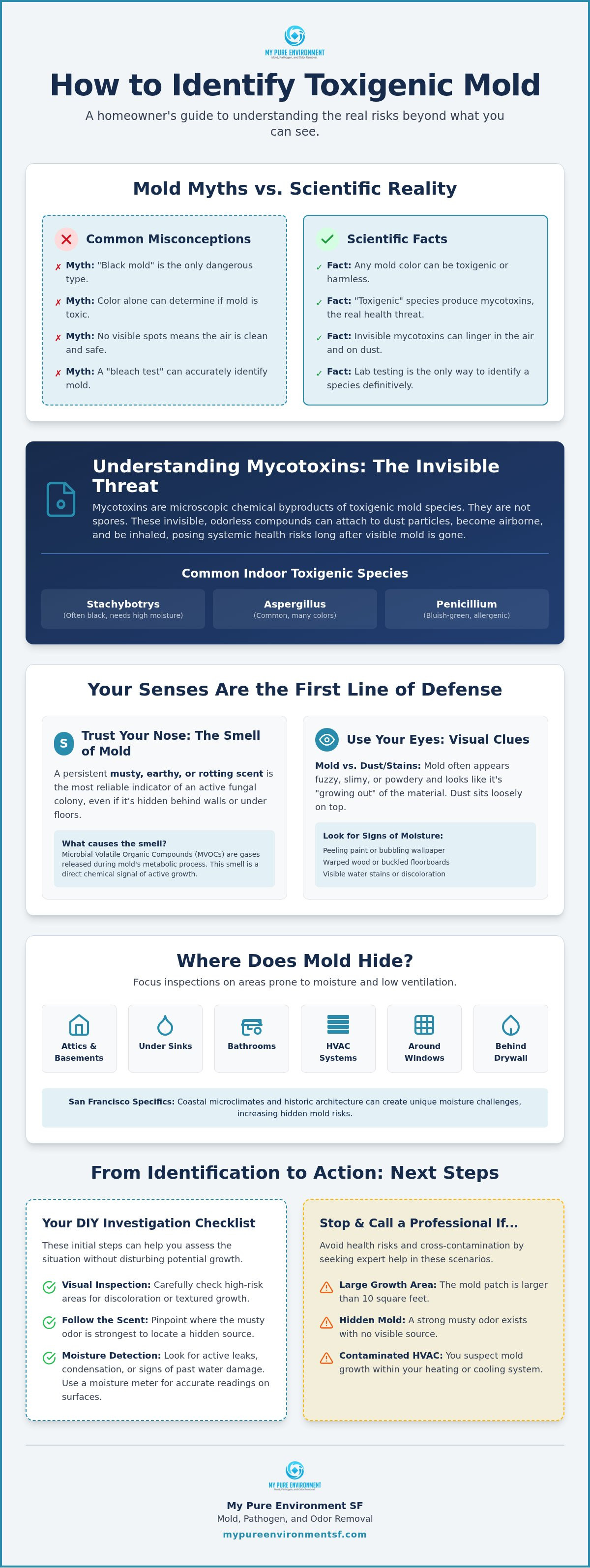
The term "toxic mold" is frequently used in headlines, but it doesn't accurately describe the biological reality of fungi. While no mold is inherently "toxic" in the sense of being poisonous on contact, certain species are classified as toxigenic. This means they have the metabolic capacity to produce chemical compounds under specific environmental conditions. Learning how to identify toxic mold starts with moving past the labels and looking at the science of your indoor environment.
There's a common misconception that black coloration equals danger, while green or white mold is harmless. In reality, color is often a result of the material the mold is consuming or its current stage of growth. Some harmless species appear dark, while certain toxigenic strains can look light or powdery. Moisture is the critical catalyst here. Without a consistent water source, even the most notorious species cannot produce the toxins that impact your health. Consequently, the primary metric for a healthy home isn't just the absence of visible spots, but the overall indoor air quality.
What are Mycotoxins and Why Do They Matter?
Mycotoxins are secondary metabolites produced by fungi during their growth cycle. Unlike spores, which are reproductive units, mycotoxins are microscopic chemical byproducts that can attach to dust particles or become airborne. When inhaled, these particles can enter the lungs and eventually reach the bloodstream, potentially causing systemic health concerns. Mycotoxins are the chemical byproduct of specific mold species like Stachybotrys. Because these toxins are invisible and odorless, they often linger in the air long after the visible mold has been wiped away.
Common Toxigenic Species Found Indoors
Several species are known for their ability to produce harmful compounds in residential settings. Stachybotrys chartarum is perhaps the most well known, typically flourishing on moisture-heavy cellulose materials like drywall or fiberboard. Other common culprits include Aspergillus and Penicillium, which can grow in lower humidity levels than Stachybotrys. Because these species can look identical to non-toxigenic varieties, professional lab testing is the only definitive way to confirm a species. Understanding how to identify toxic mold requires a clinical approach that prioritizes data over visual assumptions.
Sensory Signs: How to Spot and Smell Mold Growth
Mold often announces its presence through subtle sensory cues long before it becomes a visible colony. While many people focus on visual spotting, understanding the chemical and physical signals of fungi is a more reliable way to assess your home's health. Volatile Organic Compounds are the gases released by mold as it grows and consumes organic material. These compounds create the classic "musty" smell that many homeowners mistakenly accept as normal. If you're wondering how to identify toxic mold, your first step should be a mindful walkthrough of your property, paying close attention to any shifts in air quality or scent.
Visual identification requires a meticulous eye, as mold can easily be mistaken for common household dust or soot. Unlike dust, which sits loosely on a surface, mold often appears to be "growing out" of the material. Its texture varies significantly based on the species and moisture levels; it might look fuzzy like velvet, slimy and wet, or dry and powdery like flour. Beyond the mold itself, look for the underlying conditions that support it. Peeling paint, bubbling wallpaper, and warped wood are all red flags for moisture intrusion. To keep your home safe, you must learn to identify and control moisture problems before they facilitate a full-scale infestation.
The Smell of Mold: More Than Just a Nuisance
An earthy or rotting scent is often the most reliable indicator of an active fungal colony. This smell isn't just unpleasant; it's a direct result of the mold's metabolic processes. Because mold thrives in dark, stagnant environments, it frequently establishes itself behind drywall or under floorboards. Even if you can't see the growth, the scent can permeate through porous materials. Following your nose to the strongest point of the odor helps locate hidden leaks or condensation points that require immediate attention.
Visible Mold vs. Household Stains
A common misconception is the "bleach test," where homeowners assume that if a stain turns white after applying bleach, the mold is dead. Bleach only removes the pigment and often leaves the microscopic roots intact on porous surfaces like wood or drywall. To truly understand how to identify toxic mold, look for recurring patterns. Persistent growth in bathroom grout or on ceilings suggests a systemic moisture issue rather than a one-time spill. If cleaning fails to stop the growth, a professional indoor air quality improvement assessment can provide the necessary scientific clarity.
Where Toxic Mold Hides: High-Risk Areas in San Francisco Homes
San Francisco's unique geography creates a specific set of challenges for property owners. The city's famous coastal fog is more than just a scenic backdrop; it's a persistent source of high indoor humidity that can settle in poorly ventilated spaces. In neighborhoods like the Sunset or Richmond districts, where the marine layer is most dense, the risk of moisture accumulation is significantly higher than in drier climates. Understanding how to identify toxic mold in this environment requires a localized perspective that accounts for these specific microclimates and their impact on building health.
The architectural heritage of the Bay Area also plays a role in fungal growth risks. Many Victorian and Edwardian structures were built long before modern moisture-barrier technology or advanced insulation standards existed. These older homes often feature intricate rooflines and aging plumbing systems that are prone to slow, hidden leaks. Over time, these minor seepages can create the perfect damp sanctuary for toxigenic colonies to thrive undisturbed within the building's envelope, often remaining invisible to the naked eye for years.
Attic and Crawl Space Inspections
Attics are frequently the primary location for undetected fungal growth because they are rarely visited. In the damp winters of San Francisco, poor airflow can trap rising heat and moisture against the underside of the roof sheathing. You should inspect your attic insulation for dark staining or a "matted" appearance, which suggests moisture saturation. If the ventilation is inadequate, the attic becomes an incubator for species that can eventually impact the air quality throughout the entire home. Checking these areas during the rainy season is a proactive way to maintain a healthy environment.
Hidden Mold Behind Walls and Under Floors
Mold doesn't always manifest as a visible patch on your paint or tiles. It often resides within HVAC systems, ductwork, or behind the very walls of your bathroom. If you notice soft spots in your drywall or a persistent musty odor that doesn't go away after deep cleaning, you may be looking at signs of mold behind walls. These hidden colonies are particularly concerning because they can release spores directly into your living space through the ventilation system. Learning how to identify toxic mold in these concealed areas often requires specialized tools like moisture meters to detect the hidden "wet spots" that provide the necessary catalyst for growth.
The Identification Process: DIY Checks vs. Professional Testing
Identifying a potential environmental hazard requires a systematic approach that moves from basic observation to technical analysis. The first step in how to identify toxic mold involves a thorough visual and "sniff" inspection of all damp areas, focusing on the high-risk zones discussed earlier. Once you've located a suspect area, use a moisture meter to find "wet spots" that aren't yet visible to the eye. This tool is essential for determining if a moisture source is active or if you're looking at historic staining.
Next, you must evaluate the scope of the problem. If the area of growth is larger than 10 square feet, the risk of cross-contamination during cleaning increases significantly. At this stage, you'll need to decide between DIY surface swabs and professional air quality testing. While surface samples confirm what's on a wall, they don't tell you what you're breathing. For a definitive answer, consult with mold inspection professionals to obtain a laboratory-backed report that details the specific fungal concentrations in your home.
The Limits of DIY Mold Test Kits
Many homeowners turn to hardware store petri dishes for quick answers, but these often produce "false positives." These kits simply confirm that mold spores are present, which is true for almost every indoor space. Professional testing is superior because it utilizes "control" samples from the outdoors to establish a baseline. Every home has some mold; the goal is identifying abnormal concentrations of toxigenic species that shouldn't be there. Without this context, a DIY kit can cause unnecessary anxiety without providing a path to resolution.
Professional Air Quality and Spore Testing
When mold is hidden behind structural elements, air sampling is the only way to identify the risk. This process involves drawing a specific volume of air through a collection media, which is then analyzed under a microscope. This identifies "hidden" toxigenic mold by revealing elevated spore counts that aren't consistent with the outdoor environment. Interpreting these results allows you to see the exact species present and understand the systemic health of your building. For a deeper look at local requirements, see the San Francisco Mold Testing Guide.
If your initial checks reveal persistent moisture or unexplained odors, scheduling a professional Mold Testing & Inspection is the most reliable way to ensure your indoor air is safe for your family.
From Identification to Elimination: Safe Next Steps
Once you've mastered how to identify toxic mold, the transition to elimination must be handled with scientific precision. Many homeowners make the mistake of attempting to scrub away colonies, but disturbing toxigenic mold can release millions of spores into the indoor air. This significantly increases inhalation risks and spreads the contamination to unaffected rooms. If the growth covers a large area or if you suspect it's a toxigenic species, it's time to stop DIY efforts. Cleaning with bleach is often counterproductive on porous surfaces like drywall or wood; it removes surface pigment but the water in the solution can actually feed the roots deep within the material, leading to faster regrowth.
For San Francisco properties, where humidity is a constant factor, a more comprehensive approach is required. Choosing professional mold remediation ensures that the root cause is addressed rather than just the visible symptoms. Modern, non-invasive methods like dry fogging allow for a thorough treatment that doesn't require the demolition of your historic Victorian or Edwardian interior. This technology is particularly effective at neutralizing spores in the air and on surfaces simultaneously, restoring the purity of your living space.
Protecting Your Health During the Process
While waiting for professional intervention, focus on stabilizing the environment. Use a dehumidifier to drop the relative humidity below 50% to slow fungal metabolism. High-efficiency air filtration can also help capture some airborne particles. If you must enter the contaminated space, PPE is mandatory, including an N95 respirator, gloves, and eye protection. To prevent cross-contamination, keep the doors to affected rooms closed and avoid using fans that might blow spores into other areas of your home. These immediate actions help contain the issue until a clinical solution is applied.
Why Professional Remediation is Essential for Toxigenic Mold
True safety requires more than just surface cleaning. Professional remediation focuses on total spore elimination throughout the entire indoor environment. The science of dry fog allows the sterilant to reach spores hidden in microscopic cracks and crevices that manual cleaning simply cannot touch. This systemic approach ensures the air you breathe is as clean as the surfaces you see. The process concludes with final clearance testing. This step involves laboratory analysis to prove the spore counts have returned to safe, natural levels, providing the peace of mind that your home is once again a healthy environment for your family.
Securing Your Home's Long-Term Environmental Health
Mastering how to identify toxic mold transforms a confusing household worry into a manageable health priority. You've learned that visual cues are only part of the story; true detection relies on recognizing the chemical signals of moisture and the architectural vulnerabilities unique to San Francisco. Whether it's a hidden leak in a Victorian attic or a persistent musty odor in a modern bathroom, accurate identification ensures you don't waste resources on ineffective surface cleaning. Protecting your property requires looking beyond the visible to address the systemic health of your building.
Your family's well-being deserves a solution rooted in scientific accuracy rather than guesswork. Our San Francisco local specialists provide expert lab-backed testing to confirm the exact nature of your indoor air quality. If remediation is necessary, our specialized dry fog technology offers a non-invasive path to total spore elimination without the stress of demolition. You now have the knowledge to spot the warning signs; now you can take the final step toward a pure environment.
Schedule a Professional Mold Inspection in San Francisco Today and reclaim your peace of mind. We're here to help you navigate the path to a healthier home with clarity and care.
Frequently Asked Questions
Is all black mold toxic?
No, the color of a fungal colony is not a reliable indicator of its toxicity. While Stachybotrys chartarum is the most famous toxigenic black mold, many other harmless species share the same dark pigment. Conversely, some dangerous species appear green or white. Determining whether a growth is truly toxigenic requires laboratory analysis to identify specific mycotoxin producing capabilities rather than relying on visual color alone for a diagnosis.
Can I identify toxic mold just by looking at it?
Visual inspection cannot definitively confirm if a mold is toxigenic. While texture cues like a slimy or fuzzy appearance can suggest active growth, they don't reveal the presence of mycotoxins. Learning how to identify toxic mold involves a combination of visual checks, moisture mapping, and professional sampling. A microscope and laboratory analysis are necessary to distinguish between a benign household stain and a species that poses a significant health risk to residents.
What are the first physical symptoms of toxic mold exposure?
Symptoms often mirror common respiratory allergies or a persistent cold. Homeowners frequently report sneezing, coughing, watery eyes, and skin irritation as their first signs of a problem. In environments with high concentrations of mycotoxins, individuals might also experience persistent headaches or unexplained fatigue. Because these symptoms are non-specific, it's essential to evaluate your home's air quality if health issues persist only while you are indoors or worsen during San Francisco's damp winters.
How do I test for mold behind my walls without tearing them down?
Modern technology allows for non-invasive detection using thermal imaging and moisture meters. These specialized tools identify the temperature differentials and hidden wet spots that indicate leaks or condensation. Additionally, professionals can perform wall cavity air sampling by drilling a tiny, inconspicuous hole to draw air from behind the drywall. This methodical process provides a clear picture of what's happening inside your structure without the need for destructive or expensive demolition in your living space.
Does a musty smell always mean there is a toxic mold problem?
A musty odor indicates the presence of microbial volatile organic compounds, which are gases released by fungi during their growth cycle. While every musty smell confirms active mold growth, it doesn't always mean the species present is toxigenic. However, any persistent odor suggests a chronic moisture issue that could eventually support more dangerous growth. Addressing the underlying water source is the first step toward restoring a pure environment and ensuring long-term air quality.
Are home mold test kits from the hardware store accurate?
DIY petri dish kits are often misleading because they lack a controlled environment and professional interpretation. Since mold spores exist in almost every indoor space, these kits will nearly always grow a colony, leading to unnecessary anxiety for homeowners. They don't provide accurate spore counts or compare indoor levels to outdoor baselines. For a reliable assessment, professional air sampling is required to determine if the concentrations of mold in your home are truly abnormal.
What should I do if I find a small patch of mold in my SF bathroom?
Small areas of surface mold, such as those found on tile grout, can often be addressed with a non-porous cleaner. However, you must first identify the moisture source, such as inadequate ventilation during San Francisco's foggy mornings. If the mold returns quickly or covers an area larger than ten square feet, it's a sign of a deeper systemic issue. In these cases, a professional assessment is needed to ensure no hidden colonies exist within the walls.
How much does a professional toxic mold inspection cost in San Francisco?
The investment for a professional inspection varies depending on the square footage of your property and the number of laboratory samples required for a definitive report. Factors such as the age of your San Francisco home and the accessibility of crawl spaces or attics also influence the scope of the investigation. Rather than focusing on a single price point, property owners should prioritize a comprehensive report that includes species identification and moisture mapping to ensure total safety.